
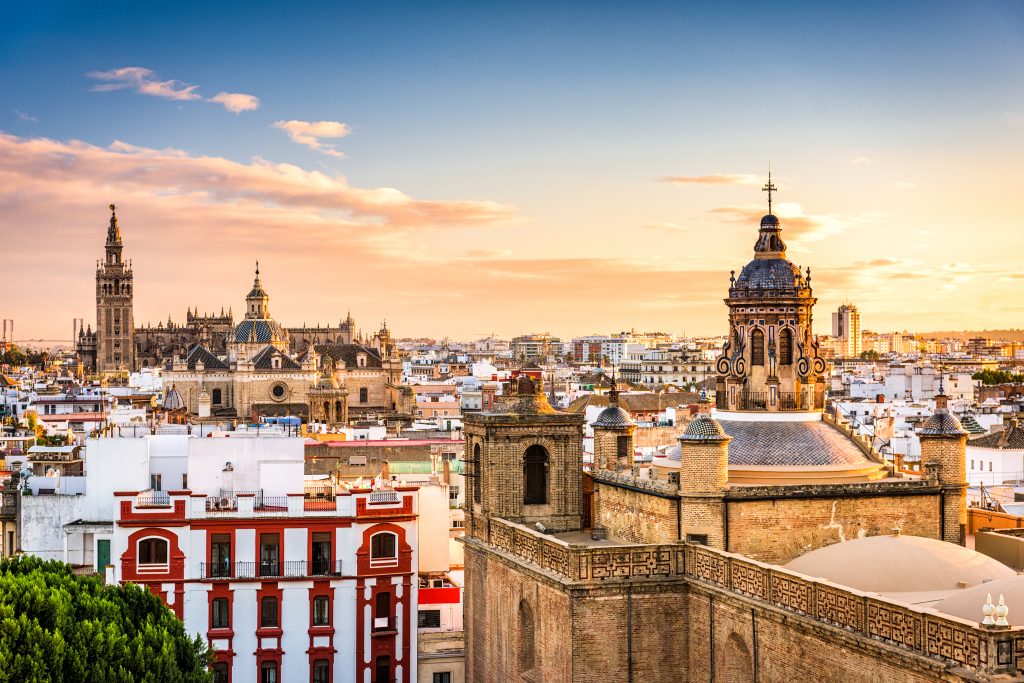
Seville is a city that sums up everything that makes Spain so special – history, culture and boundless energy. Set on the banks of the Guadalquivir River, it’s the capital of the autonomous region of Andalusia and one of the most charming cities in the country, with a cultural identity all of its own. Stroll through its narrow lanes and you’ll find yourself immersed in a history that weaves together a Roman legacy, Moorish splendour and Renaissance brilliance.
One of the first things that strikes visitors is the passion and energy pouring out of every corner of Seville. Here you can enjoy the unique art of flamenco, try incredible traditional tapas and join the crowds at one of the lively local festivals, such as the Feria de Abril and Semana Santa. The city offers not only magnificent sights like Seville Cathedral and the Alcázar, but also an atmosphere that makes every visitor feel part of its rhythm.
Seville is a place where time seems to stand still and every moment becomes an unforgettable experience. Whether you choose to explore its rich architecture, get lost in colourful neighbourhoods like Triana and Santa Cruz, or simply relax with a glass of sangria in hand, Seville is sure to leave a lasting mark on your heart.
In this article I’ve gathered the top 15 most interesting sights in Seville, along with a few tips to make your stay even more exciting and memorable.
How to get there
Seville has an international airport – Seville Airport (SVQ) – with flights from a range of destinations. Unfortunately, there are no direct flights from Sofia. The easiest option is to fly to one of Spain’s bigger airports – Madrid, Barcelona, Valencia or Málaga – and change there. You can also reach Seville on the AVE high-speed train, which links the city with Madrid in about two and a half hours. Buses and hire cars are handy options too, especially if you’re travelling around southern Spain.
When to visit Seville
Spring (March to May) is the best time to visit Seville. The weather is pleasantly warm and the city comes alive with two of the biggest events in its calendar – Semana Santa (Holy Week) and the Feria de Abril (April Fair). These festivals are a unique chance to immerse yourself in Andalusian culture, with spectacular processions, traditional costumes and music.
Autumn (September to November) is also a great time to go. Temperatures are mild and the city is calmer after the hectic summer season. Summer can be a challenge because of the heat, with temperatures often topping 40 °C, but if you cope well with the heat, you’ll find Seville with fewer tourists.
Where to stay
Seville has a wide range of places to stay, from luxury hotels to cosy boutique guesthouses. The most popular areas are:
- Santa Cruz – the historic centre, close to all the main sights.
- Triana – an artsy neighbourhood with an authentic atmosphere and wonderful views of the river.
- Alameda – a trendy, lively area popular with young travellers.
Getting around the city
Seville is a compact city, perfect for exploring on foot. You can also get around by bike – the city has an excellent network of cycle lanes and a bike-sharing scheme called Sevici. For longer distances there’s convenient public transport, including buses, trams and a metro. Taxis are easy to find, too.
Which local dishes to try
Sevillian cooking is a real treat for food lovers, with a huge choice of authentic dishes. Don’t miss:
- Tapas – Small portions of all kinds of dishes, including jamón, patatas bravas and croquetas. Seville’s tapas bars are legendary and make for an unforgettable culinary experience.
- Salmorejo – A thick tomato soup served with chopped egg and ham. It’s the perfect way to cool down on hot days.
- Flamenquín – Pork wrapped in ham and cheese, breaded and fried to perfection.
- Huevos a la flamenca – Eggs baked with tomato sauce, vegetables and ham – a true classic.
- Churros with hot chocolate – The perfect sweet treat to fuel you up for exploring the city.
What to see in Seville
Seville Cathedral and the Giralda (La Catedral de Sevilla y La Giralda)
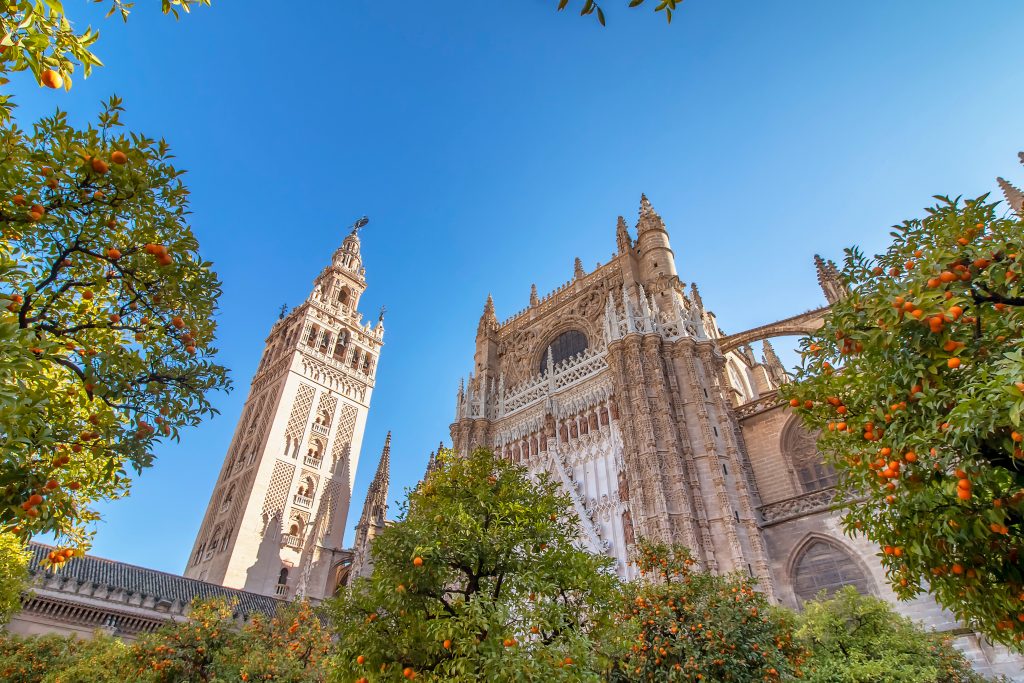
Seville Cathedral is the largest Gothic cathedral in the world and one of the most awe-inspiring religious monuments anywhere. Built on the remains of a former mosque after Spanish troops captured Seville in 1248, it was completed in the 16th century. It stands as proof of the grandeur of Spanish Christianity, and its size even surpasses that of the Hagia Sophia in Istanbul, which for a long time topped the rankings as the largest Christian church in the world.
The interior is breathtaking, with its soaring vaults, magnificent stained glass and an altar lavishly decorated with gold. One of the highlights is the tomb of Christopher Columbus, which draws visitors from all over the world. You’ll also find numerous chapels dedicated to various saints.
The iconic Giralda tower, originally the mosque’s minaret, was converted into a bell tower and preserved as a symbol of Seville’s cultural heritage. Today it offers magnificent views of the city, and you reach the top via a series of sloping ramps instead of stairs, which makes the climb much easier.
- Entrance fee: Around 17 euros (includes the tower).
- Top tip: Book your tickets online to skip the long queues at the ticket office. You can buy tickets HERE.
The Royal Alcázar (Real Alcázar de Sevilla)
The Royal Alcázar is one of the most impressive and iconic sights in Seville. Built by the Moors in the 10th century, the palace was a seat of power and grandeur, and today it serves as the official residence of the Spanish royal family when they visit the city. The Alcázar dazzles with its extraordinary blend of architectural styles, including Moorish, Gothic, Renaissance and Baroque.
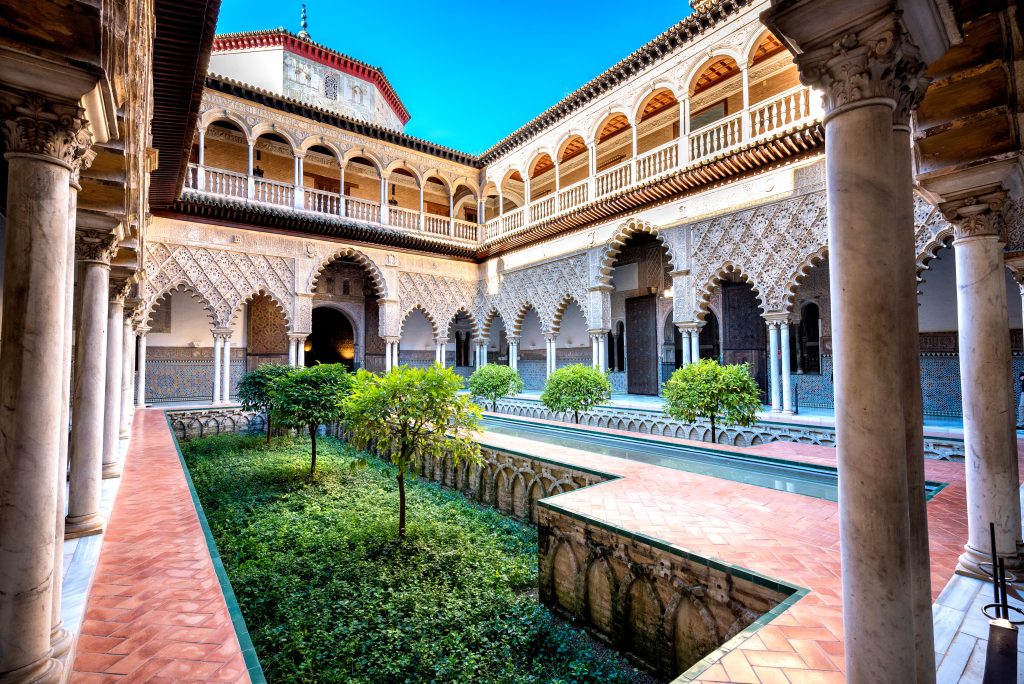
The palace interior is a real treasure for lovers of art and history. The rooms are decorated with exquisite mosaics, intricate woodcarving and gold detailing. One of the most famous parts is the Hall of the Ambassadors, with its astonishing cedarwood dome. The palace is a UNESCO World Heritage Site and a popular filming location for films and TV series, including ‘Game of Thrones’.
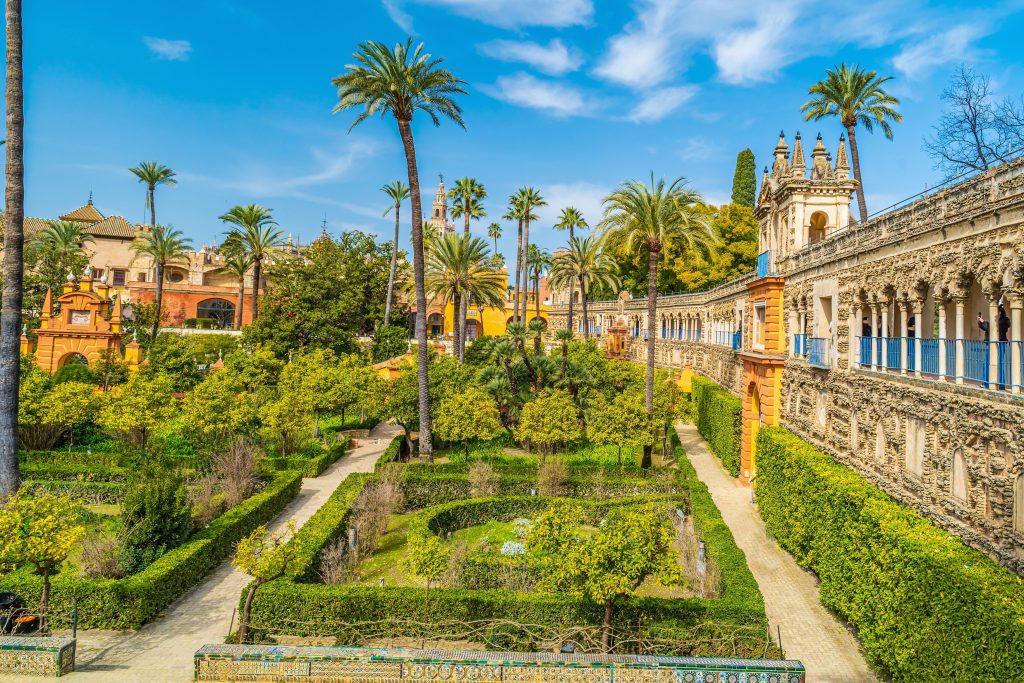
Just as impressive are the Alcázar gardens, which sprawl over a huge area and are full of fountains, exotic plants and quiet paths. It’s a place where you can wander and feel the calm and beauty of nature in the heart of the city.
- Entrance fee: Around 20 euros, depending on whether you take a guided tour.
- Top tip: Buy your tickets at least a month in advance, especially in peak season, so you don’t risk missing out. You can buy your tickets HERE.
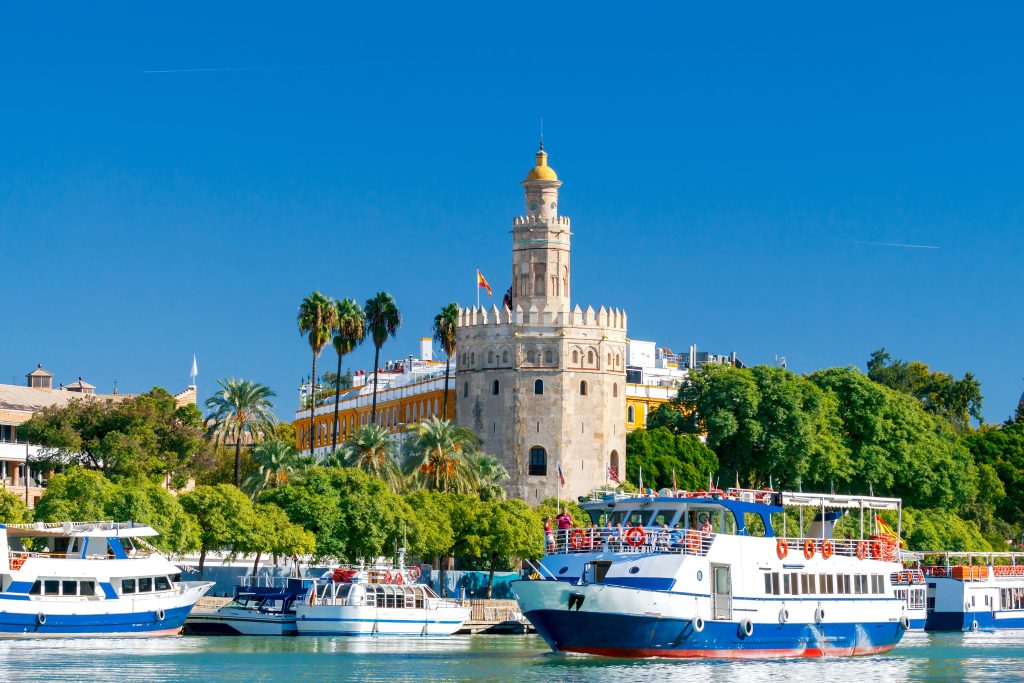
The Golden Tower (Torre del Oro)
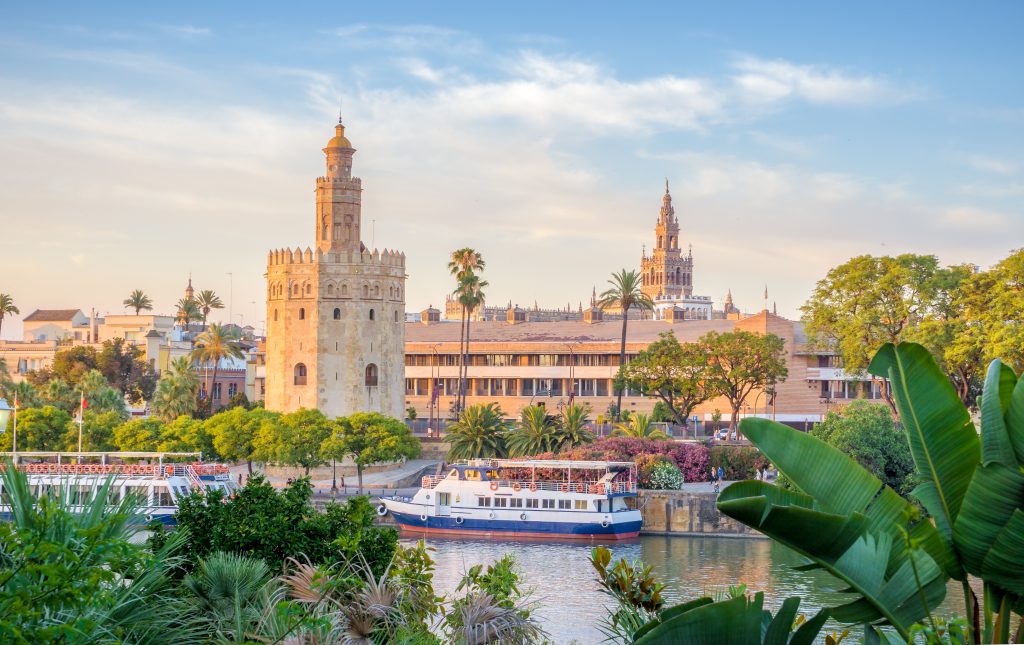
The Golden Tower is a historic landmark on the banks of the Guadalquivir, built in the 13th century as part of the city’s defences. It takes its name from the golden glint of the tiles that once covered its façade, and over the years it has served as a treasure store and a harbour tower. Today it houses the Naval Museum, where you can explore exhibitions on Spain’s maritime history.
Climb to the top for a panoramic view of the river and its surroundings. The Golden Tower is especially striking at sunset, when its golden tones are reflected in the river and create a magical atmosphere.
- Entrance fee: Around 3 euros (free on Mondays).
- Top tip: Visit in the late afternoon for the best light for photos and a calmer atmosphere.
The Santa Cruz quarter (Barrio de Santa Cruz)
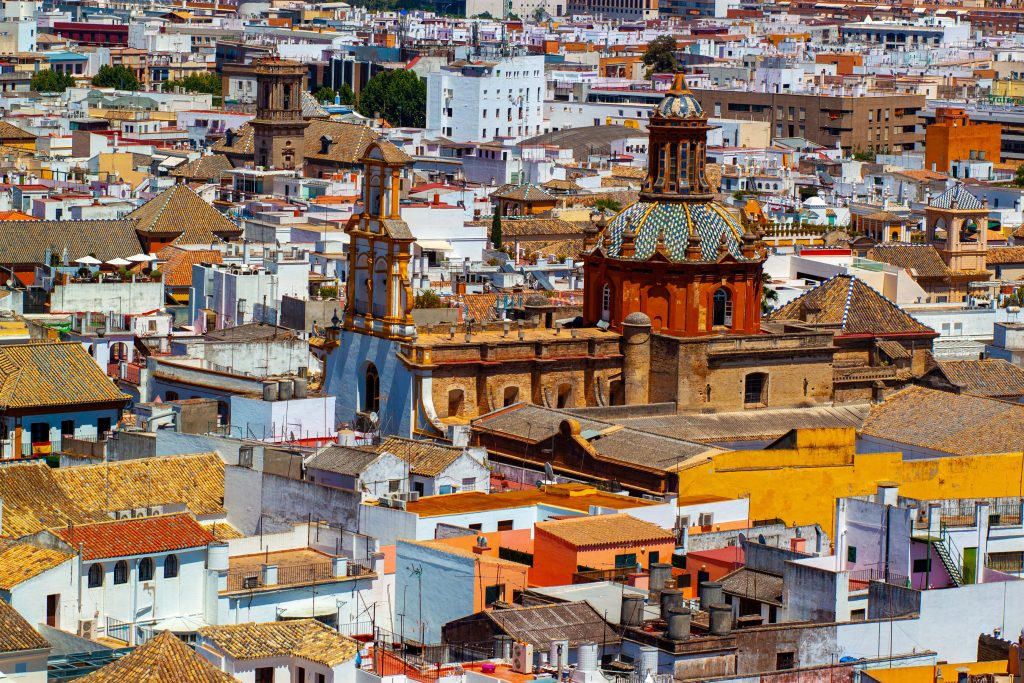
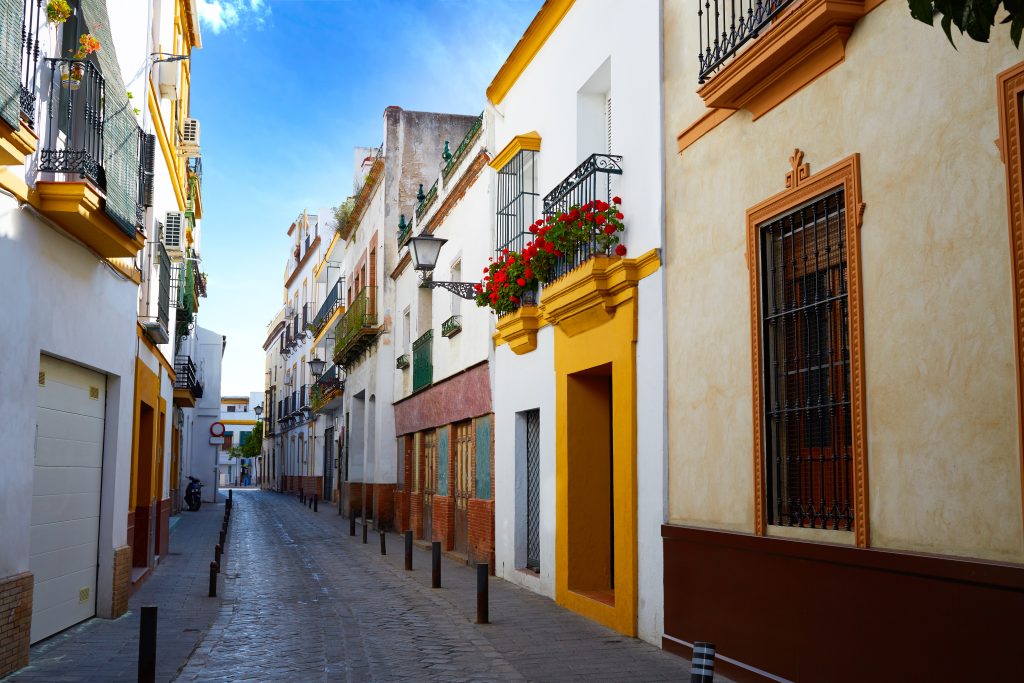
Santa Cruz is Seville’s old Jewish quarter and one of the most charming parts of the city. With its narrow lanes, whitewashed houses and beautiful inner courtyards, the neighbourhood oozes romance and calm. Here you’ll find little squares such as Plaza de los Venerables, perfect for a break or a coffee outdoors.
Besides its unique atmosphere, Santa Cruz has plenty of restaurants and tapas bars where you can try the local cooking. The area is home to some of the city’s most famous sights, including Seville Cathedral and the Alcázar, which makes it a handy base for sightseeing.
- Top tip: Take a stroll in the early evening, when the lanes come alive with music and local life.
Pilate’s House (Casa de Pilatos)
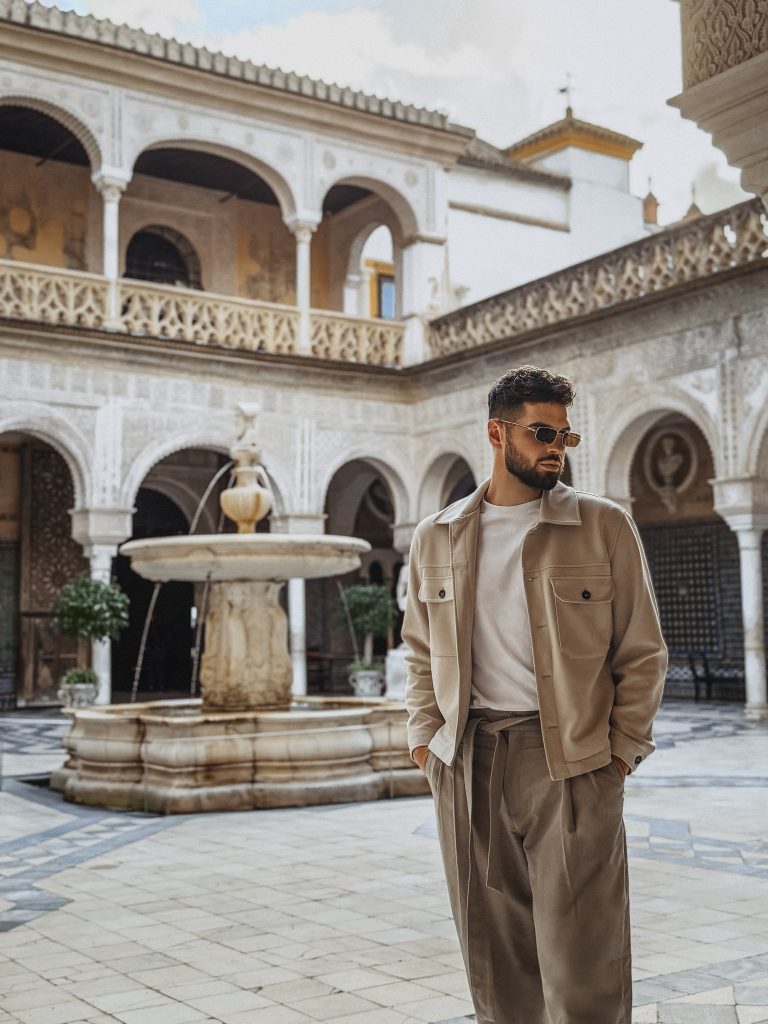
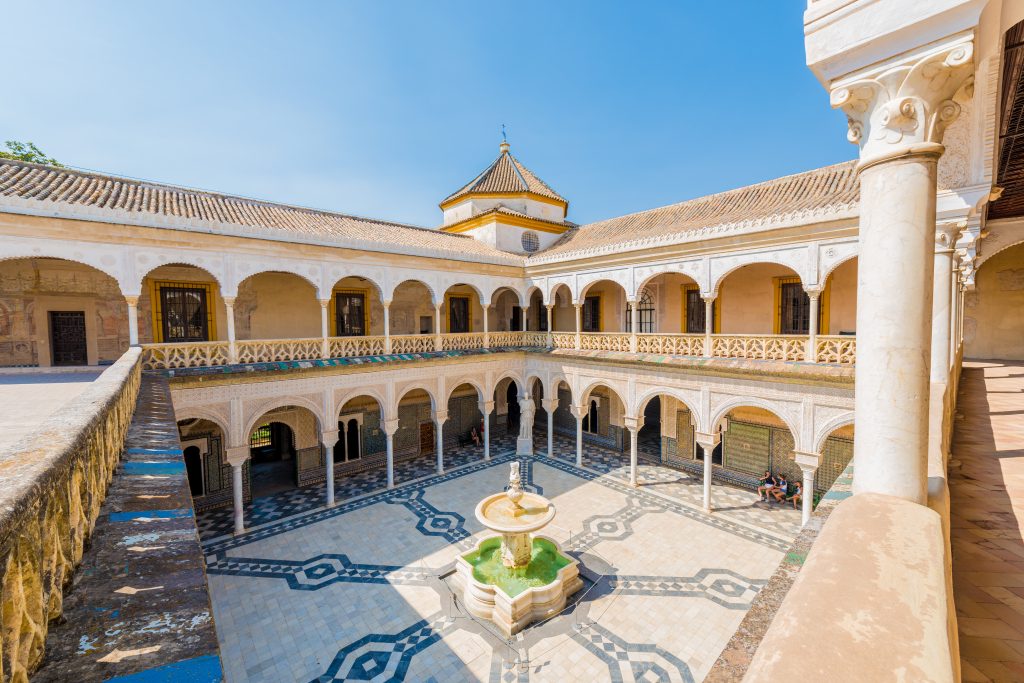
Pilate’s House is one of Seville’s finest architectural achievements, blending Gothic, Renaissance and Moorish elements. Built in the 15th century, this magnificent palace was the residence of the Enríquez de Ribera family and got its name from its supposed resemblance to the house of Pontius Pilate in Jerusalem. The rich decoration of its walls and vaults, with exquisite mosaics and intricately carved ornaments, bears witness to the many cultures that have left their mark on Andalusia.
Wandering through the palace’s inner courtyards, you can enjoy the peace of beautiful gardens with fountains, ancient statues and fragrant citrus trees. Every detail in Pilate’s House tells a story – from the Roman sculptures to the inspiring religious motifs. It’s a unique mix of Andalusian tradition and European elegance.
- Entrance fee: 10 euros. Make sure you buy your tickets in advance – you can do so HERE.
- Top tip: Pick up an audio guide to learn more about the history and architecture of the place.
Plaza de España (Plaza de España)
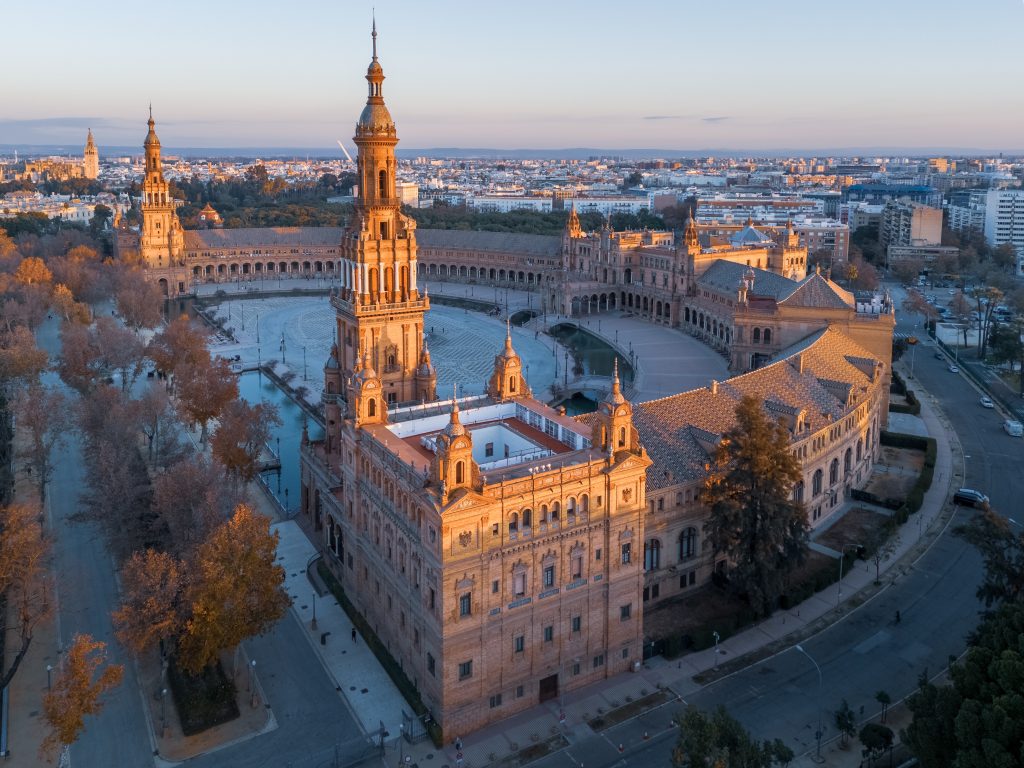
Plaza de España is one of the most iconic places in Seville. Built in 1928 for the Ibero-American Exposition, this semicircular complex blends several architectural styles, including Renaissance and Moorish. The square is ringed by a canal you can explore in a little rowing boat, and its centre is graced by a majestic fountain.
One of the main draws of Plaza de España is its ceramic-tiled panels representing the different provinces of Spain. It’s popular with tourists and locals alike, who often gather here for a stroll and photos.
- Top tip: Visit the square early in the morning or late in the afternoon to avoid the crowds and enjoy a calmer atmosphere.
María Luisa Park (Parque de María Luisa)
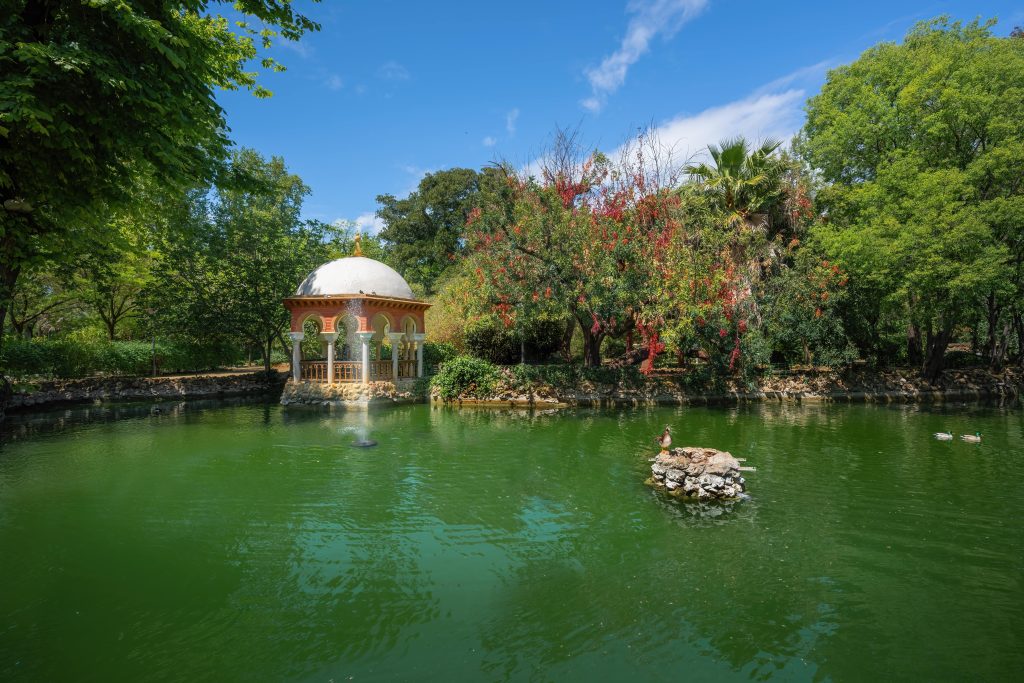
María Luisa Park sits next to Plaza de España and is the largest public park in Seville. Donated to the city by Infanta María Luisa in the 19th century, it’s an oasis of greenery and calm. Its paths are dotted with exotic trees, fountains and statues, creating the perfect setting for a walk in nature without leaving the city. What struck me was that, despite its huge size, the park was incredibly well kept and clean.
Among the park’s main attractions are the Fountain of the Lions and the Lotus Pond. You’ll often see musicians and artists here, adding life to this peaceful spot.
- Entrance fee: None.
- Top tip: Hire a bike or a rickshaw to see the park more quickly and comfortably.
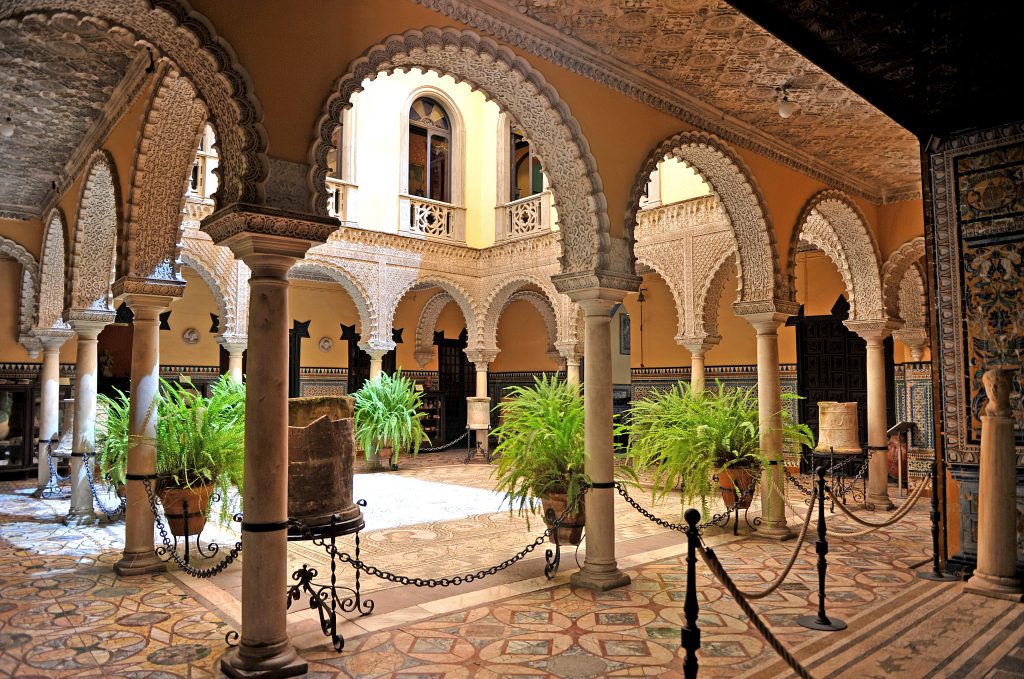
The Lebrija Palace (Palacio de Lebrija)
The Lebrija Palace is a real gem in the heart of Seville, famous for its collection of ancient Roman mosaics and its unique interior. Built in the 16th century, this elegant palace was home to the Countess of Lebrija, who collected artefacts from many different eras. Every corner of the palace tells a story – from the Roman columns to the beautiful carved ceilings.
Visitors can explore both the ground floor, richly decorated with mosaics and antiquities, and the upper floor, where the living quarters have been preserved in their original state. The palace garden is a peaceful spot and the perfect place to unwind after your tour.
- Entrance fee: Around 12 euros. Buy your tickets in advance.
- Top tip: Take a guided tour to learn more about the history of the collection of antiquities.
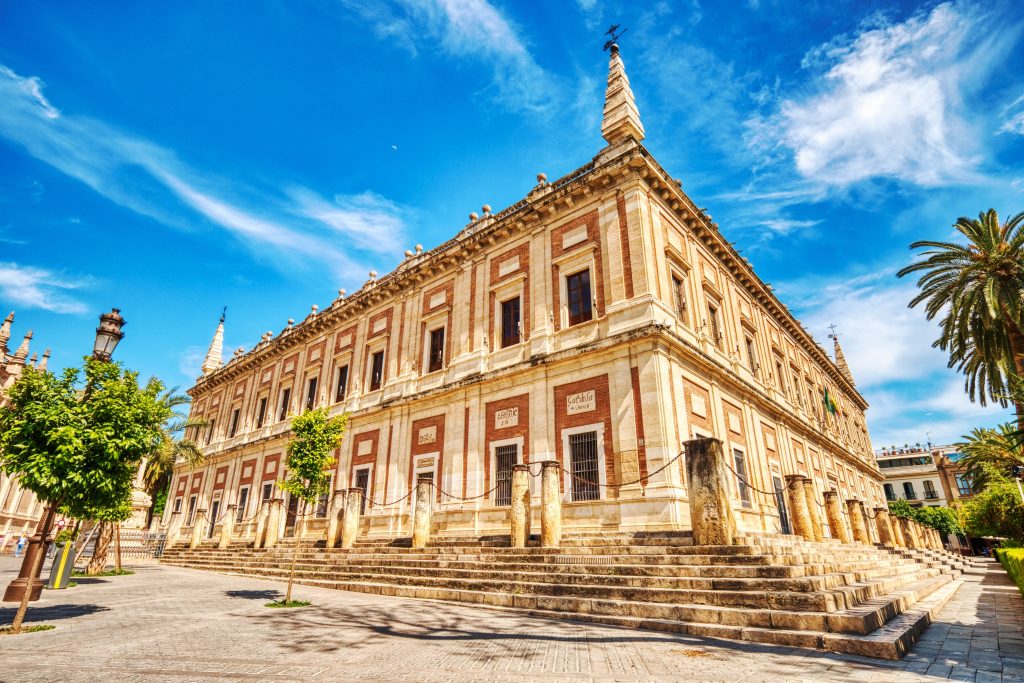
The General Archive of the Indies (Archivo de Indias)
The General Archive of the Indies is a UNESCO World Heritage Site and a place of huge importance for the study of Spanish colonial history. The 16th-century building originally served as a merchants’ exchange, but was later converted into an archive holding documents from Spain’s colonies in the Americas and the Philippines.
Visitors can browse various exhibitions of maps, manuscripts and other documents telling the story of the voyages of Christopher Columbus and other explorers. The building’s interior impresses with its elegant architecture and grand halls.
- Entrance fee: Free.
- Top tip: Check out the temporary exhibitions, which often feature unique exhibits.
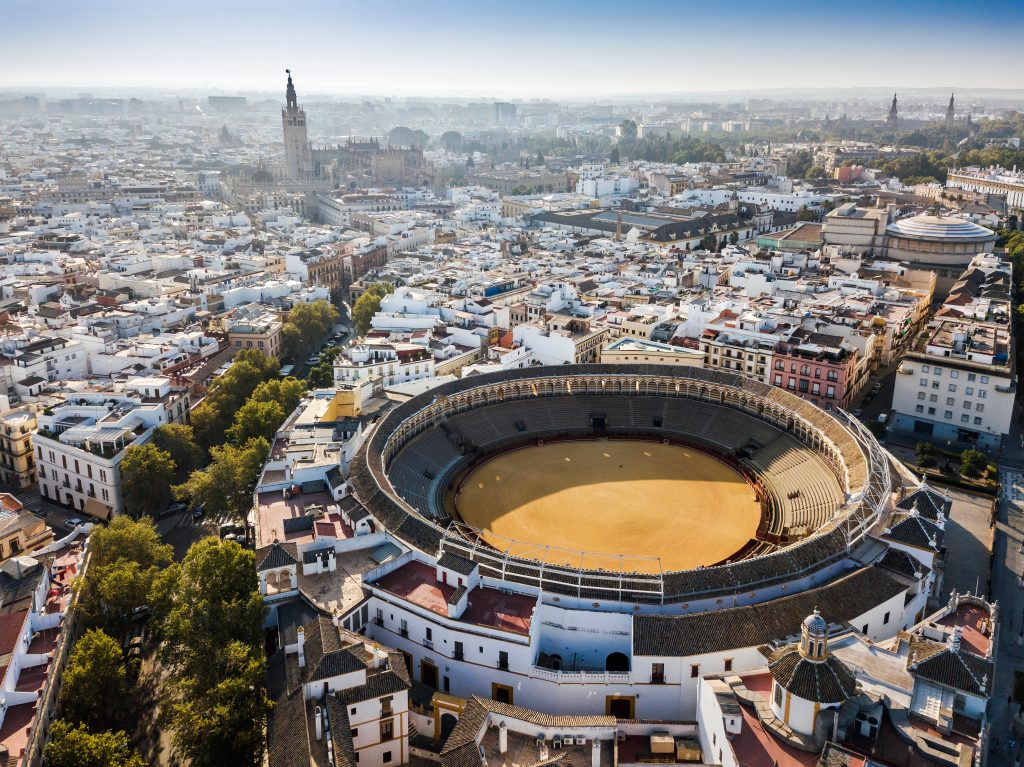
The Bullring (Plaza de Toros de la Real Maestranza)
Seville’s bullring is one of the oldest and most prestigious in Spain. Built in the 18th century, it’s an architectural masterpiece and a symbol of the Spanish bullfighting tradition. The arena impresses with its oval shape, Baroque details and room for more than 12,000 spectators.
The museum inside the complex gives visitors an insight into the history of bullfighting through a collection of costumes, posters and paintings. During the season you can attend a performance, which is a genuine cultural event.
- Entrance fee: Around 8 euros.
- Top tip: Even if bullfighting isn’t your thing, the museum alone is reason enough to visit.
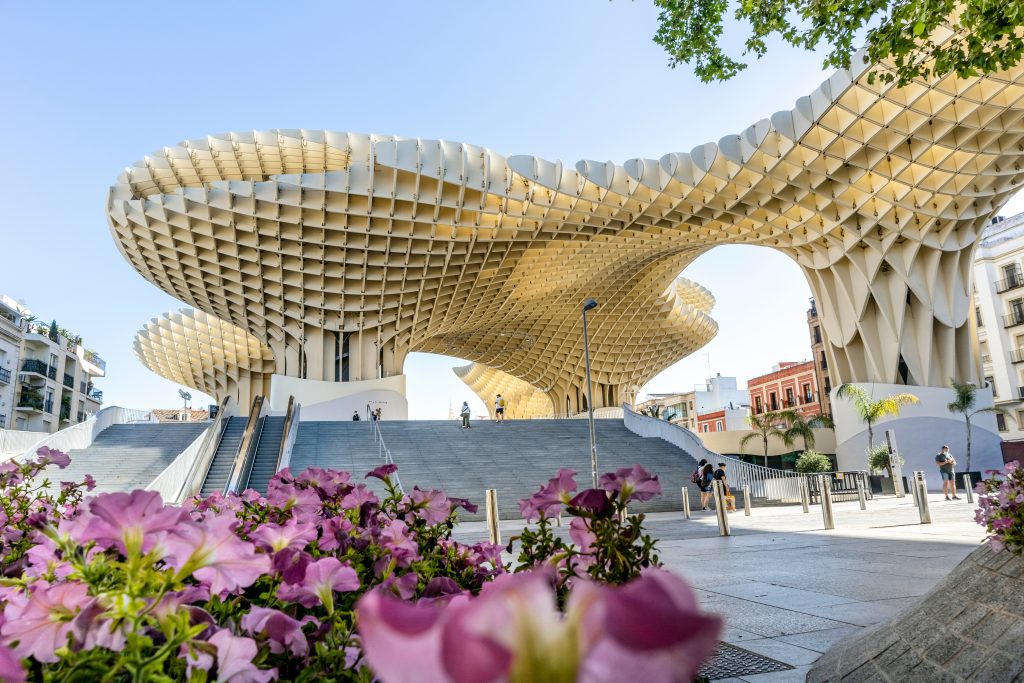
The Mushrooms (Metropol Parasol / Las Setas)
Seville’s ‘Mushrooms’, officially known as the Metropol Parasol, are among the boldest and most striking modern structures in the city. Built in 2011 by the German architect Jürgen Mayer, they stand on Plaza de la Encarnación and form the largest wooden structure in the world. The futuristic shape resembles giant mushrooms, making it an unforgettable sight that contrasts with the surrounding cityscape.
At the top of the structure there’s a viewing platform with breathtaking views over Seville. The lower levels of the Metropol Parasol house an archaeological museum, where you can see remains from the Roman and Moorish eras, as well as a lively market with local produce and restaurants.
- Entrance fee: Around 5 euros (for access to the viewing platform).
- Top tip: Go at sunset for a magical panorama.
The Triana quarter (Barrio de Triana)
Triana is famous for its authentic atmosphere and rich cultural heritage. On the west bank of the Guadalquivir, this district is the cradle of flamenco and traditional Andalusian ceramics. Wander its narrow lanes, lined with colourful façades and cosy cafés, or drop into one of the local pottery workshops.
The main sights include the Church of Santa Ana, Triana Market and the Isabel II Bridge, which links the neighbourhood with the centre of Seville. In the evening the area comes alive with music and dancing, making it the perfect place for authentic experiences.
- Top tip: Treat yourself to dinner overlooking the river to soak up Triana’s romantic atmosphere.
A cruise on the Guadalquivir River
The Guadalquivir has played a key role in Seville’s history, serving as the city’s main trade route for centuries. A river cruise is a wonderful way to see the city from a different angle. Along the way you’ll pass iconic landmarks such as the Golden Tower, the Isabel II Bridge and the modern Torre Sevilla.
Many cruises offer audio guides with interesting facts about the city’s history and monuments. The trip usually lasts about an hour.
- Entrance fee: Around 15 euros. You can buy tickets HERE.
- Top tip: Book an early-evening cruise to enjoy the gorgeous sunset views.
A flamenco show
Flamenco is the heart of Andalusian culture, and there’s no better place to enjoy it than Seville. The city is full of tablaos – venues that host flamenco performances. These shows feature passionate dancing, soulful singing and virtuoso guitar playing.
The best-known tablaos in Seville are Los Gallos and El Arenal, both offering an authentic atmosphere and top-quality performances. Whether or not you’re a music lover, this experience will leave you speechless.
- Entrance fee: Around 25–40 euros (depending on the venue). I highly recommend this show – you can buy tickets directly from the link.
- Top tip: Book your tickets in advance, especially in the tourist season.

Italica (Italica)
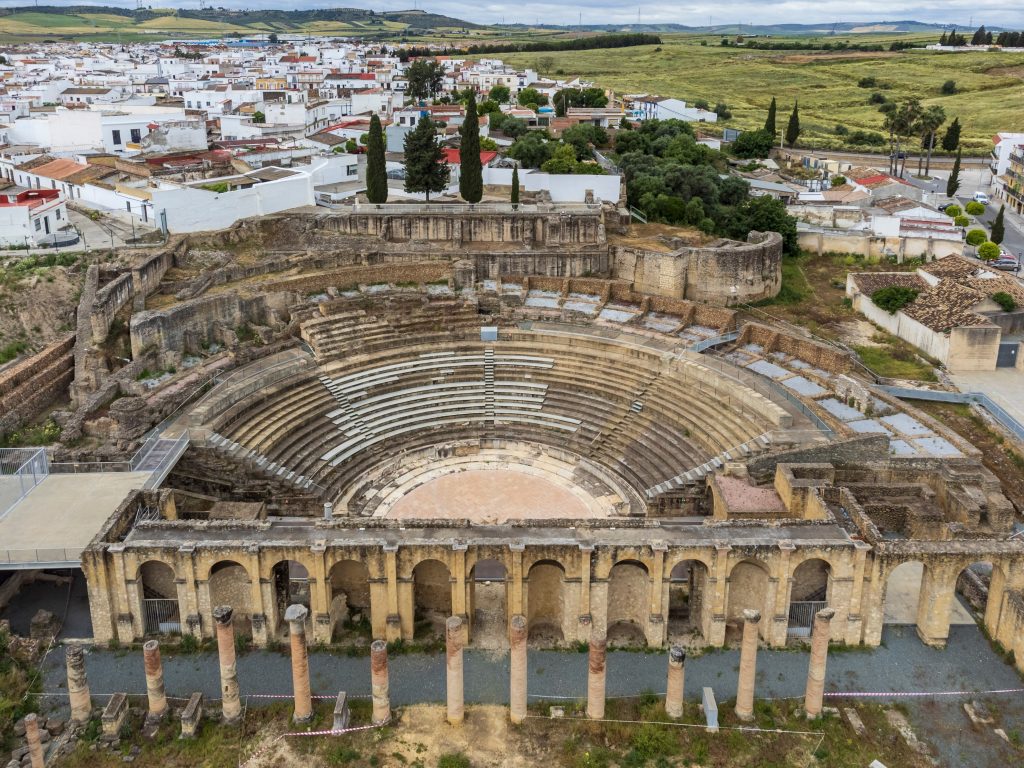
Italica is an ancient Roman city about 9 km from Seville. Founded in 206 BC, the archaeological site is famous as the birthplace of the emperors Trajan and Hadrian. Its star attraction is the amphitheatre, one of the largest in the Roman Empire, which was used as a filming location for ‘Game of Thrones’.
Besides the amphitheatre, you can explore the remains of Roman baths, temples and some impressive mosaics. Italica is a wonderful place for lovers of history and archaeology.
- Entrance fee: Around 2 euros (free for EU citizens).
- Top tip: Visit in the morning or late afternoon to avoid the heat.

Author
Vilislav Alkantara