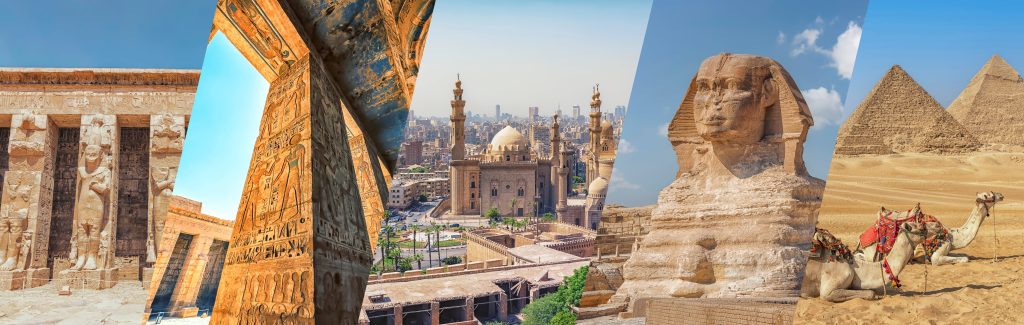


The moment I sat down at my laptop, ready to start writing my story about Luxor, a heavy wave of nostalgia came over me. Believe me, it’s entirely understandable. It’s no coincidence that the city is called “the world’s largest open-air museum”. Here, in one place, you’ll find some of the most impressive and historically important monuments, palaces, temples and artefacts of ancient Egypt. A city exceptionally rich in sights and exciting attractions.
The heir to the ancient Egyptian capital of Waset – Luxor – lies in the heart of modern-day Egypt, roughly 650 km from Cairo and 200 km from Hurghada. The ancient Egyptians called it Waset, and the Greeks – Thebes. The modern name “Luxor” was given to the city by the Arabs. It comes from “al-Uqsur” (الأقصر), which means “the palaces” (that’s right – in the plural). For more than 2,000 years the city was the capital of Ancient Egypt. This was also when their civilisation was at its height; according to scholars, the city’s population numbered over 80,000, making it the largest city in the world at the time. After the capital moved to Memphis, the city declined, and the later arrival of the Arabs hastened this, right up until Napoleon’s Egyptian expedition in the 19th century. After his return from these lands, a strong interest in ancient Egypt arose in Europe, particularly in Luxor, and curious European travellers began coming here even back then.
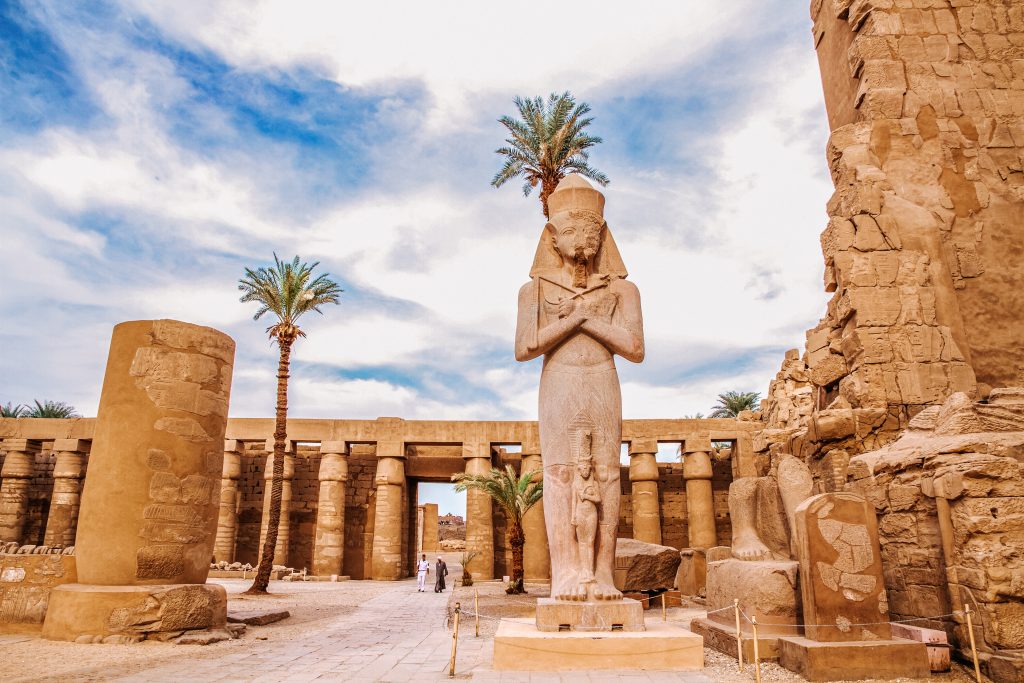
Thanks to its many sights, the city has long established itself as an iconic tourist destination. Today’s city is built around and on top of the remains of ancient Waset, and it stretches along both banks of the Nile. The river divides it into two parts – the East Bank and the West Bank, just as it was in antiquity, with the huge difference that in the past the ancient Egyptians lived only on the East Bank, which is why the remains of their once-dazzling palaces and beautiful temples were discovered there. The West Bank, meanwhile, was home to “the City of the Dead”, since the sun sets in the west and they symbolically linked it with the end of a person’s earthly journey. This explains why the West Bank holds the incredible tombs of the Egyptian rulers in the Valley of the Kings and the Valley of the Queens, as well as numerous memorial temples dedicated to various pharaohs and deities. Today, locals live on both sides of the Nile, but most of the city lies on the East Bank. The quickest and easiest way to get between the two banks of the Nile is by felucca – a traditional engineless wooden boat, steered by hand.
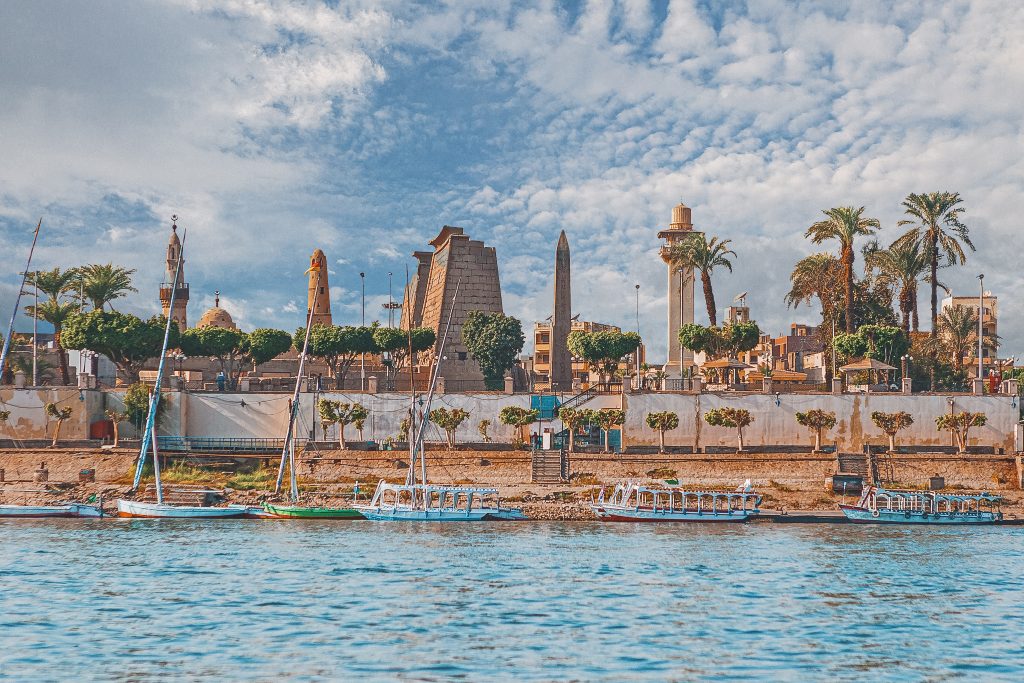
Luxor certainly has plenty to show its visitors, and one day wouldn’t be enough to see everything. I recommend between 2 and 3 full days, depending on what you want to do and see. In this article I’ve gathered the ten most interesting sights in the ancient Egyptian capital of Luxor, so that you can choose for yourselves and put together your own itinerary.
How do you get there?
If you’ve decided to organise your trip yourself, unfortunately there are still no regular direct flights from Bulgaria to Egypt, apart from charters. Although Luxor has an international airport, most tourists prefer to fly to the capital, Cairo, because there are more flights there and they’re more convenient, as it has the largest international airport in the country. From Cairo you have quite a few options for getting to Luxor. Some tourists prefer to travel by bus, others by the night train, but for me the most logical and convenient way is by plane. A ticket for the domestic Cairo–Luxor flight costs around 50 USD and the flight takes an hour, which automatically makes it the fastest and most convenient way to travel.
If you’re in Hurghada or one of the other resorts on the Red Sea coast, I strongly recommend doing it by intercity bus. It’s more comfortable, safer, and you don’t have to think about anything other than which sight to explore first. Another option is a taxi, but bear in mind that there are night-time restrictions: taxi drivers are only allowed to carry foreigners during the day, not at night, for the tourists’ safety. You could also sign up for an organised excursion to Luxor – I recommend THIS option departing from Hurghada, with a guide, transport and tickets for Karnak and the temples in the Valley of the Kings included.
When should you visit Luxor?
The best time to visit Egypt, and Luxor in particular, is between October and April, when the weather is milder and the temperatures will be in your favour. Bear in mind that this is also the busiest tourist season in the country, so prices may be a little higher, but then Egyptians love to haggle, so don’t be shy about trying to bring the prices down. The months between June and September should definitely be crossed off your plans, because the heat then is murderous, especially in the interior of the country.
What to see in Luxor?
Karnak
There’s no way I could start the list of sights in Luxor with anything other than Karnak – the reason I wanted to visit Egypt so badly. Everyone comes to the country to fulfil a different dream. Some come to see the pyramids and the Sphinx, others to see the mummies in the Egyptian Museum, others still to dive among the coral reefs of the Red Sea, while I wanted to get up close to the culture and past of the ancient Egyptians, right here in the religious complex at Karnak.
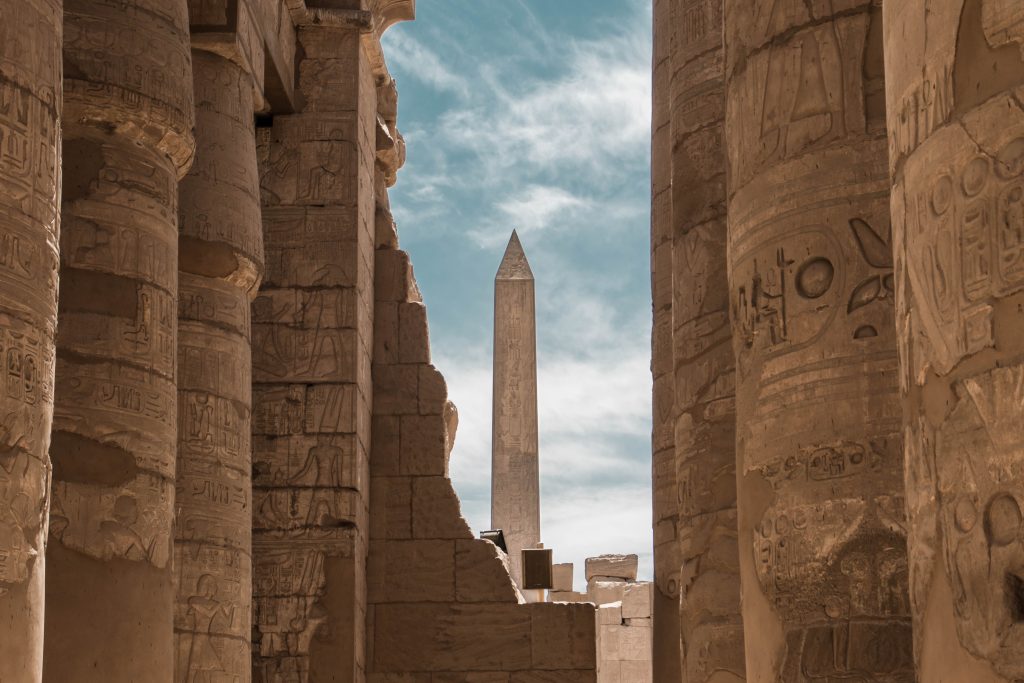
Although Luxor has 24 temples dedicated to various deities, the most attention goes to the Temple of Amun-Ra, which is located right here at Karnak. This is the place to mention that Karnak is the largest surviving architectural monument of the ancient world and the second-largest religious complex after Angkor Wat in Cambodia. The complex is truly unique in its scale. It includes buildings erected by several pharaohs over the centuries and looks more like a city than a sanctuary. In antiquity this was the holiest place for the Egyptians – a city of temples. Today more than 80% of the complex is off-limits to tourists for their own safety, but believe me, 20% is more than enough to get an idea of Karnak’s former splendour and grandeur.
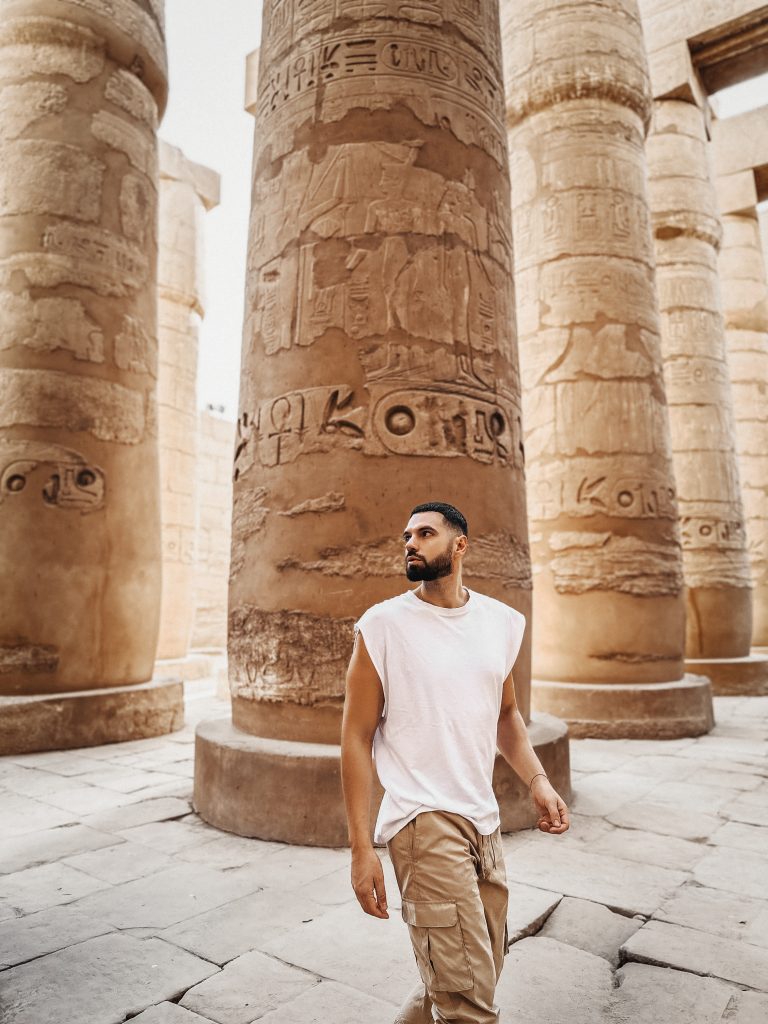
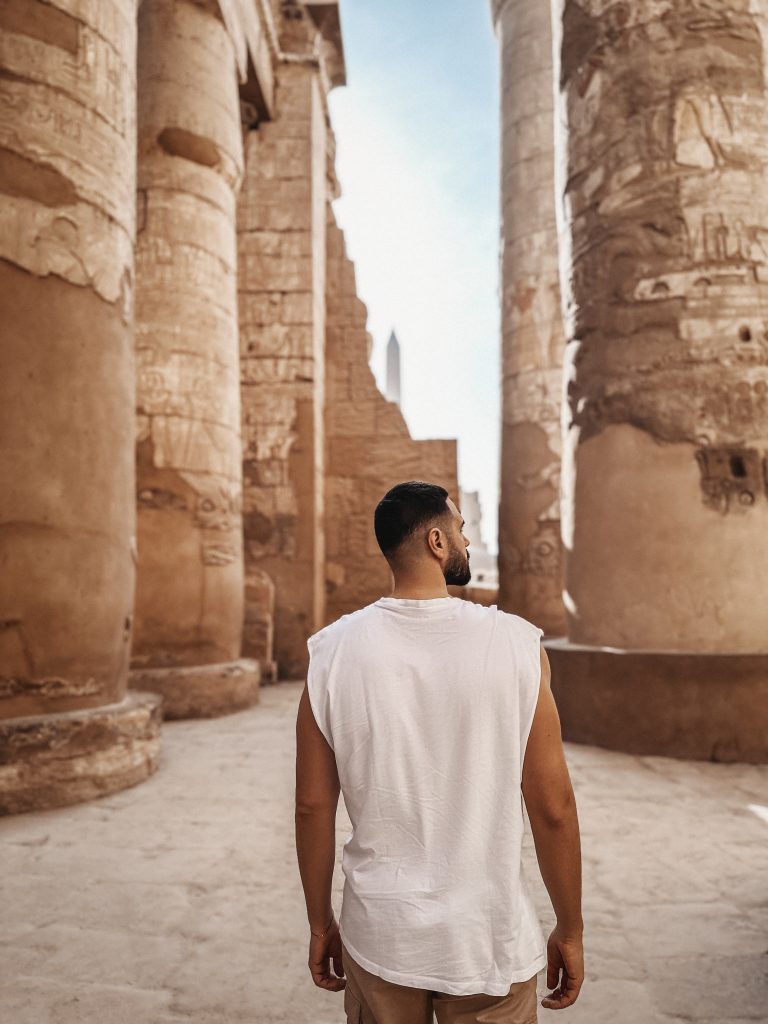
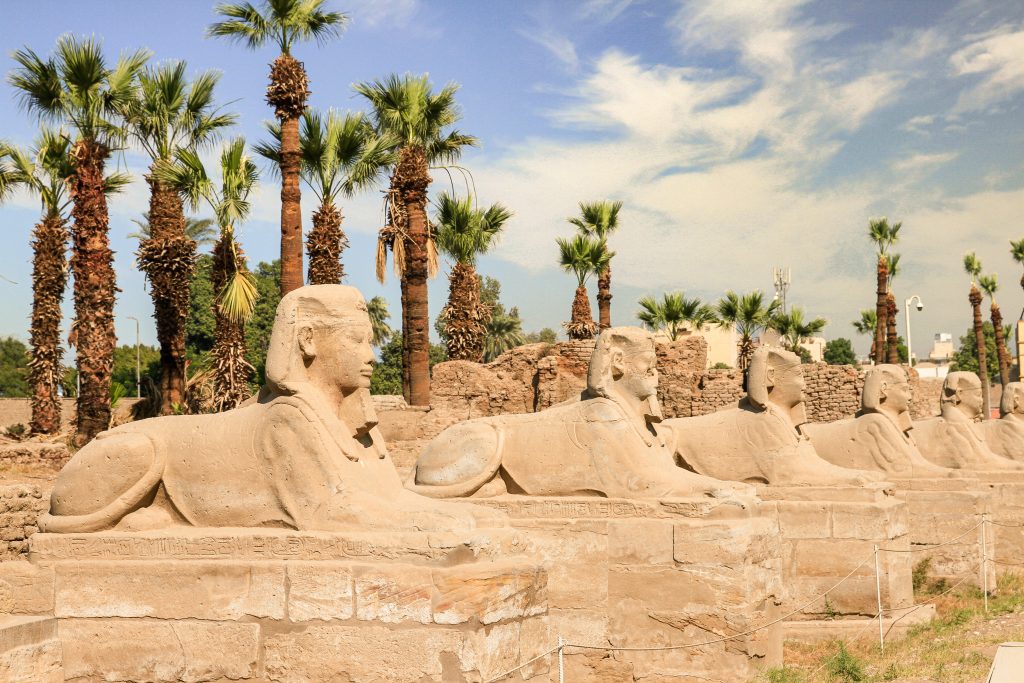
At the entrance to the temple there is a long avenue of ram-headed sphinxes (Sphinx avenue), which once stretched all the way to Luxor Temple, which I’ll tell you about in a moment. Beyond the gate stand two huge statues of Ramesses II. Ordinary people were only allowed as far as the first gate; beyond it, the rituals and ceremonies were reserved for high-ranking priests and pharaohs. Today, of course, anyone can stroll through the former ceremonial halls and admire the incredible ancient hieroglyphs. My advice is to visit Karnak early in the morning to avoid the crowds and enjoy it in peace. The complex opens at 6 am, so do your best to be among the first, just as we did.
Luxor Temple
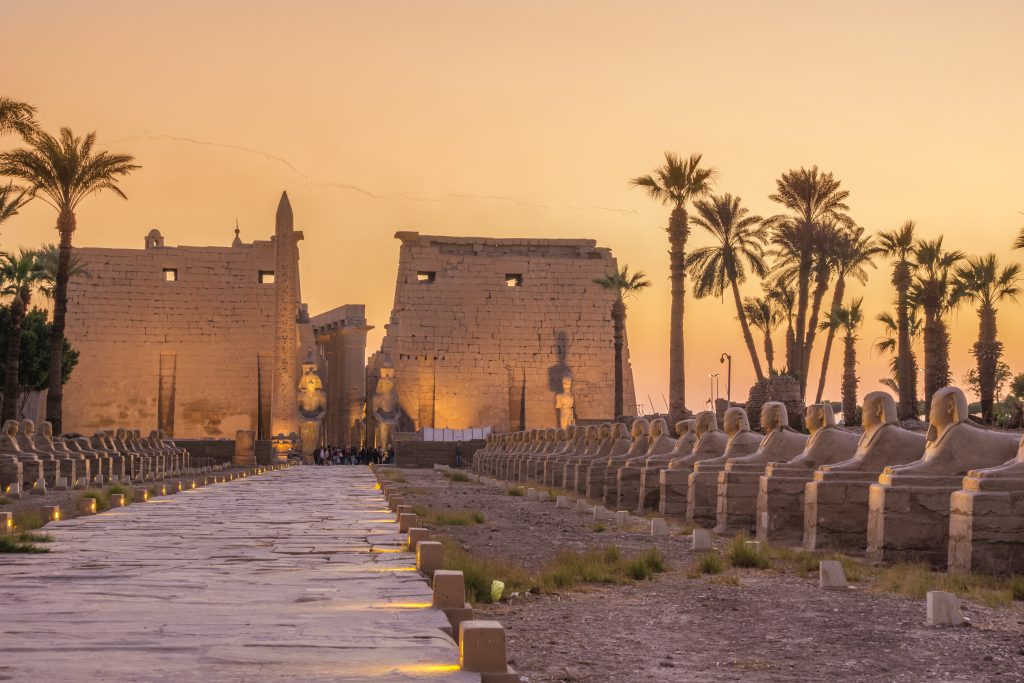
Literally in the heart of modern Luxor stands the other iconic temple complex on the east bank of the Nile. Although Luxor Temple looks like a smaller version of Karnak, it was no less significant. This temple isn’t dedicated to a particular god or pharaoh, because it served an entirely different function. This was the very place where the pharaohs of ancient Egypt were crowned. The greatest credit for building it goes to the pharaohs Amenhotep III and Ramesses II. Right at its entrance you’ll be greeted by two huge statues of Ramesses II. There were once two obelisks there as well, of which only one has survived to this day. The other was long ago taken to Paris and today adorns the Place de la Concorde. It’s impressive that every pharaoh added something new to the complex without changing the overall architecture, including the sanctuary of Alexander the Great, built when he conquered Egypt and annexed its lands to his great empire. A rather interesting fact is that Luxor Temple was only discovered in the 18th century. Until then the majestic complex lay buried under tonnes of sand, with a village built on top of it. So that the world could enjoy this wonder today, both the village and the sand were removed, and archaeological excavations continue to this day. The temple is open from 6 am to 10 pm, and I recommend visiting in the late afternoon so you can enjoy the beautiful sunset over the Nile from here.
The Valley of the Kings
On the west bank of the Nile lay “the City of the Dead”. The ancients called it that because the sun sets in the west and they symbolically linked it with the end of a person’s earthly journey. That’s why the tombs of the ancient Egyptians and their pharaohs, as well as all the mortuary temples, are on the west bank of the Nile, including those at Giza. The inhabitants of the ancient Egyptian capital Waset chose the mountain heights to build the tombs of their pharaohs, their families and their courtiers, and buried them here for nearly 5 centuries. This is how the Valley of the Kings and the Valley of the Queens came into being.
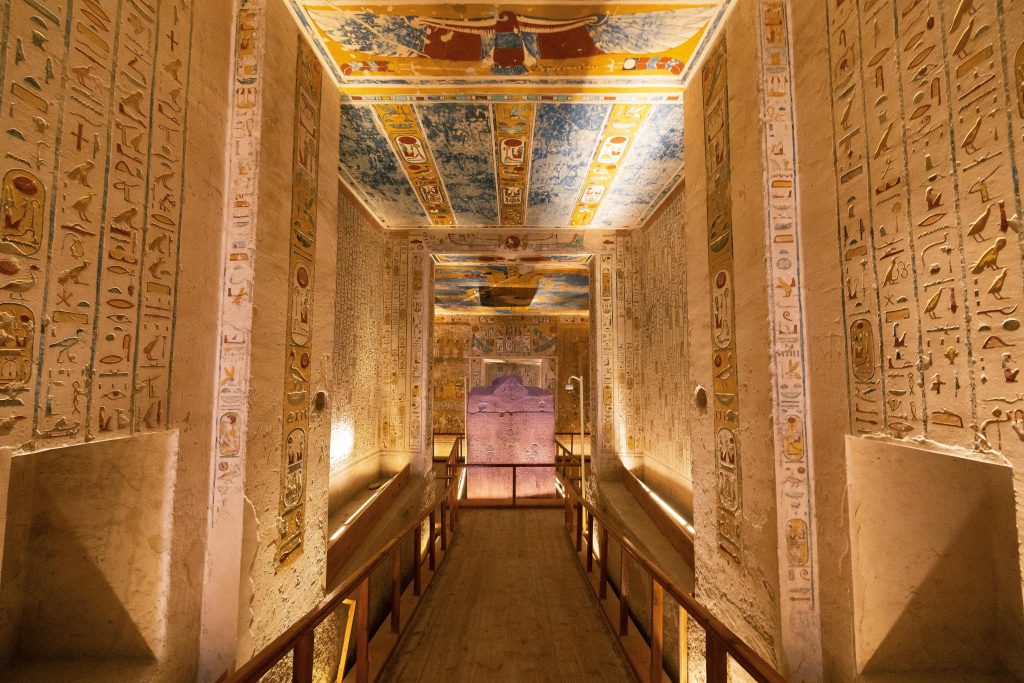
26 pharaonic tombs have been uncovered in the Valley of the Kings, some more modest, others quite dazzling and remarkable. From this we can also judge the importance of the pharaohs buried in them. The ancient Egyptians believed that life on earth was far too short, while the afterlife was eternal. So they had to use this brief moment here to build their tombs. Sadly, many of the tombs were looted back in antiquity. The most famous tomb, and one preserved intact, is that of Tutankhamun. When Howard Carter and his team discovered it in 1922, they were simply struck dumb by the sight. Before them lay a mountain of gold and dozens of ancient objects, including Tutankhamun’s pharaonic throne. You need to buy a separate ticket for it, but you’ll get the chance to see his mummy, as well as the sarcophagus in which his body was laid. Many of the artefacts found in the tombs can be seen in the Luxor Museum.
The Mortuary Temple of Hatshepsut
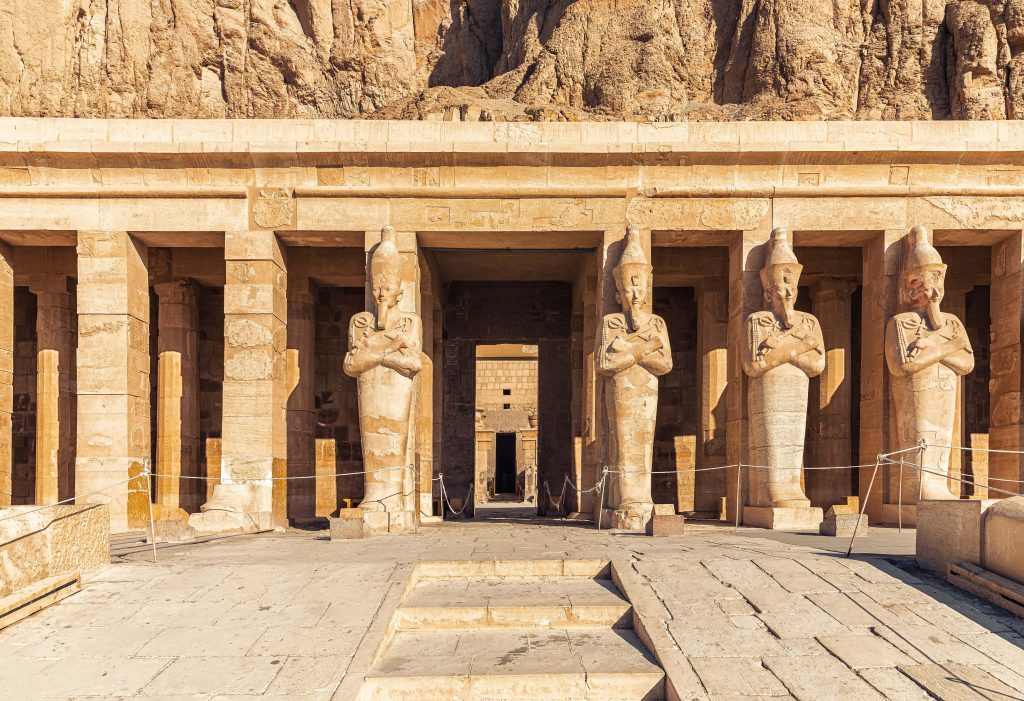
Ancient Egyptian temples fall into two types – cult temples, where homage was paid to a deity or pharaoh, and mortuary or funerary temples, where the body of the pharaoh in question was laid to rest and honoured. One of the most remarkable funerary temples, not just in Luxor but in all of Egypt, is that of Queen Hatshepsut – the second recognised female pharaoh in history. She ruled for a full 21 years, which was quite a long period for those times. She dressed in men’s clothing and is known for her building works and her peaceful reign. Her mortuary temple, built by herself, has no equal anywhere in present-day Egypt. It was built on the left bank of the Nile, cut into a rocky massif, close to the Valley of the Kings. For its time it was a truly ambitious project, and it’s no coincidence that the locals call it Djeser-Djeseru, or “holiest of the holy”.
Queen Hatshepsut herself is no less impressive than her funerary temple. She was married to her half-brother Thutmose II, who inherited the throne from his father Thutmose I. After her husband’s death, Hatshepsut deprived her stepson Thutmose III of his right to the throne and ruled for 21 years. When Hatshepsut died, Thutmose III finally managed to ascend the throne and began to take his revenge. He destroyed many of the buildings she had built, but since the temple was a sacred place, he preserved it, erasing all her images from its walls. To tell the truth, the interiors of the Karnak and Luxor temples impressed me more, but the architecture of Hatshepsut’s temple itself is truly remarkable for its time, and it’s no coincidence that it’s one of the biggest sights on the west bank in Luxor.
The Memorial Complex of Ramesses III – Medinet Habu
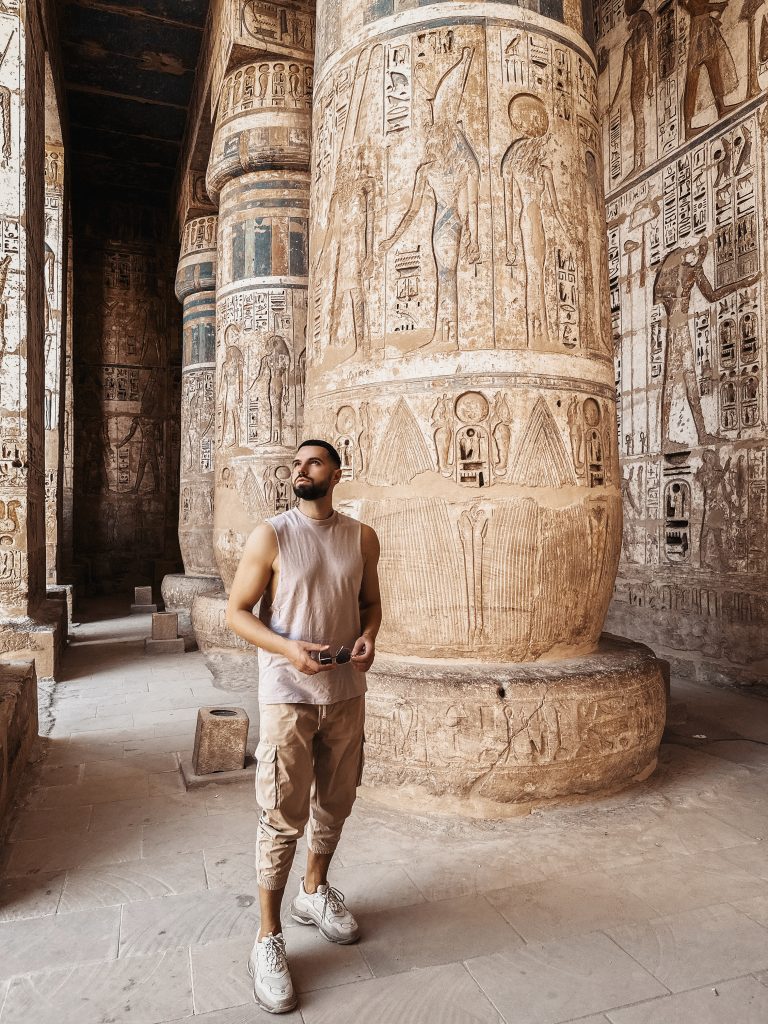
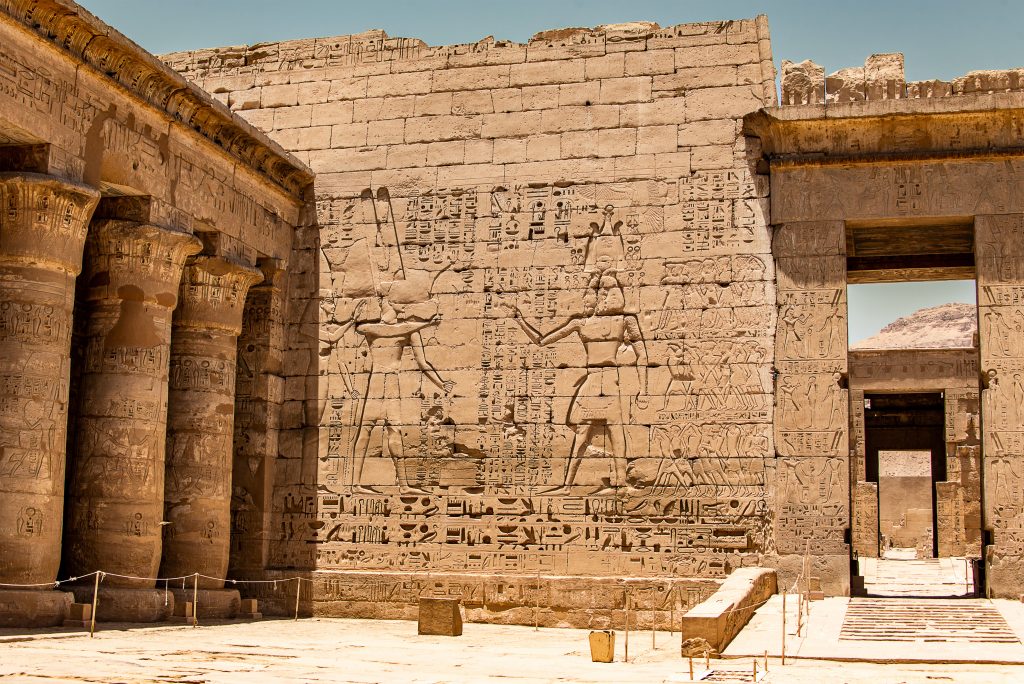
We continue our tour of the west bank of the Nile in Luxor and head to another masterpiece of ancient Egyptian civilisation – the memorial complex of Ramesses III, or as it’s better known, Medinet Habu. The ancient Egyptians called the mortuary temple of Ramesses III hat ganmat ha, meaning a temple united with eternity. It’s one of the most important historical monuments in Egypt, and unique in its architecture, thanks to its well-preserved hieroglyphs and the painted decorations on the surfaces of its columns and walls. At its peak, Medinet Habu must surely have resembled a city, enclosed by walls and temples, complete with small chapels and sleeping quarters for the priests. The pharaoh’s palace was also here, together with his throne room and private chambers. Today most of the buildings have been restored and renovated, so that we can get a better visual idea of the grandeur of the Egyptian kingdom of old. The entrance fee is 100 Egyptian pounds.
The Valley of the Queens
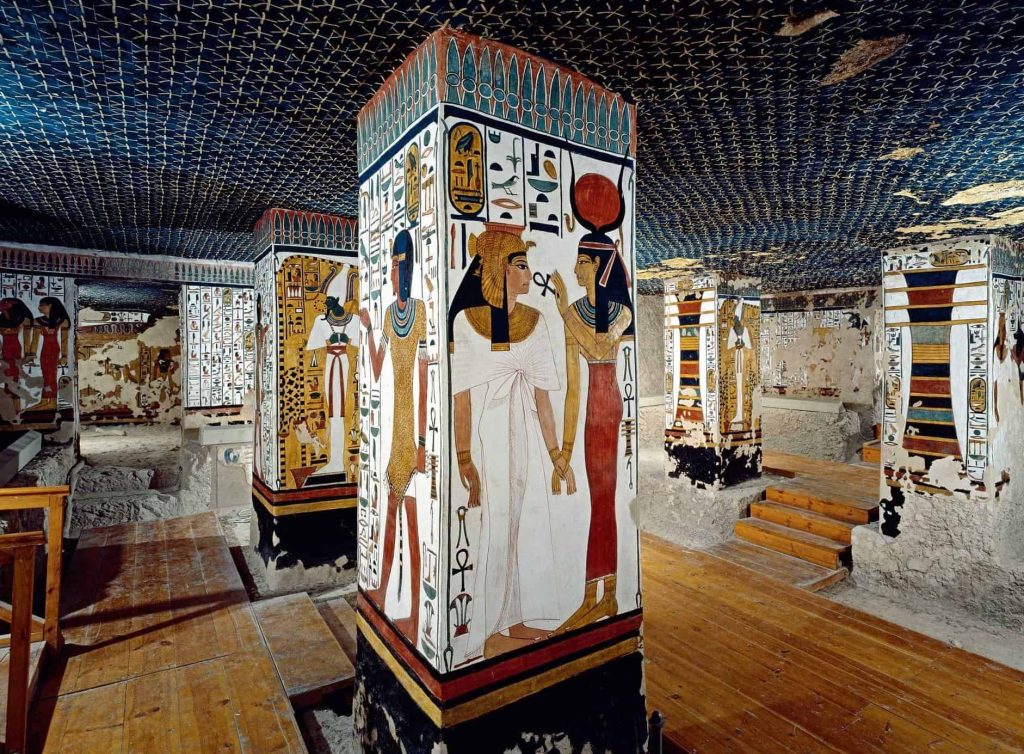
The Valley of the Queens and of the pharaohs’ children is certainly not as impressive as the Valley of the Kings. Although 70 rock-cut tombs have been discovered here, they are smaller, lower and not as lavish as those of the pharaohs – with one exception. The tomb of Queen Nefertari, wife of Ramesses II, is perhaps one of the most impressive and beautiful tombs you can visit in Egypt. So impressive, in fact, that you’ll need a separate additional ticket for it, costing 1,400 Egyptian pounds. When we were buying our tickets at the ticket office, I thought it must be some kind of typo, but it wasn’t. We paid nearly 50 dollars to see it, but hand on heart I can say it was completely worth it. The wall paintings were exquisite, so well preserved that it seemed incredible to me that they had survived so well, down to the smallest detail, and for more than 3 millennia at that. The colours were so vivid, more vivid than many we saw in the other pharaonic tombs.
The Colossi of Memnon
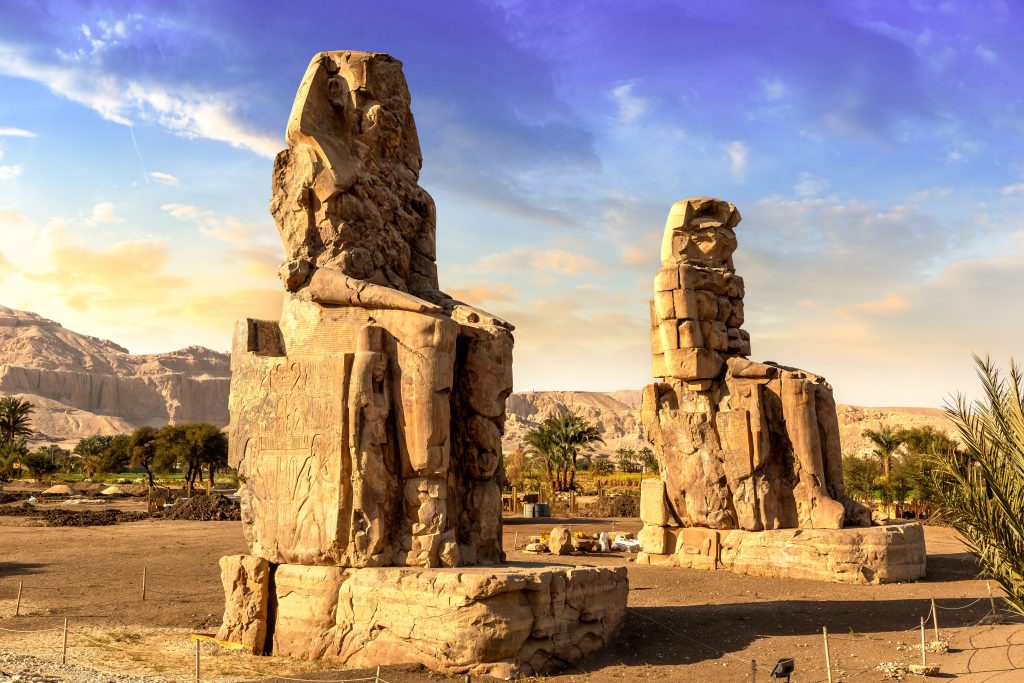
Before finishing our walk along the west bank of the Nile, we make a stop to see the majestic Colossi of Memnon. Sadly, these two statues are the only surviving remains of the once majestically towering mortuary temple of Amenhotep III. The 18-metre-high twin statues depict a seated Amenhotep III with his hands resting on his knees and his gaze directed east, towards the Nile and the rising sun. Their purpose was to guard the entrance to the pharaoh’s mortuary temple. Each colossus weighs 1,300 tonnes. At the feet of the colossi stand the figures of the queen mother Mutemwiya and Queen Tiye. On both sides of the seated figures is the patron god of the Nile – Hapi. The bas-reliefs showing papyrus and lotus – the symbols of Upper and Lower Egypt – express the unity of Egypt. It’s impressive how the ancient Egyptians, who lived several millennia before us, put symbolism into absolutely everything they built and created, as if they knew they would leave behind such a majestic history, one that would take people’s breath away for generations.
The Luxor Museum
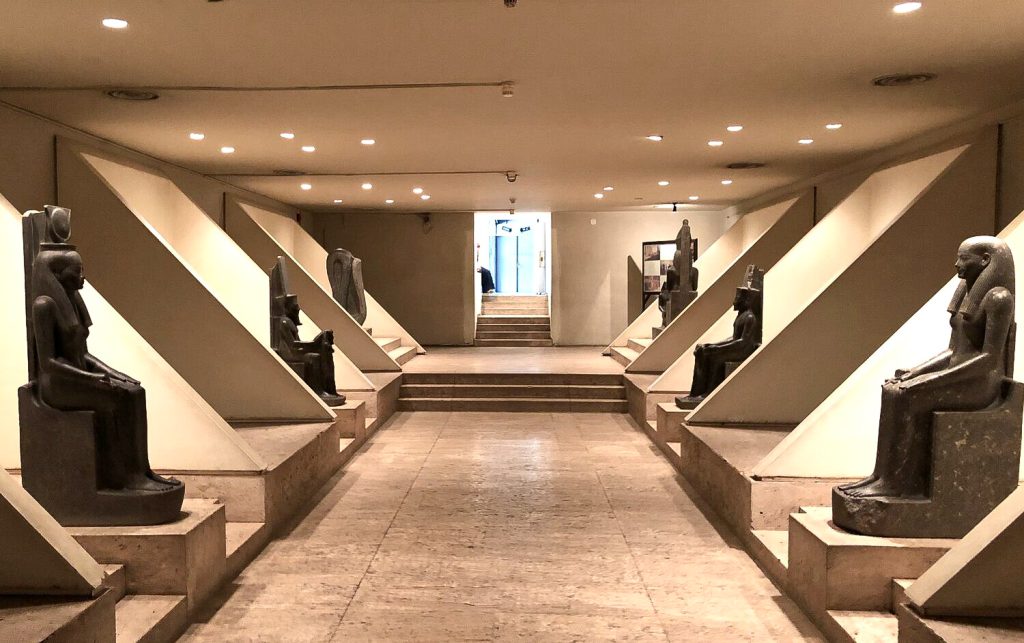
Among the most important and valuable sights for locals and tourists alike is undoubtedly the Luxor Museum, which brings together in one place the richest collection of artefacts related to funerary ceremonies and rites, as well as statues found near the city itself. When it comes to antiquities, the museum can easily rival the Egyptian Museum in Cairo. Here you’ll have the chance to see mummies on display, some very interesting statues and even reliefs from some of the temples in the city and the surrounding area. This way you can examine them up close and see even the smallest details on them. The pride of the statue collection is the 2.5-metre-tall statue of Amenhotep III, the builder of Luxor Temple. The museum also displays many of the objects found when Tutankhamun’s tomb was opened. The museum is open from 9 am to 4 pm, after which it closes for 1 hour and reopens from 5 pm to 10 pm, and the entrance fee is 140 Egyptian pounds.
The Mummification Museum
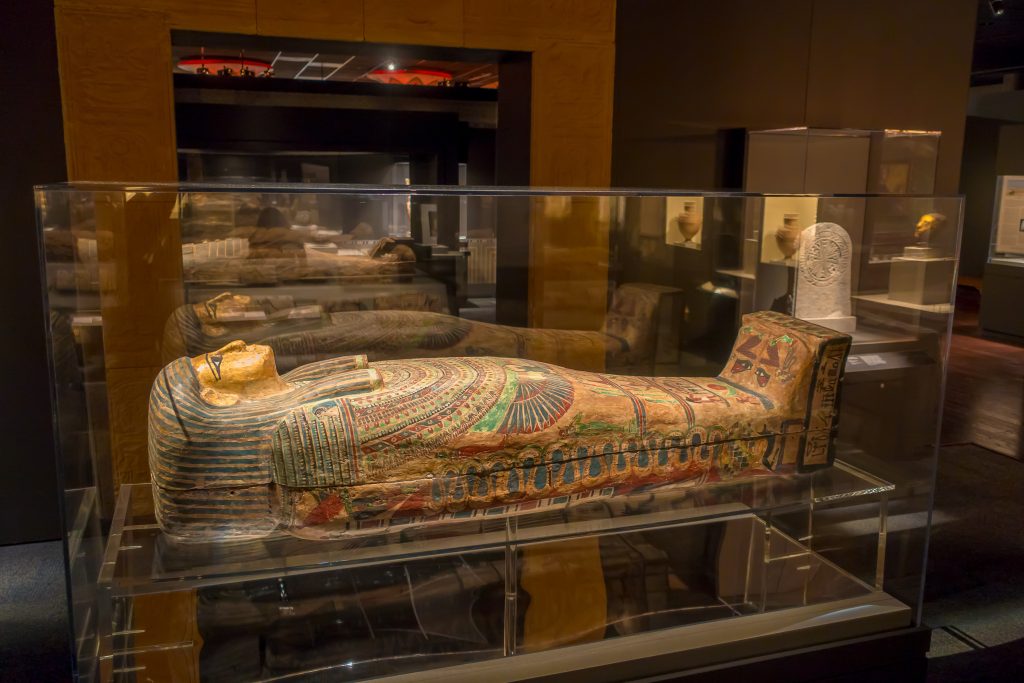
The Mummification Museum is located not far from the Luxor Museum and Luxor Temple, on the east bank of the city. This is where you’ll have the chance to get close to the mysteries of mummification. You’ll learn more about how the ancient Egyptians perfected the practice of preserving the dead, as well as what the whole burial process and its rituals involved. Of course, you’ll also be able to see quite a few mummified bodies found in “the City of the Dead”, not only of pharaohs but also of animals, including cats, birds and even crocodiles. I’d say this place is one of a kind, and especially impressive for anyone interested in this ancient civilisation. The museum is open every day from 9 am to 1 pm, then again from 5 pm to 8 pm, and the entrance fee here is 100 Egyptian pounds.
A hot-air balloon flight over the Valley of the Kings
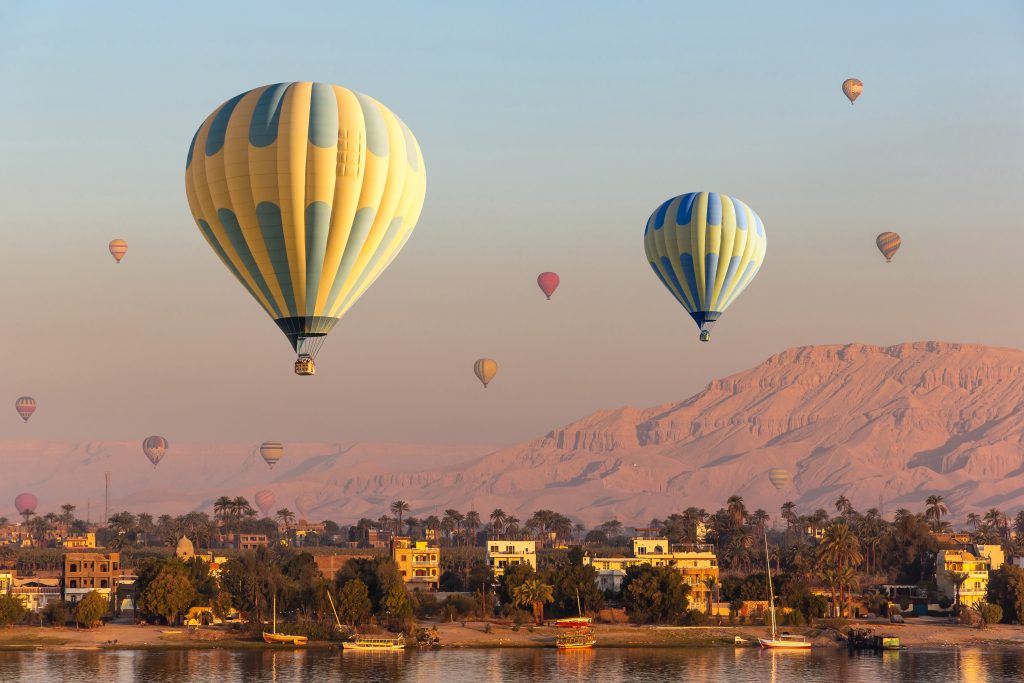
I’m rounding off my article on the sights and attractions of “the world’s largest open-air museum” – Luxor – with a truly impressive experience that I’d advise you to include in your plans. A sunrise hot-air balloon flight over the Valley of the Kings is one of the most unforgettable experiences you can treat yourself to in Luxor. Of course, this is an attraction that depends largely on the weather, but the chance to take in the whole west bank of the city is not to be missed. Even more tempting are the prices – between 30 and 40 US dollars, which is considerably cheaper than similar balloon flights in Cappadocia, where prices exceed 200 euros. The only slightly unpleasant thing is the early start. The organisers usually pick up those who have signed up between 3 and 4:30 in the morning, depending on the season and when the sun rises, but after such a punchy start to your day, the adrenaline is bound to do you good.

Author
Vilislav Alkantara