
Marrakech is not a city, it is a pulse. It does not greet you — it swallows you up. From the very first step along its colourful streets you feel that special thrill that is only born in places where time flows to its own rhythm. The hubbub of the markets, the scent of spices, the warmth of the desert wind creeping between the streets — everything here intertwines into one living, breathing whole. And as you look around, you realise that Marrakech has not the slightest intention of being just another destination for you. It wants to be a whole experience.
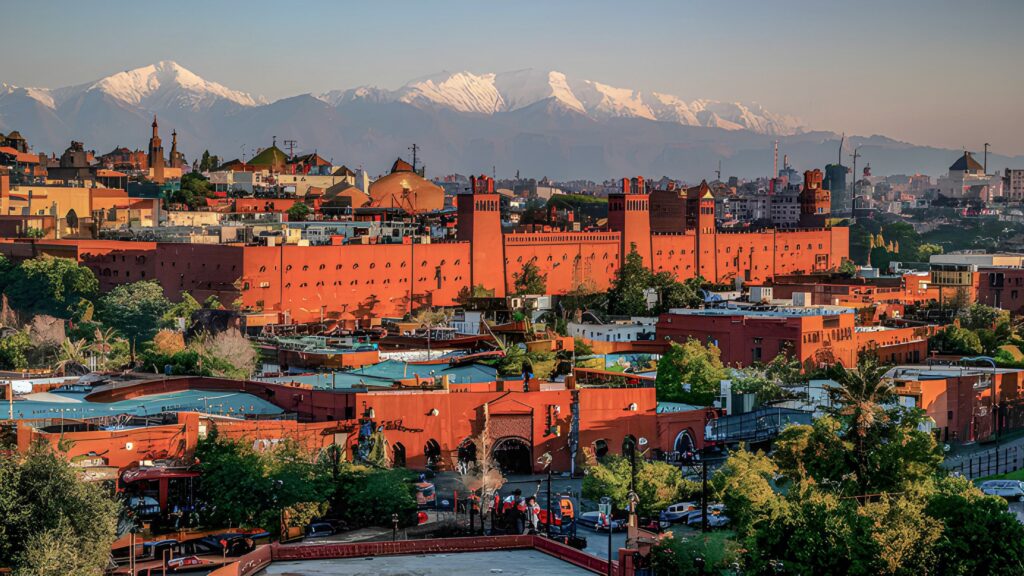
In the medina everything is movement, chaos, life. By day the sun paints golden glints on the terracotta walls, and in the evening the squares turn into a theatre stage where fires, music and stories create a universe of their own. When you get lost in the souks (and that is inevitable), you discover how many different worlds a single place can hold. Leatherworkers, goldsmiths, weavers, tea sellers, street musicians… each of them adds a thread to the colourful fabric of the city.
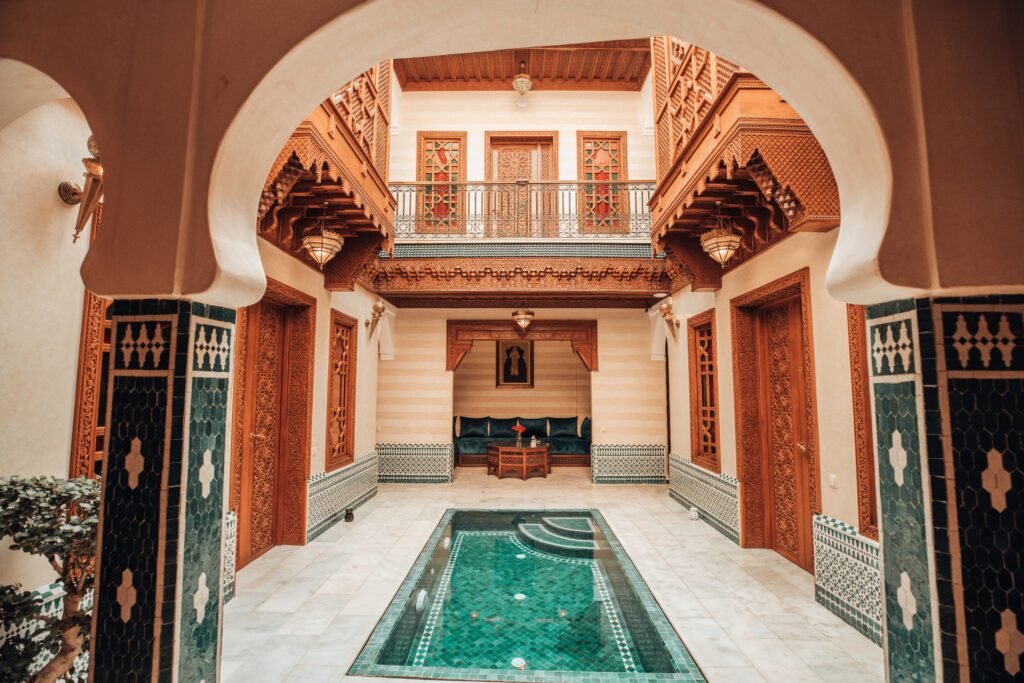
And then comes the oasis. Behind a massive carved wooden door, hidden somewhere in all this beautiful chaos, you suddenly find yourself in a fairy-tale riad where everything is silence, shade and the scent of jasmine. The whole magic of Marrakech lives in this contrast — a city that can both exhaust you and revive you, shake you up and calm you down. Here there is no way to remain indifferent. Here you change, because the city makes you look more closely, feel more deeply and trust the path that reveals itself to you.
In this article I have gathered the top 20 most interesting sights in Marrakech and its surroundings, as well as some tips that will make your stay there even more exciting and interesting.
How to get there?
Marrakech is becoming more and more accessible to Bulgarian travellers. Thanks to direct flights from Sofia, the city is only about 4 hours and 20 minutes away – enough time to watch a film, have a coffee and prepare yourself for a completely different world. Until the end of March Wizz Air operates the direct Sofia–Marrakech route, and from April to the end of October Ryanair adds two more direct flights a week, which makes it easier to plan a weekend or a longer holiday.
After landing at Marrakech Menara airport, getting around is extremely convenient. The safest and most hassle-free option is the official airport taxi – you pay in advance at the desk at the airport exit, get a ticket and board a taxi with a fixed fare depending on the district where you are staying. The trip to the Medina costs about 13–14 euros and is the most practical choice, especially if you are in Marrakech for the first time or arrive late in the evening. Another option is a transfer from the airport to your hotel, which you can book HERE.
When to visit Marrakech?
The best time to visit Marrakech is from October to April, when temperatures are considerably milder and allow you to explore the city and the nearby areas to the full. During these months the days are pleasant, the evenings cool, and the atmosphere in the medina is lively without being too crowded. November, February and March are particularly good for travelling, when the climate is at its most balanced and the tourist flow is more moderate.
In the summer months Marrakech can be a real challenge, as temperatures often reach 40–45°C. This makes daytime walks difficult and trips to the desert possible only early in the morning or after sunset. If you do plan a summer trip, it is a good idea to allow more time for resting in the riads or to head for places with a pool and plenty of shade.
Where to stay?
Choosing where to stay in Marrakech depends mostly on what you want to experience. Many travellers prefer to stay in the Medina – the old city, home to the most authentic riads, the markets and traditional architecture. If you are visiting Morocco for the first time, a stay in a riad is almost a must, because it is precisely these traditional houses with inner courtyards, terraces and a distinctive atmosphere that create that inimitable Moroccan charm you can rarely feel in a standard hotel.
For travellers who prefer a more modern urban setting, the Gueliz and Hivernage districts offer a wide choice of hotels, evening options and quieter streets. And if you are looking for a premium experience, tranquillity and absolute comfort, Amanjena is among the best options in the whole of Morocco. The hotel is located outside the noisy centre and offers the feeling of a luxurious oasis, with flawless service and architecture in keeping with local traditions.
How to get around the city?
Marrakech is a city best experienced on foot, especially if you are in the Medina. The narrow alleys, small shops and hidden riads are often accessible only to pedestrians, and finding your way between them is part of the whole adventure. Walking lets you feel the pulse of the city, its scents, colours and the rhythm of everyday life in a way that simply cannot be recreated by transport.
For longer distances, a taxi remains the most convenient option. Prices are affordable, but it is important to agree on the fare in advance so there are no unpleasant surprises later. Many hotels and riads offer private transfers, which are safer and more comfortable, especially on arrival or departure. Although scooters and bicycles are available in the city, the traffic can be unpredictable and they are not particularly recommended for less experienced visitors.
Which local dishes to try?
Moroccan cuisine is among the richest and most aromatic in North Africa, and Marrakech is the ideal place to try traditional dishes prepared to authentic recipes. Tagine – a slow-cooked dish in a clay pot (similar to our gyuvech) – is emblematic of the region and comes in versions with chicken, lamb, beef, vegetables or dried fruit. Couscous, traditionally served on Fridays, is another staple of the local cuisine and is prepared with a variety of vegetables and meat.
Don’t miss pastilla either – a sweet-and-savoury pie with chicken, almonds and cinnamon that is a real culinary surprise. Harira, the rich Moroccan soup of tomatoes, chickpeas and lentils, is ideal for lunch as well as a lighter dinner. And to finish – be sure to try the traditional mint tea, known as “Moroccan whisky”, which is served hot, highly aromatic and sweet, and is a symbol of local hospitality. Moroccan mint tea became a favourite of mine back when I lived in Dubai, where I first “met” Moroccan cuisine.
More useful information
- Do Bulgarians need a visa? – No. No visa is required for stays of up to 90 days.
- Currency: Moroccan dirham (MAD).
- Exchanging money: Best at official bank branches, hotels or on arrival at the airport. Avoid street exchange offices.
- Card payments: Accepted in most restaurants and large shops, but in the little shops and markets of the medina you pay in cash only. Taxis also accept cash only.
- Is it safe? – Yes, but watch out for pickpockets in the souks and on Jemaa el-Fnaa square.
- Dress code: Modest and respectful – covered shoulders and knees are recommended for women, especially when visiting religious sites.
- Haggling: As with our neighbours in Turkey, bargaining is part of Moroccan culture and is expected in most shops.
What to see in Marrakech?
Jemaa el-Fnaa Square
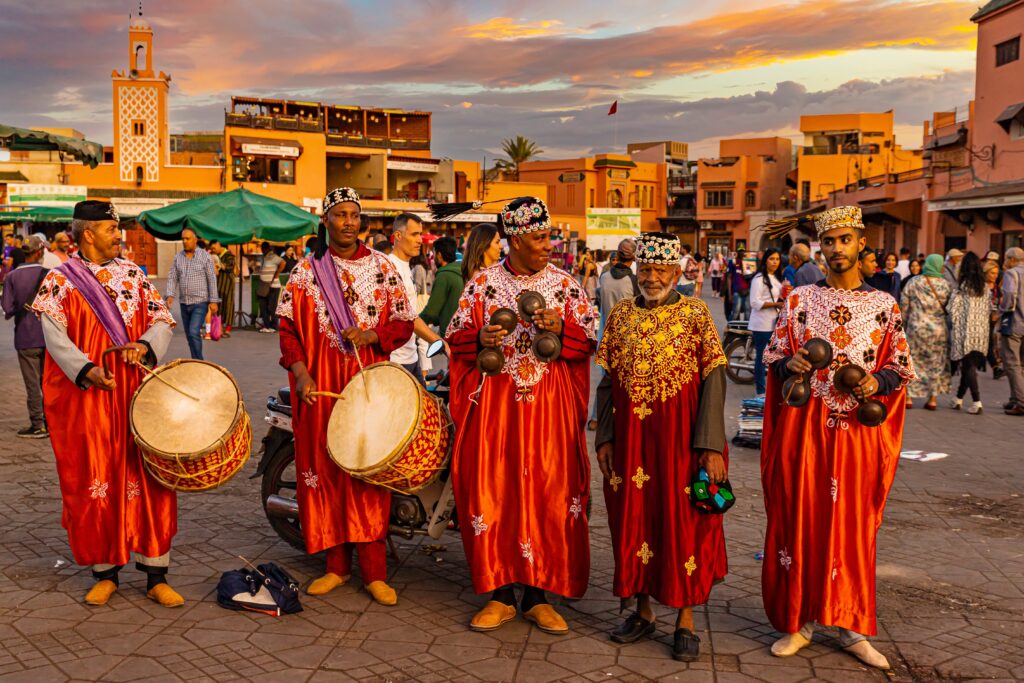
Jemaa el-Fnaa square is the heart of Marrakech and one of the most iconic places in Morocco. By day it looks relatively calm – you will see sellers of freshly squeezed juice, traditional herbalists, street performers and craftsmen demonstrating centuries-old techniques. Here you can get up close to the everyday life of the locals, buy spices or sip mint tea while watching the lively atmosphere.
When the sun begins to set, the square literally comes alive and turns into an improvised “open-air theatre”. Dozens of food stalls open up, the aromas mingle, musicians play traditional rhythms, and fire performers and dancers draw crowds. This is a place you don’t simply visit – you experience it with all your senses.
Useful tip: Keep an eye on your belongings and avoid photos with animals – hefty “fees” are often demanded afterwards.
The Medina of Marrakech
The Medina is the historic soul of the city – a labyrinth of narrow alleys, the scent of spices and ancient architecture, where life has carried on almost unchanged for centuries. Here you will find traditional workshops, small shops, riads, mosques and many hidden treasures. Entering the medina is like going back in time, to a world where trade and crafts are at the centre of daily life.
Wandering around the Medina can be chaotic, but that is exactly where its charm lies. The streets twist unpredictably and GPS often gets confused, but while you are “getting lost”, you are actually discovering the authentic Marrakech – quiet courtyards, little cafés, bakeries whose smell of bread fills the alleys, and people who will gladly point you in the right direction.
Useful tip: Don’t be afraid to get lost – just remember the main streets and landmarks.

The Majorelle Garden (Jardin Majorelle)
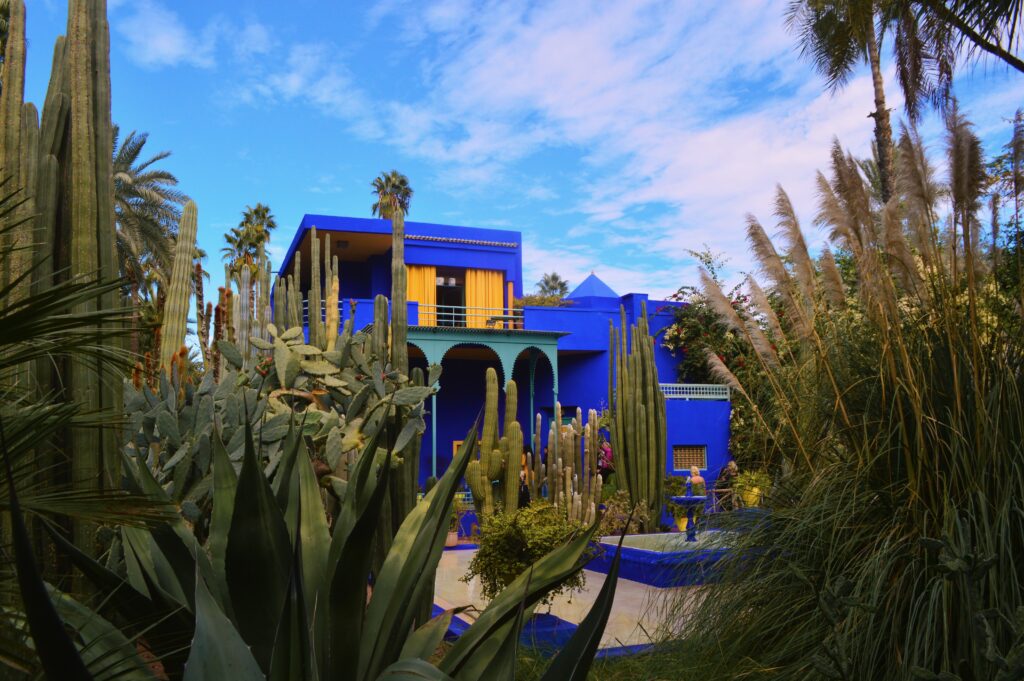
The Majorelle Garden is one of the most beautiful and well-kept oases in Marrakech. Created by the French painter Jacques Majorelle in the 1920s, the garden impresses with its rich flora, cacti from all over the world and bright blue façades, which have become the trademark of the place. Every path reveals new views – from pools with water lilies to exotic trees that provide cool shade on hot days.
After Yves Saint Laurent and Pierre Bergé acquired the site, the garden was restored and opened to visitors, becoming one of the most iconic attractions in the city. The colour palette, the architecture and the sense of silence amid bustling Marrakech make a visit an unforgettable experience.
Entrance fee: around 170 MAD (≈ €16) for the garden alone. There is also a combined ticket for the garden and the Yves Saint Laurent Museum.
Useful tip: Visit early in the morning, because the queues get very long. I strongly recommend buying your tickets online in advance, as they sell out quickly. You can do this directly HERE.
The Yves Saint Laurent Museum (YSL Museum)
Located right next to the Majorelle Garden, this museum is dedicated to the life and work of Yves Saint Laurent. The exhibits include original outfits, accessories, sketches and photographs that trace the designer’s evolution. The museum shows how Moroccan colours, shapes and textures influenced many of YSL’s collections.
The architecture of the building itself is impressive – modern, yet in keeping with local traditions. The interior is minimalist and provides an ideal space for presenting the fashion creations. The museum is a must for every lover of fashion and art.
Entrance fee: around 140 MAD (≈ €13).
Useful tip: Combine the visit with the Majorelle Garden on the same day. Buy a combined ticket for the garden and the museum HERE.

The Souks of Marrakech
The souks are a network of markets divided by craft – leather, ceramics, lamps, fabrics, jewellery, spices, oils and much more. This is the best place to immerse yourself in the daily life of the local craftsmen. You can watch leather bags being made, fabrics being dyed or traditional metal lamps being crafted.
Shopping here is an experience in itself. Prices are not fixed and haggling is part of the culture – you can often knock 40–50% off the initial offer. The strong aromas of saffron, cinnamon and cumin, mixed with the bustle of the market, make the place captivating.
Entrance fee: Free
Useful tip: Start haggling with a smile – it always opens doors.

Bahia Palace
Bahia Palace is a true masterpiece of 19th-century Moroccan architecture. Built for the vizier Si Moussa, it comprises dozens of halls decorated with delicate wood carvings, marble floors and exquisite mosaics. Palaces were meant to impress, and guests were left amazed by the ethereal beauty of every detail.
The inner gardens with orange trees and palms add an extra sense of harmony. Walking through the halls is like diving into the history of the Moroccan elite and lets you see what luxury looked like in those times.
Entrance fee: around 70 MAD (≈ €7) You can buy your tickets in advance HERE.
Useful tip: Go early for a calmer atmosphere.

El Badi Palace
In ruins today, El Badi was once among the most magnificent palaces in North Africa. Built in the 16th century by Sultan Ahmad al-Mansur, the palace was lavishly decorated with gold, onyx and precious materials imported from Italy and India. Destroyed in the centuries that followed, it remains a testament to past glory and splendour.
A walk through the spacious courtyards, underground tunnels and rooftop terraces offers a unique insight into the city’s history. Storks are a common sight here, nesting on the walls of the ruins and adding even more charm to the place.
Entrance fee: around 70 MAD (≈ €6.5)
Useful tip: Combine the visit with nearby Bahia Palace – they are just a few minutes apart.

Koutoubia Mosque
With its 77-metre minaret, the Koutoubia is the most recognisable mosque in Marrakech and an important architectural symbol of the city. Built in the 12th century, it serves as a landmark and can be seen from almost every point around the Medina. Its style is characteristic of the Almohad dynasty and inspired other famous buildings such as the Giralda in Seville.
Non-Muslims cannot go inside, but the courtyard and gardens around the mosque make for a pleasant stroll and offer excellent photo opportunities. In the evening, when the minaret is lit up, the place is especially beautiful.
Entrance fee: Free
Useful tip: The best photos are taken around sunset.

Menara Gardens
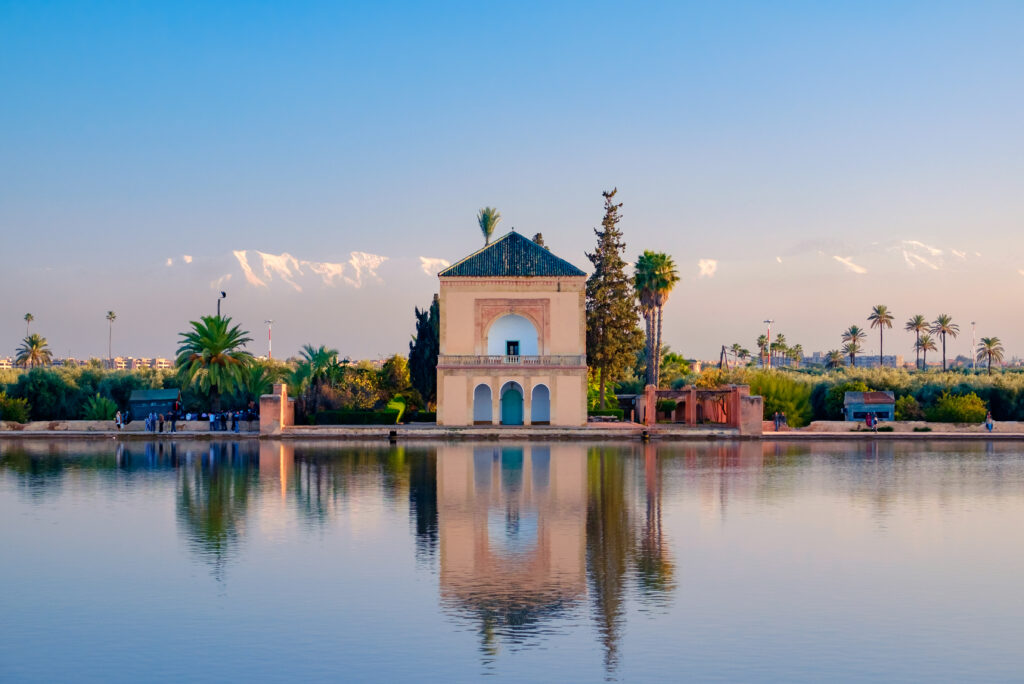
The Menara is one of the most iconic gardens in Marrakech, dating back to the 12th century. The large artificial basin, used for irrigation, is surrounded by olive groves and serves as a symbol of peace and harmony. Legend has it that the sultans used the place for relaxation and meditation.
The pavilion overlooking the Atlas Mountains is one of the most beautiful photo spots in the city, especially on clear days. The gardens are a wonderful place for a walk and an escape from the noisy centre.
Entrance fee: Free
Useful tip: Visit in clear weather for the best view of the mountains.
Ben Youssef Madrasa
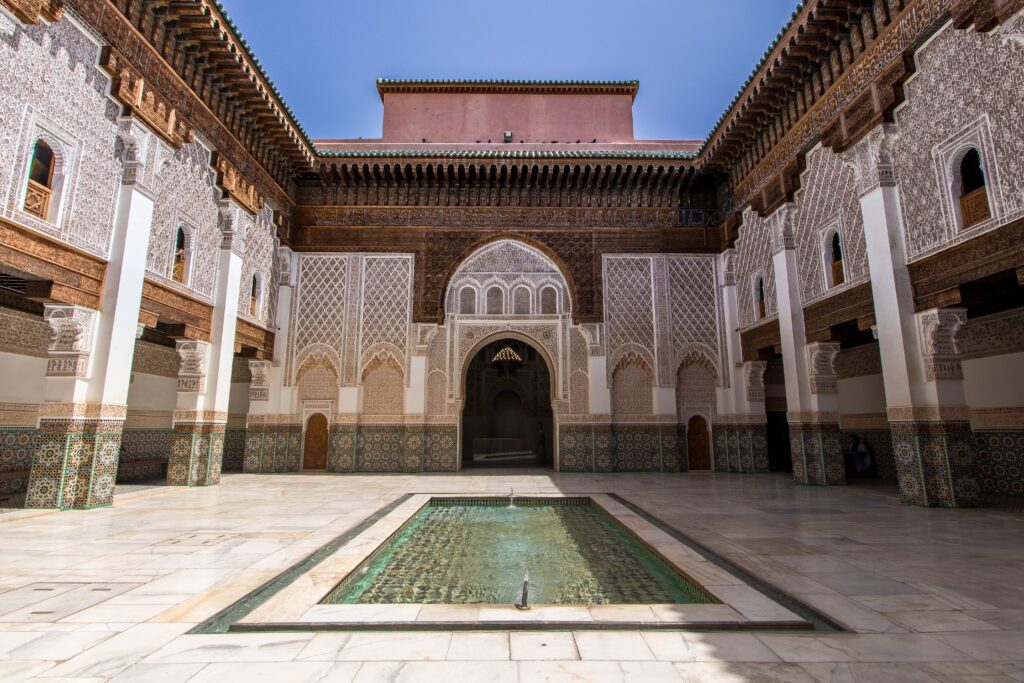
Ben Youssef is one of the most impressive buildings in Marrakech and a former religious school that once housed hundreds of students. Its architecture is exceptional – precise mosaics, wood carvings, Arabic inscriptions and a symmetry that creates a sense of perfection. The inner courtyard with its marble pool is among the most photogenic places in the city.
The madrasa offers an insight into Morocco’s spiritual and educational heritage. The tiny rooms where the students lived are a reminder of the strict regime and devotion to learning. It is a place that combines history, art and culture in a unique way.
Entrance fee: around 50 MAD (≈ €4.5)
Useful tip: Go early – after 10:00 it gets very busy.
The Marrakech Museum
The museum is housed in a former 19th-century palace, famous for its impressive inner courtyard, richly decorated ceiling and huge metal chandelier. On display are ceramics, textiles, jewellery and traditional Moroccan objects that showcase the country’s cultural diversity.
In addition to the permanent collection, the museum hosts temporary exhibitions by contemporary artists, which makes a visit enjoyable and varied. It is a wonderful place for anyone who wants to deepen their understanding of Moroccan art.
Entrance fee: around 70 MAD (≈ €6.5)
Useful tip: Combine the visit with the nearby Ben Youssef Madrasa.

The Secret Garden (Le Jardin Secret)
Hidden in the Medina, the Secret Garden is a true green oasis that offers tranquillity amid the chaos of the city. The garden has been restored to a 16th-century design and is divided into two sections – a traditional Islamic garden and an exotic garden. The irrigation system, based on ancient techniques, is one of its most interesting features.
The architecture is minimalist and elegant, with exquisite wood carvings and terraces offering a wonderful view of the minarets and rooftops of the Medina. It is an ideal place for a short break and to refresh yourself.
Entrance fee: around 80 MAD (≈ €7.5)
Useful tip: Head up to the rooftop terrace for a panorama and a good coffee.

Cooking class
Cooking classes are a wonderful way to get to know Moroccan culture from the inside. They usually begin with a visit to a local market, where participants choose ingredients, learn about spices and see how the locals cook. Then comes the practical part, in which you prepare tagine, couscous or pastilla yourself.
It all ends with a shared tasting – and food you have made with your own hands always tastes best. This experience is particularly suited to food lovers and to travellers looking for more authentic moments.
Price: 350–500 MAD (≈ €32–46). I recommend this cooking class.
Useful tip: Choose a morning class – the temperatures are more bearable.

Hot-air balloon flight over Marrakech
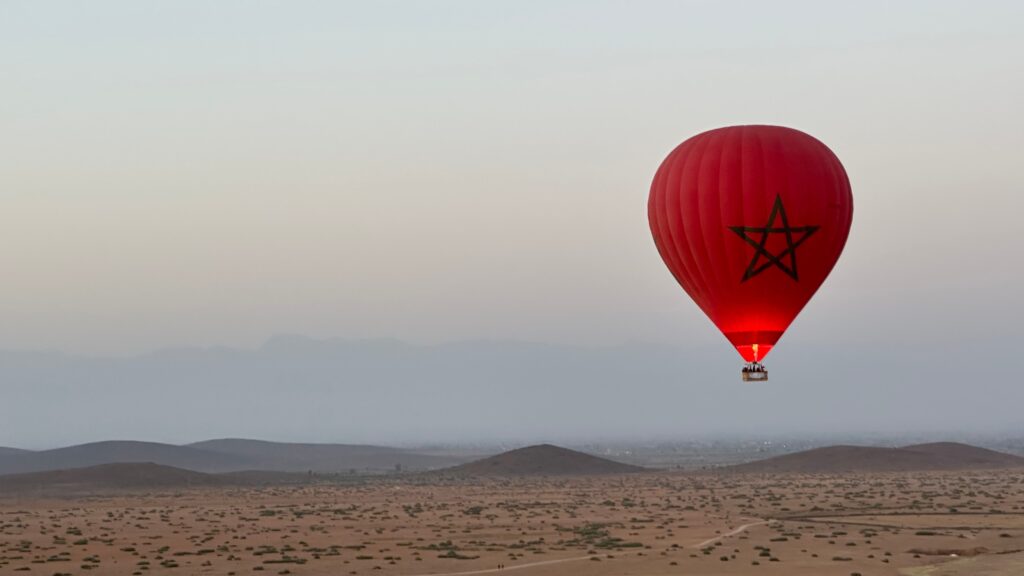
A hot-air balloon flight is one of the most spectacular experiences in the area. Take-off is usually at sunrise, when the air is at its calmest and the desert and the Atlas Mountains glow in golden tones. You see the city from above, as well as the small villages, palm groves and endless fields.
After landing, a Moroccan breakfast is traditionally served in a Berber village. It is an experience that stays in your memory and offers a completely different perspective on the region.
Price: 2000–2500 MAD (≈ €180–230)
Useful tip: Book at least a week in advance. I highly recommend this option, which includes transport, breakfast and a certificate.
Anima Garden (André Heller’s gardens)
Anima Garden is an artistic park created by the Austrian artist André Heller. The place is a blend of art, nature and fantasy, with numerous colourful installations, sculptures and exotic plants. A walk here is like visiting a creative world unlike anything else in Marrakech.
The garden is about 30 minutes from the city and is a perfect place for peace and inspiration. The colours, scents and works of art make a visit truly powerful.
Entrance fee: around 150 MAD (≈ €14)
Useful tip: Use the free shuttle from the centre (times are on the official website).

Agafay Desert
Agafay is a stony desert located only about 40–50 minutes from Marrakech. Although it is not sandy like the Sahara, its landscapes are dramatic and impressive. Here you can ride buggies, ride camels, enjoy dinner under the stars or stay overnight in a luxury desert camp.
The sunsets over the hills are especially beautiful and create incredible photo moments. It is an ideal place for a day trip or a romantic experience.
Price: You can book a trip from Marrakech to Agafay HERE, with transport, dinner and activities included. And this option includes an overnight stay in one of the desert camps.
Useful tip: The best time to visit is around sunset.

Ouzoud Waterfalls
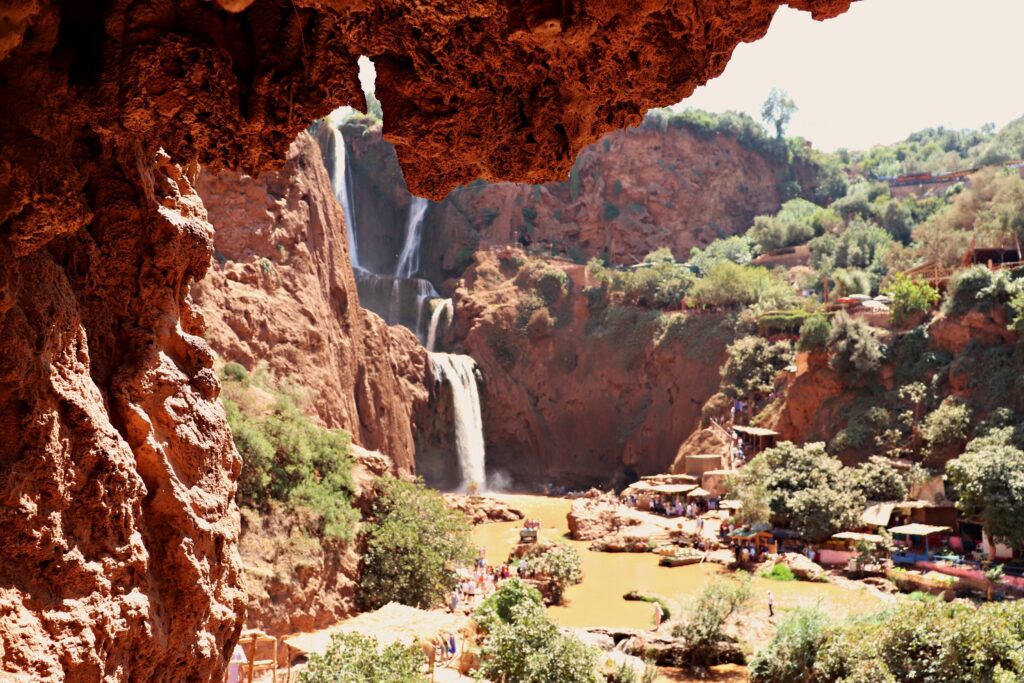
Ouzoud is the highest waterfall in Morocco and lies about 2.5 hours from Marrakech. The area is green and fresh, and offers wonderful walks along trails, views of the canyon and the chance to see wild monkeys. It is one of the most popular places for day trips.
Along the way there are plenty of cafés and places to rest, and the boats that take you close to the waterfall make the experience even more exciting.
Price: around €24–30. Book the trip in advance – you can do so HERE.
Useful tip: Wear comfortable shoes – the ground can be slippery.
The Atlas Mountains and the Berber villages
Trips to the Atlas Mountains offer another perspective on Morocco – peaceful villages, terraced fields and Berber hospitality. Walks in the mountains reveal beautiful views of the snow-capped peaks and give you the chance to discover the local way of life.
Many tours include visits to traditional houses, tea tastings and stories about the history and culture of the Berbers. It is one of the best ways to get to know Morocco beyond its city limits.
Entrance fee: None; tours cost 300–600 MAD (≈ €28–55)
Useful tip: Choose a private tour for a more personal experience. I recommend this option, with transport and lunch included.

Aït Benhaddou
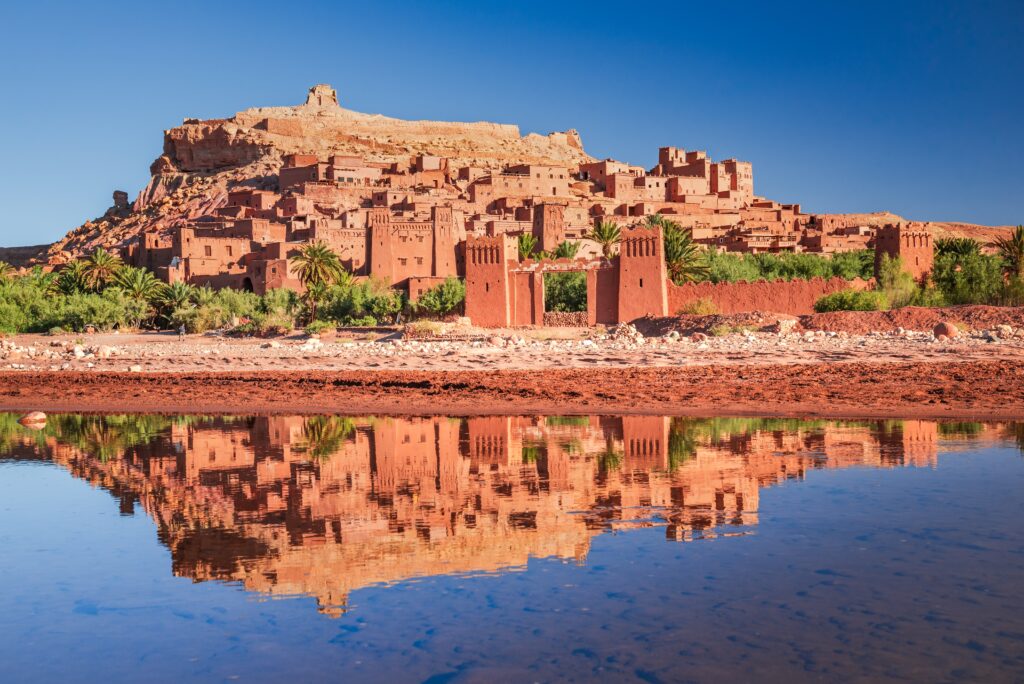
This ancient fortified village (ksar) is one of the most famous sites in Morocco and is on the UNESCO list. Built of clay and stone, the place has inspired generations and served as a film set for films such as “Gladiator”, “The Mummy” and “Game of Thrones”. A walk through its narrow alleys reveals impressive architecture and a glimpse of ancient life.
The climb to the top offers a panoramic view of the surrounding landscape and the river that crosses the valley. A visit is usually combined with a journey through the Atlas Mountains, which in itself is an incredible experience.
Entrance fee: around 20 MAD (≈ €2) There are day trips from Marrakech to Aït Benhaddou, and I recommend this option.
Useful tip: Go in the morning, when temperatures are lower.
Ourika Valley
The Ourika Valley is the closest natural area to Marrakech and an ideal choice for anyone wanting to escape the heat and noise of the city. About 45 minutes away, it offers waterfalls, green trails and plenty of little restaurants right beside the river.
The place is popular with locals, who come here at weekends to relax, so weekdays are quieter. The walk to the waterfalls is slightly challenging but extremely pleasant.
Entrance fee: Free
Useful tip: Avoid Sundays – it can get very crowded. I recommend this tour, with transport and lunch included.


Author
Vilislav Alkantara