
“Kalimera” from the sunny Greek island of Rhodes – also known as “the Island of the Knights”. When I say “sunny”, I mean it quite literally, because the island will treat you to more than 300 days of sunshine a year, not to mention beautiful beaches, gorgeous sea views, pretty villages and an incredibly rich cultural and historical heritage. Something for everyone!
Rhodes is the fourth-largest Greek island and the largest of the Dodecanese. The impressive history of Rhodes goes back to the 12th century BC, when the Dorians are thought to have founded a settlement in what is now the town of Lindos. I’m sure many of you have heard of the Colossus of Rhodes, one of the Seven Wonders of the Ancient World. Sadly, you won’t be able to see it, because it was destroyed by a powerful earthquake in the 3rd century BC, and nothing is left of its grandeur but stories and legends. It’s thought to have stood 34 metres tall at the entrance to the harbour of Rhodes Town, the island’s capital. According to ancient chroniclers, the Colossus could be seen even from the neighbouring islands.
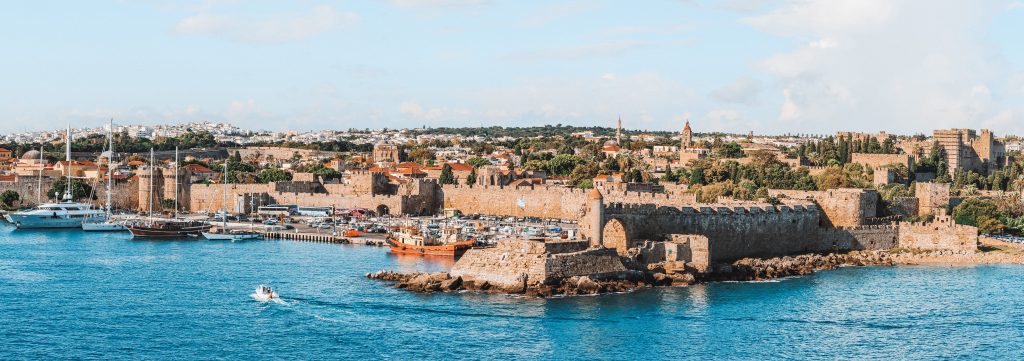
The Old Town of Rhodes, which shares its name with the island, will cast a spell on you and whisk you back to a long-gone age of knights, honour and glorious battles. As the closest island to the Holy Land, in the Middle Ages Rhodes was a gathering point for pilgrims from all over Europe. This is where the Knights of St John, also known as the Knights Hospitaller, set up their headquarters. The walled Old Town is one of the best-preserved medieval towns in the world and the oldest inhabited medieval town in Europe, and it’s a UNESCO World Heritage Site. After the Ottoman Turks drove the knights off the island, Rhodes came under Ottoman rule for nearly 400 years, and you can still feel the oriental influence here, especially in the Old Town, with its bazaar-like stalls on the square and the tall minaret of the Mosque of Suleiman the Magnificent.
When to visit Rhodes
As in most of southern Greece, the tourist season runs from April to November, but personally I think the best time to visit Rhodes is May–June and September–October. At those times the temperatures are pleasant rather than scorching, and there aren’t too many tourists. The busiest months of the season are definitely July and August, but the heat then is unbearable – for me, at least. We made the mistake of visiting the island in mid-July, and it was no fun at all walking around, especially during the day. Part of the island was also cut off by the wildfires raging there.
Getting there
Rhodes has its own international airport, which makes it very easy for tourists to reach. This year (2023), one of the low-cost airlines launched a direct route between Sofia and the Greek island, and we decided to make the most of it – the flight took about an hour and 20 minutes. Another option is to fly from Athens or Thessaloniki – both have regular flights to the island. And if you’re travelling by car, you can catch a ferry, again from Athens or Thessaloniki, but bear in mind that it takes a lot longer. The crossing can last anywhere between 15 and 31 hours, depending on whether or not you go for a high-speed ferry.
Where to stay
While we were still in Rhodes, lots of people – friends and strangers alike – messaged me asking for tips on where to stay. Given how popular the destination is, there are plenty of options – hotels, hostels, Airbnbs, villas and guesthouses. There are budget-friendly choices as well as some very luxurious hotel complexes you won’t even need to leave. We’d booked a hotel in the centre of Rhodes Town, because we’d hired a car and had already picked out places and beaches we wanted to visit, and we decided it would make getting around easier. If you have children or simply want to relax, there are plenty of hotel complexes in the island’s smaller towns, away from the noise of the city and the crowds of tourists.
What to see and do on Rhodes
The Old Town of Rhodes
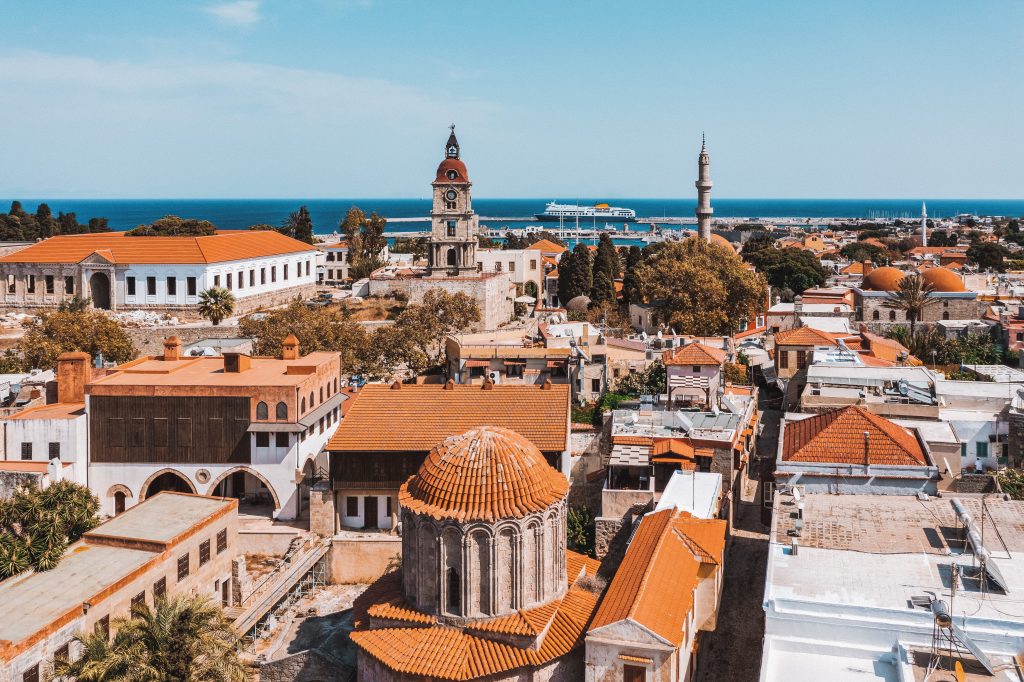
The old part of Rhodes is truly magical, especially at sunset. I highly recommend wandering the cobbled lanes of the knights’ former capital. Charming old houses, palaces, churches and a mosque, all enclosed by a majestic city wall – we were genuinely impressed, and the mix of medieval European architecture with Gothic, Ottoman, Byzantine and Italian styles creates a rather unusual but remarkable fusion. At times I wondered whether I was in Greece, Turkey or even Malta. In the evenings, especially in high season, the streets are packed and noisy, but that’s all part of Old Rhodes’ charm. It’s full of souvenir shops, craft workshops, tavernas, bars and stalls, and it should be a must-stop during your stay on this exotic Greek island.
The Palace of the Grand Master
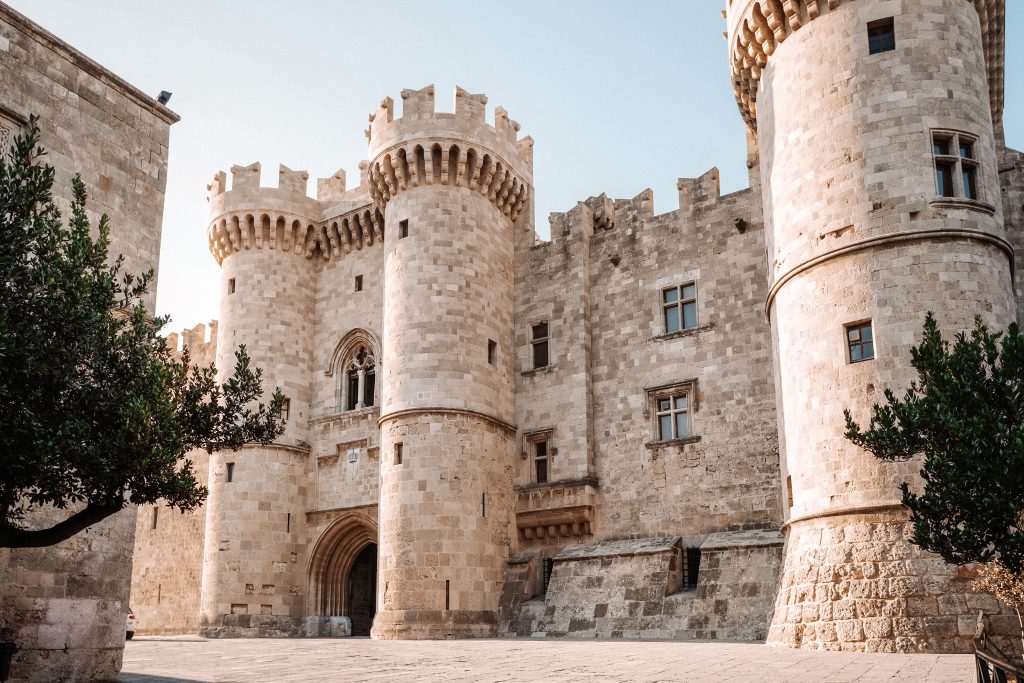
The Knights Hospitaller stayed on the island for nearly 200 years, until they were driven out by the Ottomans and moved their headquarters to Malta. Even so, the cultural and architectural legacy they left behind is hugely important to the locals. It was the knights who turned medieval Rhodes into a thriving, multicultural European city, ruled by the Grand Master of the Hospitallers. One of the island’s biggest attractions is the lavish Palace of the Grand Master, in the old part of town, surrounded by three rings of walls. Today the palace is a museum, where you can see ancient artefacts from both the Middle Ages and the Ottoman period. The entrance fee is €6, and you can buy tickets HERE.
The Colossus of Rhodes
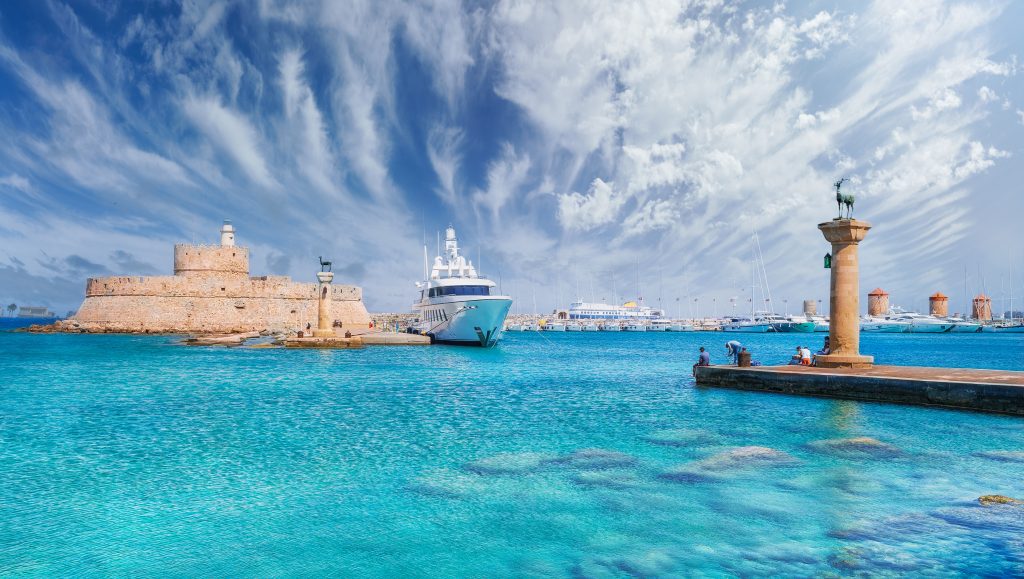
The mythical Colossus of Rhodes is a sight you can’t actually see – all that’s left of it are legends passed down from generation to generation. In ancient times Rhodes was one of the most prosperous cities in the Mediterranean and the island’s patron was the ancient Greek sun god, Helios. As this was the easternmost point settled by the ancient Greeks, they believed it was here that Helios’s rays first touched Greek soil every morning. In his honour, the locals raised a monument that was gigantic for its time – 34 metres tall and clad in bronze. The statue is thought to have stood right at the entrance to the harbour and to have been visible from the neighbouring islands. Sadly, just 56 years after it was built, the Colossus was completely destroyed by a powerful earthquake, and nothing of it survives today but legends and ancient chroniclers’ tales of its grandeur. Even so, the harbour entrance where it’s believed to have stood still draws lovers of history and legend. Today two deer statues stand on the spot, welcoming visitors who arrive on the island by sea.
Mandraki Harbour
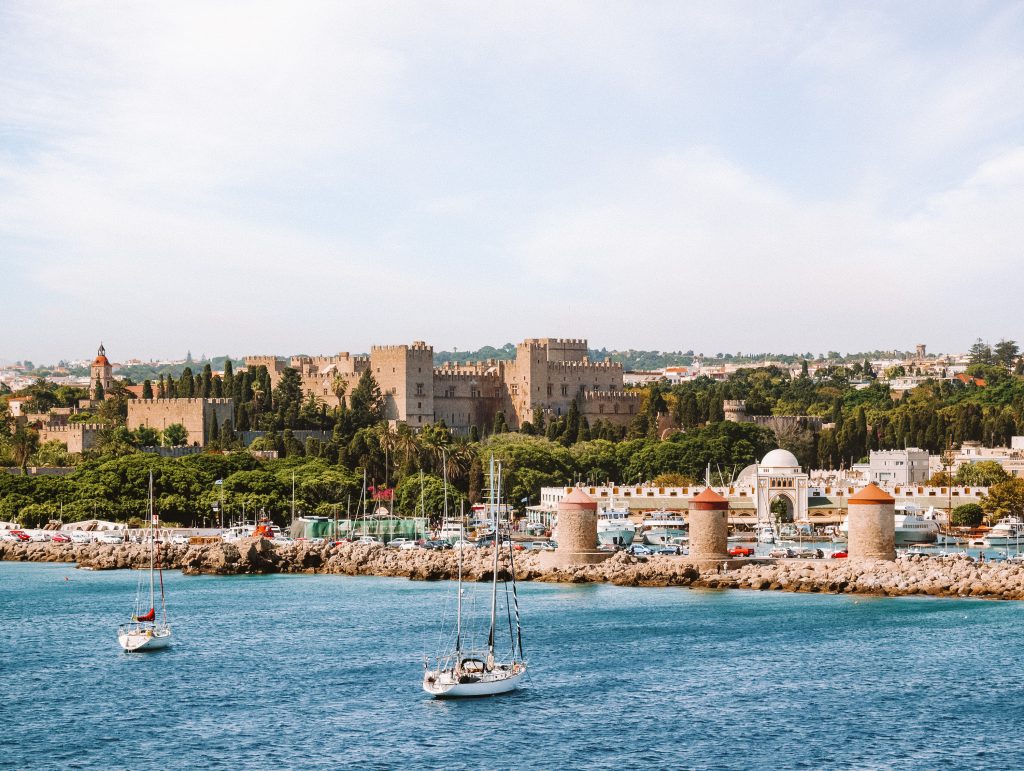
Right next to the Old Town of Rhodes lies Mandraki Harbour. As well as being the supposed site of the mythical Colossus of Rhodes, it’s a lovely place for a stroll at the end of the day. On the far side of the harbour stand the Fort of St Nicholas and three medieval windmills, which reminded me a lot of the old town of Nessebar. We visited Mandraki just before sunset and watched the sun sink behind the high walls of the knights’ city. It was truly beautiful. This is also where the boats leave for trips around the island, as well as the ferries to Symi, which I’ll tell you about a little further down.
The Acropolis of Lindos
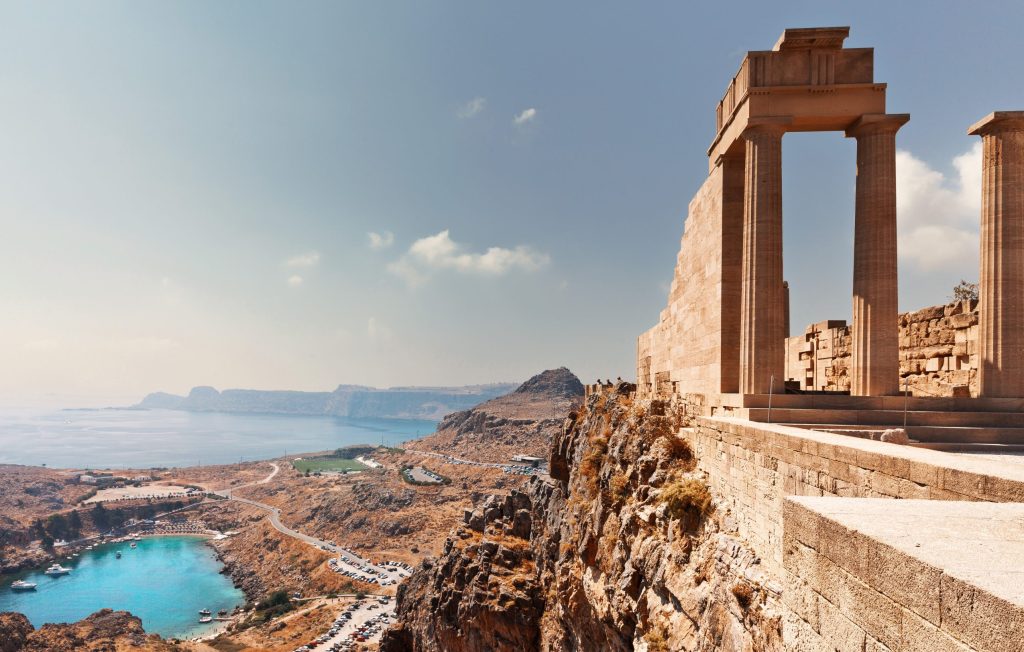
Less than 50 or so kilometres south of Rhodes Town lies one of the island’s biggest attractions – the acropolis in the pretty little town of Lindos. It’s the second-largest and second most important acropolis in Greece, after the one in Athens. The remains of the majestic fortress seem to perch on a sheer cliff rising high above the sea, still guarding the shores of Rhodes like a frozen sentry. From far away you can make out the columns of the small temple dedicated to the goddess Athena Lindia with the naked eye. The ruins in and around the fortress bear witness to the importance and wealth of the ancient city, once a trading hub on the route between Greece and the Middle East. From the walls there’s an unforgettable view of the Mediterranean and of the town of Lindos at the foot of the acropolis. I highly recommend buying your tickets for the Acropolis in advance, which you can do directly HERE.
Ancient Kamiros
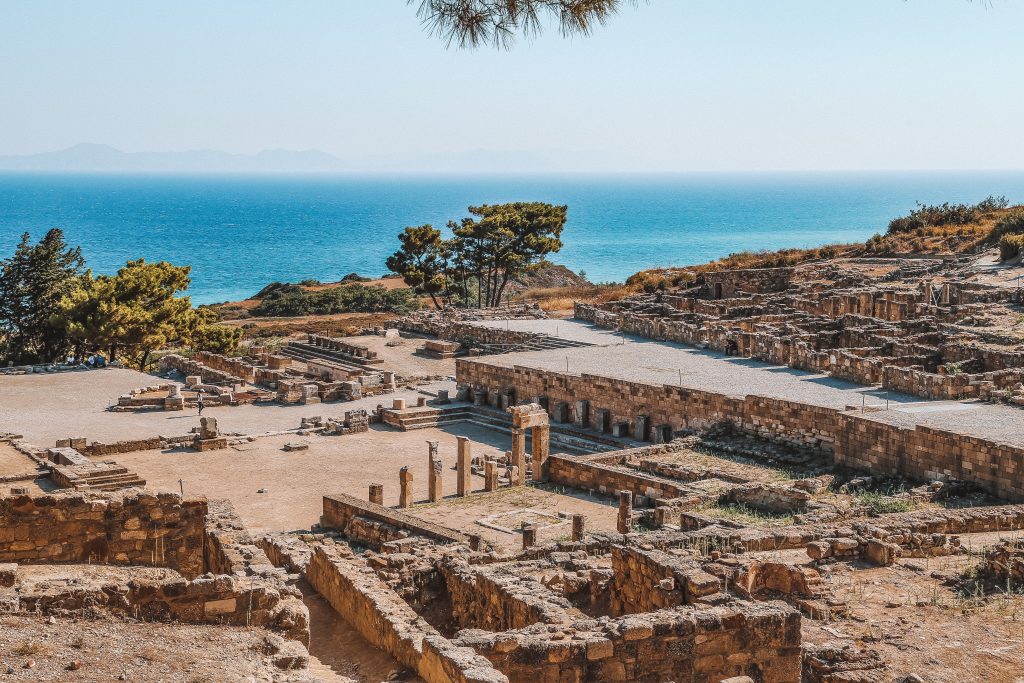
If you love ancient Greek history, I highly recommend visiting the remains of the ancient city of Kamiros. Once a thriving city-state, also known as “the Pompeii of Greece”, today all that’s left are ruins that vividly tell the story of its glorious past. Kamiros had a rather dramatic fate. After two serious earthquakes in ancient times, its inhabitants abandoned it and the city sank into oblivion until the early 20th century, when British archaeologists found some intriguing artefacts and began excavating the site. Today it’s one of the island’s main tourist attractions, where you can easily spend a few hours wandering its ancient streets among the ruins of houses, temples, fountains and an ancient acropolis.
Tsambika Monastery
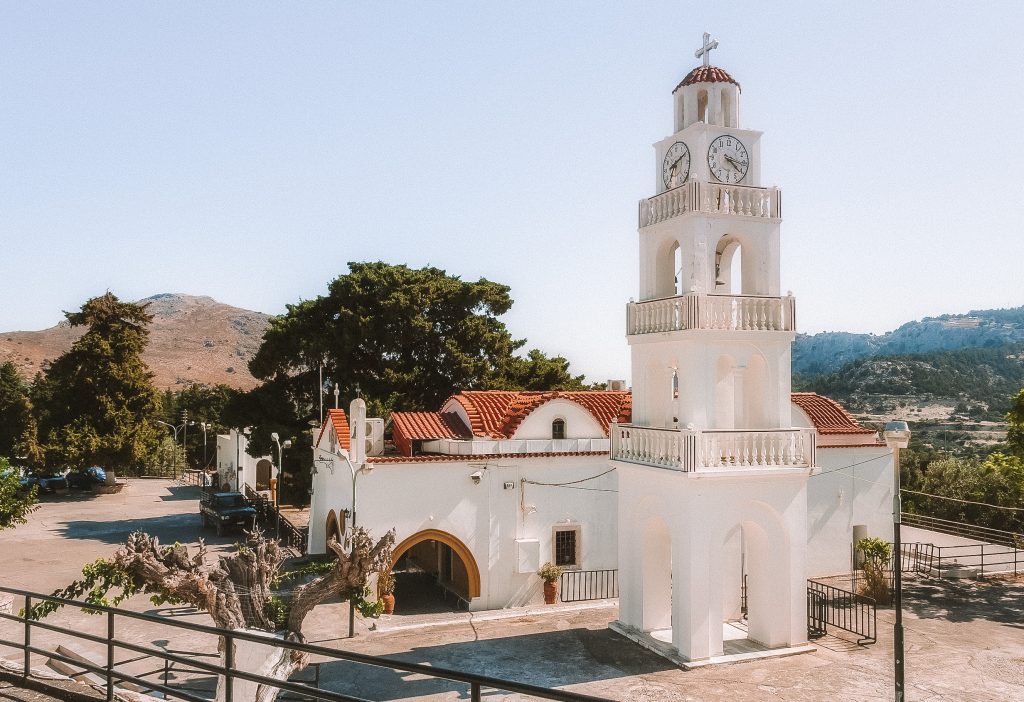
Mount Tsambika is a sacred place for the Greeks. It’s also home to the monastery of the same name, reached by a staircase of 307 steps. The little Byzantine church sits at the top of the mountain and is dedicated to the Virgin Mary. The church once held a miraculous icon, and the locals believed that if a childless woman climbed the steps to the monastery on her knees, guided by her strong faith, the Virgin would hear her prayers and bless her with a child. Today the icon has been moved to the monastery at the foot of the mountain, but the pilgrimage tradition lives on, and many believers still climb to the top – as do plenty of tourists, of course, even if only to enjoy the incredible view from up there.
The Valley of the Butterflies
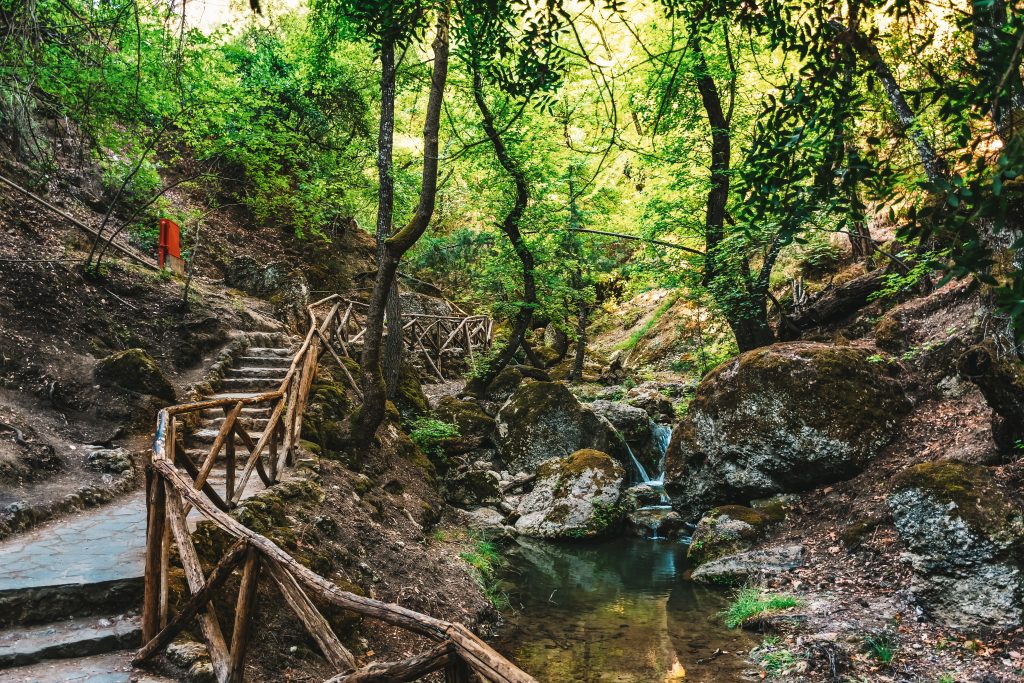
The Valley of the Butterflies is a real oasis, tucked into a narrow gorge with several waterfalls, lots of little bridges and paths covered in greenery and moss. It’s a wonderful place for a walk in the summer heat, especially between June and September. That’s exactly when you can see tens of thousands of butterflies covering the trees and paths, just like a picture from a children’s fairy tale. There’s quite a simple explanation for this phenomenon: a rather rare species of conifer grows in the valley, and the resin it gives off attracts all these colourful creatures.
Beaches
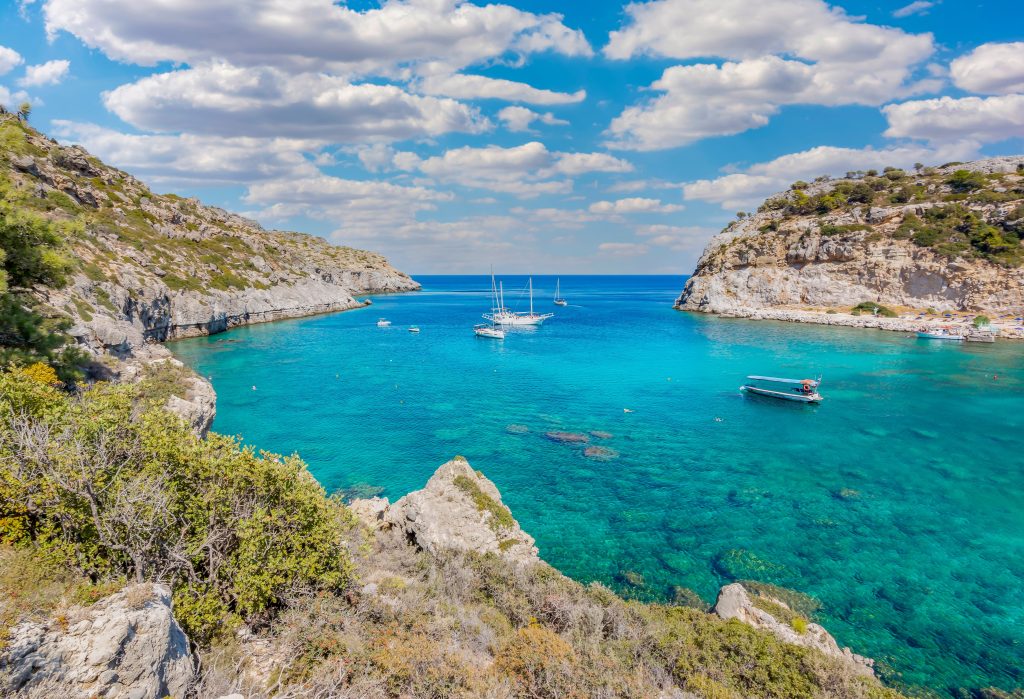
Rhodes has more than 40 gorgeous beaches – endless stretches of golden sand and crystal-clear water, clean and safe. The island has everything from wide, open beaches with upmarket beach bars to quieter, secluded little coves. One of them, and perhaps the most popular with tourists, is Anthony Quinn Bay, near the town of Faliraki. Another is Saint Paul’s Bay, right next to Lindos, so once you’ve explored the Acropolis, don’t miss it. Rhodes Town itself has a nice beach too – Elli Beach, a calm, clean beach with a long stretch of sand. I’d also recommend heading to Prasonisi Beach, at the southernmost tip of the island. “Green Island”, as its name translates, is a separate island in winter, but in summer, when the water level drops, it’s joined to Rhodes by a very thin strip of sand. The beach is also great for surfers, thanks to the strong winds in this part of the island.
Symi
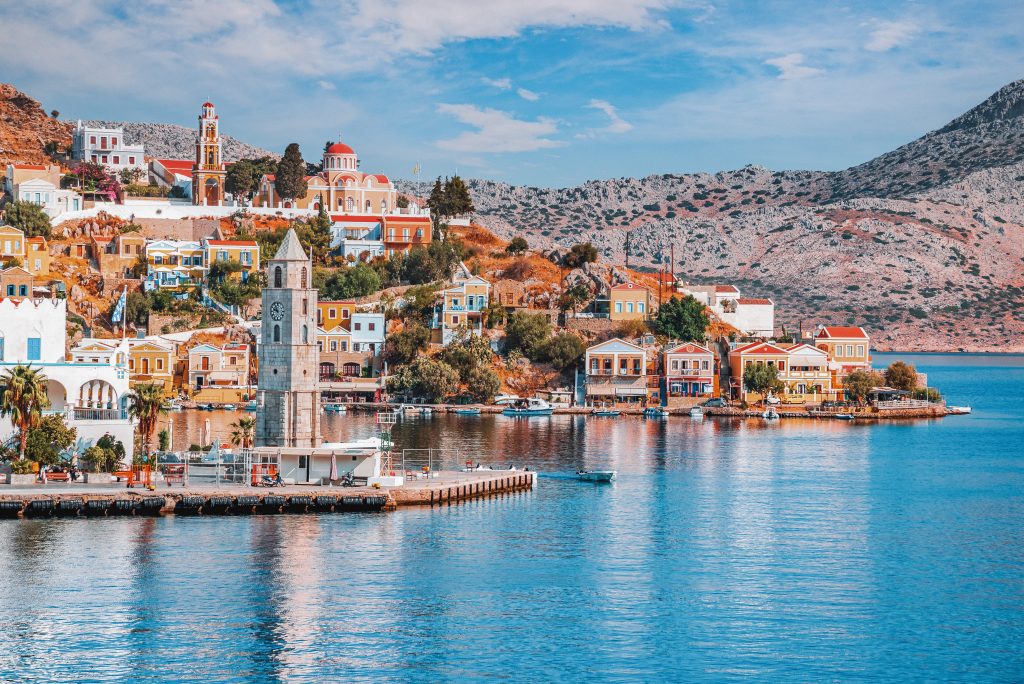
Symi is one of the most popular day trips from Rhodes. According to Greek mythology, it takes its name from the nymph Syme, and it’s known as the birthplace of the Charites – the goddesses of grace and beauty. One look at Symi is enough to make you agree wholeheartedly with the ancient Greeks. You’ll feel the island’s beauty before you’ve even set foot on it. I’d call it the most picturesque harbour in Greece. You can’t help being impressed by the pretty, colourful houses perched on the rocky hillsides of the island’s main town. Symi has a rich history, and although it’s many times smaller than Rhodes, you won’t be bored. There are lots of lovely places to explore, plus incredible little coves and beaches with water so crystal clear that the boats seem to be floating in mid-air. There are two ways to get to this small but very Instagram-famous island – either book an organised cruise or simply buy a ferry ticket and explore on your own. Either way, the journey takes just over an hour. If you decide to visit Symi, I recommend booking one of these cruises – Option 1 and Option 2.

Author
Vilislav Alkantara