
Having held on to its authentic mix of cultures – Venetian, Greek and Ottoman – Crete is without doubt one of the most popular destinations in our southern neighbour, Greece, thanks to its incredible beaches, beautiful mountain scenery, mild climate and rich cultural and historical heritage. Stunning Crete is the largest island in Greece and the fifth largest in the Mediterranean. It’s a place where reality and mythology meet, and where tradition and modernity blend in an incredible symbiosis. Besides its emerald waters and gorgeous landscapes, the island is also home to the Minoan civilisation, considered the first advanced civilisation in Europe. In fact, the remains of the colourful ancient city of Knossos are one of its most iconic sights.
Speaking from personal experience, once you’ve soaked up the atmosphere of Crete, you carry it in your heart forever. The island has easily earned its place among my favourite holiday spots in Greece, and you’ll see why once you’ve read the whole article. I’ve rounded up the 20 most interesting sights in Crete, along with a few extra tips that will make your holiday unforgettable.
How do you get there?
Crete has not one but two international airports. The bigger one is in the island’s capital, Heraklion, and the other is in Chania, Crete’s second largest city. There are direct flights from Sofia to both, run by low-cost airlines as well as the national carrier, Bulgaria Air. Another option is to take a ferry from Athens or Thessaloniki to Heraklion, but that would make your journey a great deal longer, and more expensive too. My advice is to make the most of the easy flights from Bulgaria to either of Crete’s airports.
Another tip: when you’re planning your trip, factor in a hire car right from the start. It’s incredibly handy, especially if you’re planning to explore lots of places. Yes, you could get around by local bus or taxi, but nothing beats the freedom of stopping in a pretty mountain village for lunch on your way to the beach or to one of the island’s iconic sights.
When should you visit Crete?
Crete’s peak tourist season is June, July and August. Bear in mind that it’s not only much busier then – hotel and accommodation prices also hit their peak. That said, Crete isn’t one of the priciest Greek destinations compared with Mykonos, Santorini and Paros, so if you plan well and book in good time, you can still find places at good prices.
In April, May and September the weather is still warm enough for the beach, prices are lower and you might stumble on some exclusive deals – plus you’ll dodge the crowds on the beaches and at the tourist sights. For me personally, the best time to visit Crete is May or September, because I don’t like big crowds and can’t fully enjoy a beautiful place when it’s packed. That’s why I always go either at the start or at the end of the season.
Where should you stay?
Crete is huge and offers a vast range of accommodation – luxury five-star hotels, more budget-friendly family-run hotels, rooms to rent, villas and anything else you can think of. As for location, my advice is to choose according to the purpose of your trip. If you’re after somewhere livelier, with bars, restaurants and nightlife, I’d definitely recommend one of the bigger towns – Heraklion, Rethymno or Chania. And if it’s your first time on the island, you’ll find it much easier to use them as a base for the places you’ve got your eye on. If you’ve decided to give yourself over entirely to relaxing and want somewhere quieter or more romantic, I’d strongly suggest a village such as Sisi or Agios Nikolaos. Of course, the island also has plenty of self-contained resorts that you won’t even need to leave. I’ll say it again: choose your location according to what you want from your trip.
What is there to see in Crete?
Chania Old Town
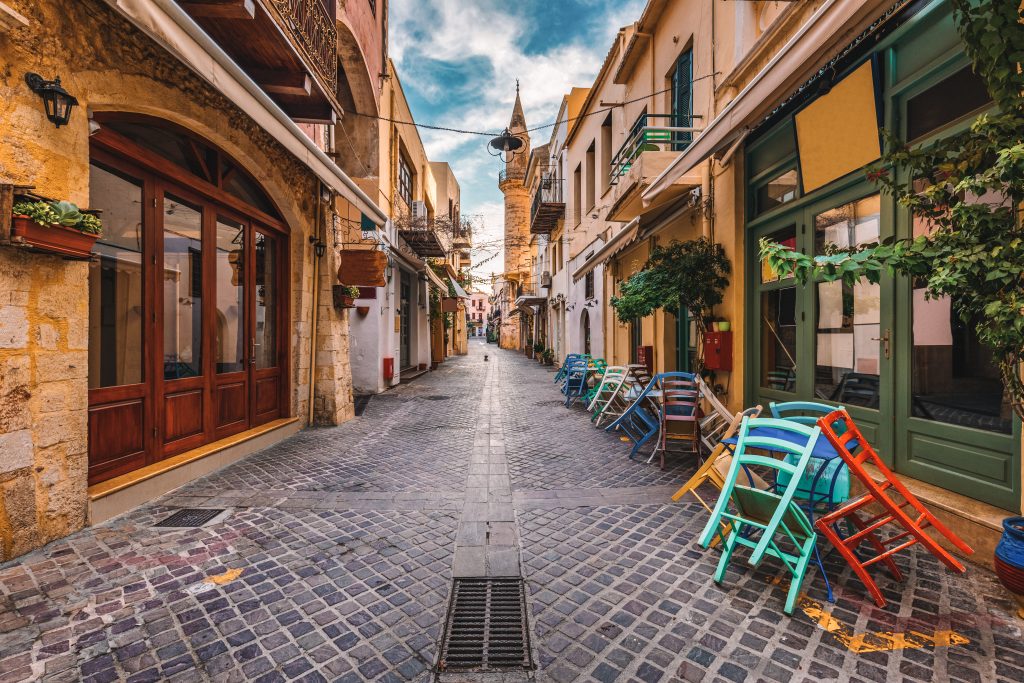
One of the most charming places in Chania is the Old Town, where you’ll find an incredible amalgam of the cultures that shaped the city’s authentic look today. The narrow cobbled lanes, colourful houses with wooden shutters, little churches, the remains of the old mosque and all the other historic sights are reminders of the Venetian, Ottoman and Byzantine heritage that left its mark on the local culture – and that has turned the town into an alluring destination you can’t help falling in love with. Part of the Old Town’s charm is the buzz and beautiful chaos that fill its streets in the evening, giving the place an extra spark. This part of town is packed with little shops selling souvenirs, local crafts, spices and whatever else you can think of, plus dozens of places to eat, most of them family-run restaurants that you’ll only ever see empty out of season. I highly recommend trying the local Cretan wine, the local cuisine – which is quite different from the Northern Greek food we know – and the local desserts, especially Cretan baklava.
Chania’s Old Venetian Harbour
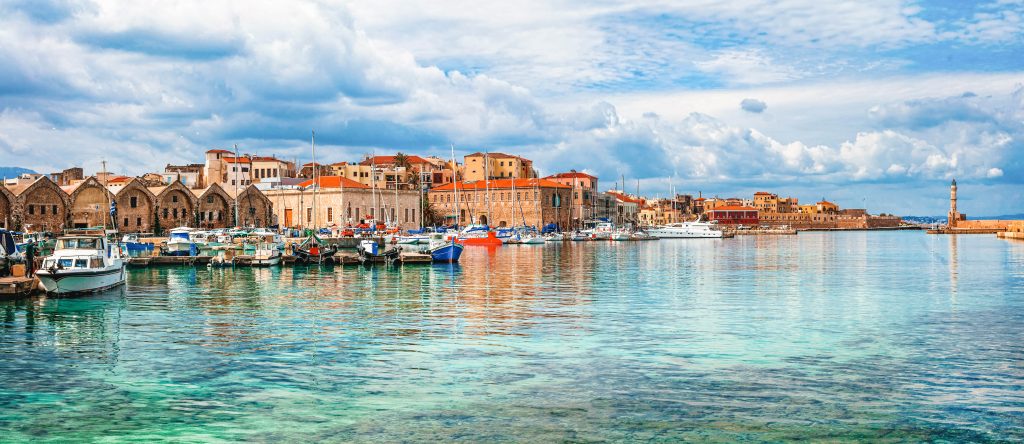
Built by the Venetians between 1320 and 1356, the harbour remained an important trading hub for the island until the early 20th century. Today it’s used only by smaller boats and yachts, and its crowning jewel is the Venetian lighthouse – one of the oldest in the world. It’s a lovely spot for a stroll early in the morning or at sunset. There are plenty of cafés and restaurants where you can enjoy a gorgeous sunset over the Aegean. Around the harbour you’ll also find some of Chania’s main sights – the mosque (now restored and turned into a gallery), the Venetian city walls, the Naval Museum and the Agios Nikolaos bastion.
Heraklion
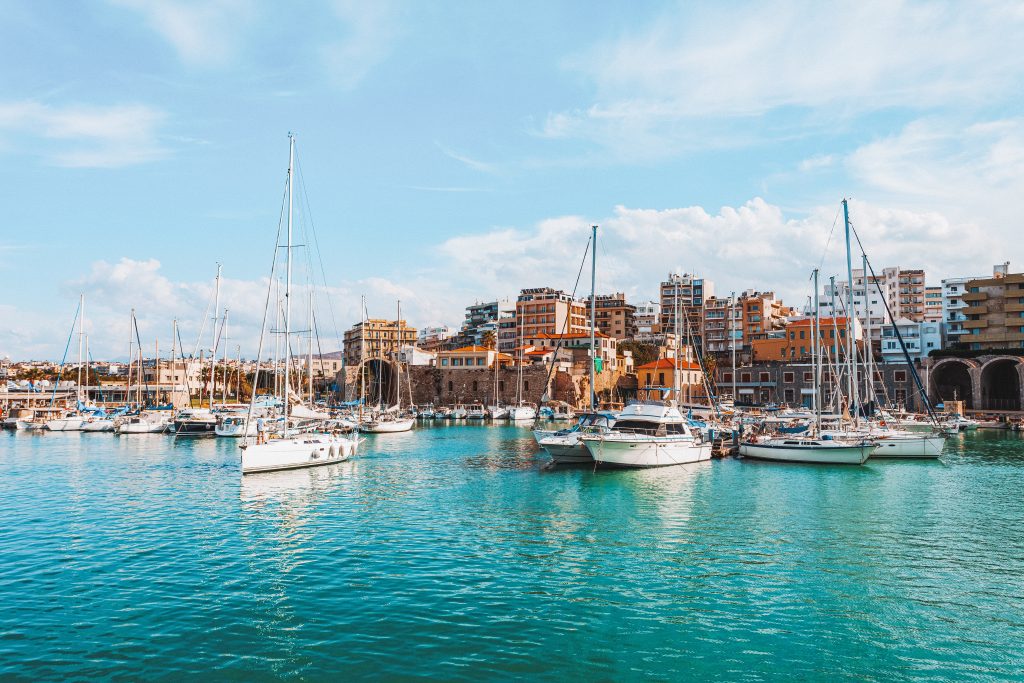
Heraklion is the island’s capital and largest city, a blend of ancient history and modern urban energy. It offers visitors an exceptionally rich palette of entertainment and attractions. Much livelier and noisier than Chania, Heraklion is known for its nightlife and its bars and restaurants. So that you don’t come away with the wrong impression of the capital, I should add that the city has a rich history and plenty of historic sights. The biggest of them is the Archaeological Museum, which holds artefacts from every period of Cretan history – I’ll tell you more about it in a moment. Another landmark is the Venetian harbour, which was every bit as important as the one in Chania. Today the area around it is a favourite place for locals and tourists to stroll. Eleftheriou Venizelou Square (Platia Eleftheriou Venizelou), or “Lion Square”, as the locals know it, is the heart of the city. Around it run the main shopping streets, with plenty of restaurants and tavernas serving Cretan specialities, as well as bars and cafés.
Heraklion Archaeological Museum
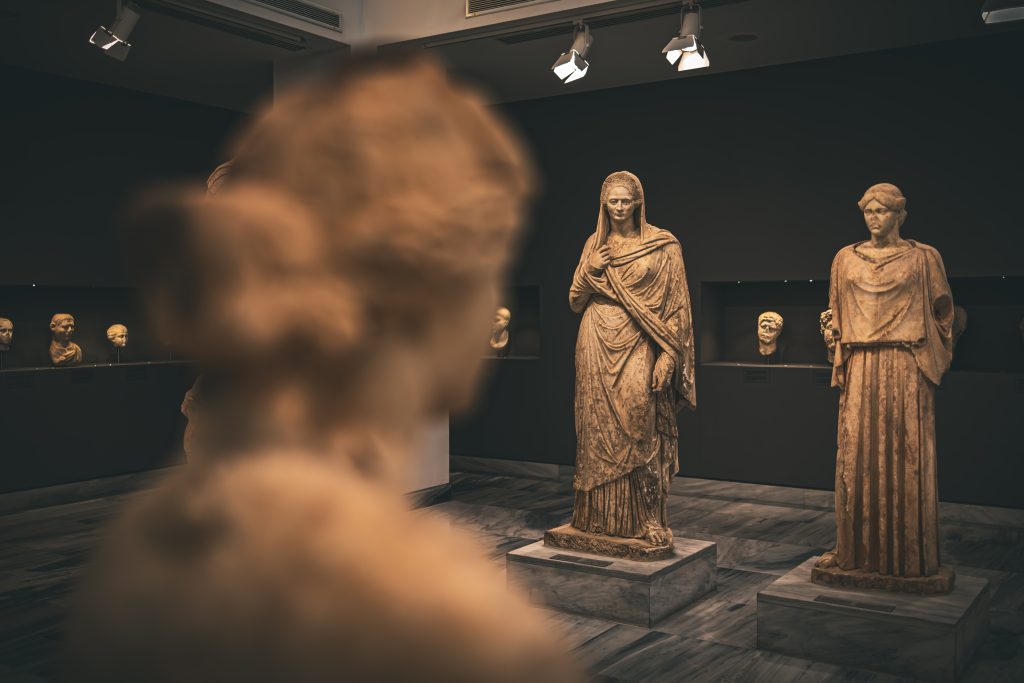
As well as being the biggest and most important sight in Heraklion, the Archaeological Museum is one of the largest in neighbouring Greece. It holds finds from the ancient cities of Knossos, Archanes, Phaistos, Zakros and more. It’s a must for anyone who wants a feel for Crete’s archaeological riches, and for the Minoan civilisation in particular. Among the artefacts on display you’ll see ancient vessels, incredible gold jewellery and impressive sculptures from various periods. One of the most intriguing exhibits is the Phaistos Disc, which still sparks debate and speculation among archaeologists to this day. Found at the Minoan palace of Phaistos, the disc is made of fired clay and stamped with symbols on both sides, and its purpose remains a mystery. One of the most popular theories is that it carries a coded text message in an unknown language and alphabet, with unknown content. You can buy tickets for the museum HERE.
Koules Fortress
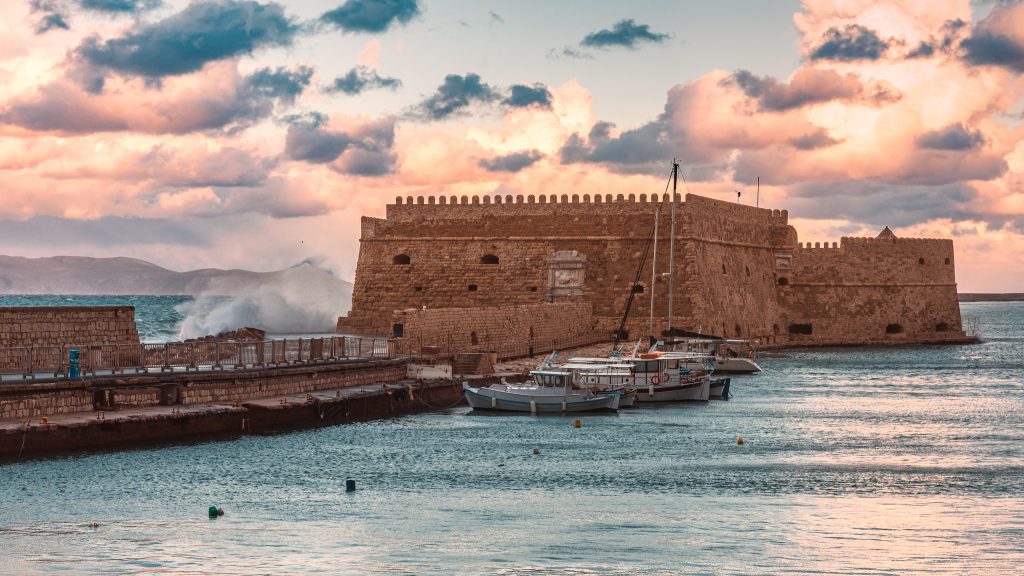
The fortress is one of Crete’s most impressive sights and a symbol of Heraklion. It was built at the entrance to the capital’s Venetian harbour to protect the city from attack. Over the centuries it has served many purposes – from prison to military base. On its walls you can still see authentic fragments of carved lions that have stood the test of time. At the top of the fortress there’s an open-air theatre used during the summer festivities. The Venetians named the fortress “Rocca al Mare”, while its present name, “Koules”, dates from Ottoman times. Today the fortress is open to visitors – and I have to say, the panoramic view of the city from its walls is breathtaking.
Knossos
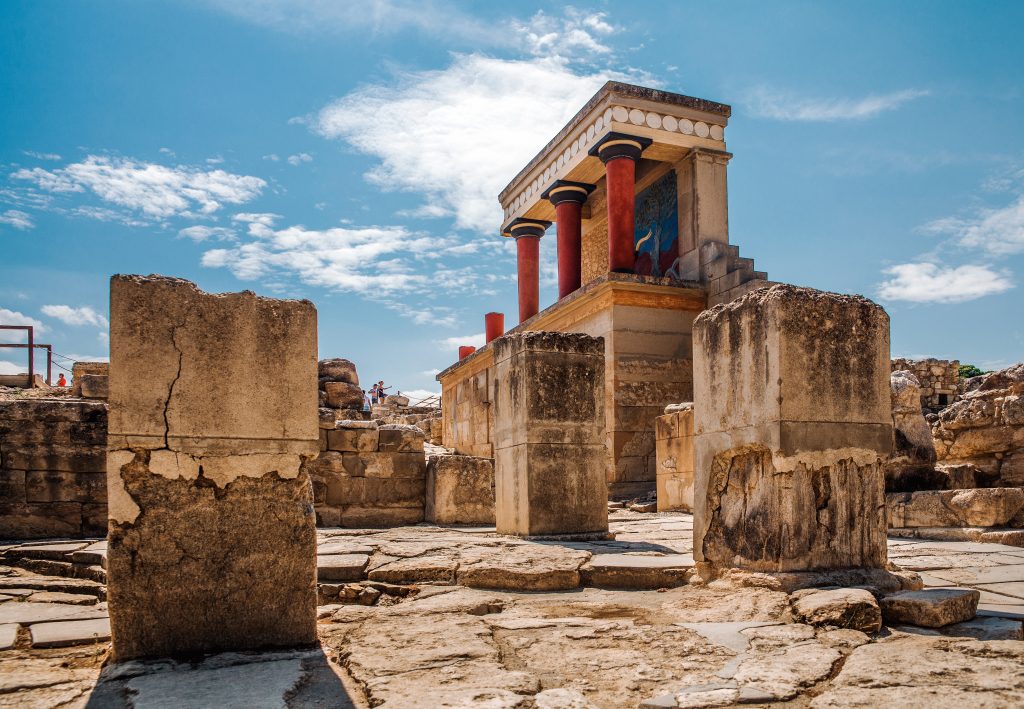
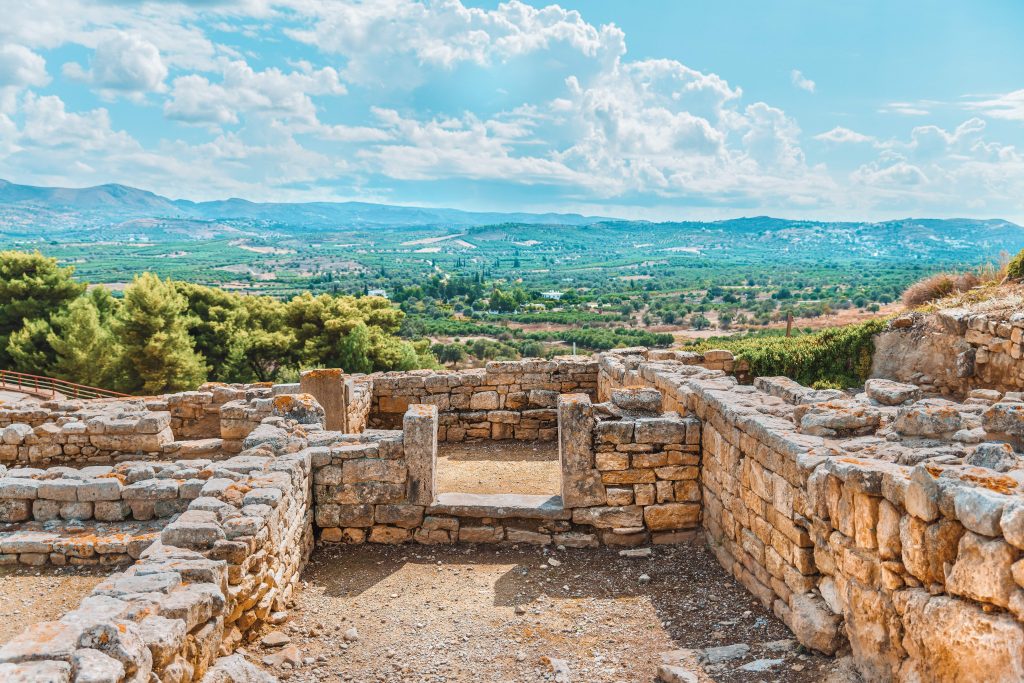
Just 5 km or so from Heraklion lie the remains of ancient Knossos – the centre of the Minoan civilisation. The ancient city and its palace, once the seat of King Minos, form the largest archaeological site on Crete, and hundreds of thousands of tourists come to the island mainly to see it. This iconic ancient city has almost 4,000 years of history and is considered one of the most advanced European cities of its time. Legend has it that the Palace of Knossos is the very labyrinth where the Minotaur of Greek mythology lived. Knossos is a must if you’re visiting Crete, especially if you’re staying near the capital, Heraklion. I strongly recommend going early in the day, because the sun gets pretty fierce later on, and one of the nearby beaches makes a far nicer place to spend the afternoon. Be sure to buy your tickets in advance to save yourself the queues. You can buy tickets HERE.
Phaistos and Malia
Besides Knossos, don’t forget to visit the palaces of Phaistos and Malia. Phaistos is the second largest, and with its magnificent architectural layout it’s considered a textbook example of a Minoan palace.
Malia, meanwhile, sits in a picturesque valley between the Dikti mountains to the south and the coast to the north. This palace is thought to have been the seat of Sarpedon, the brother of King Minos.
Rethymno
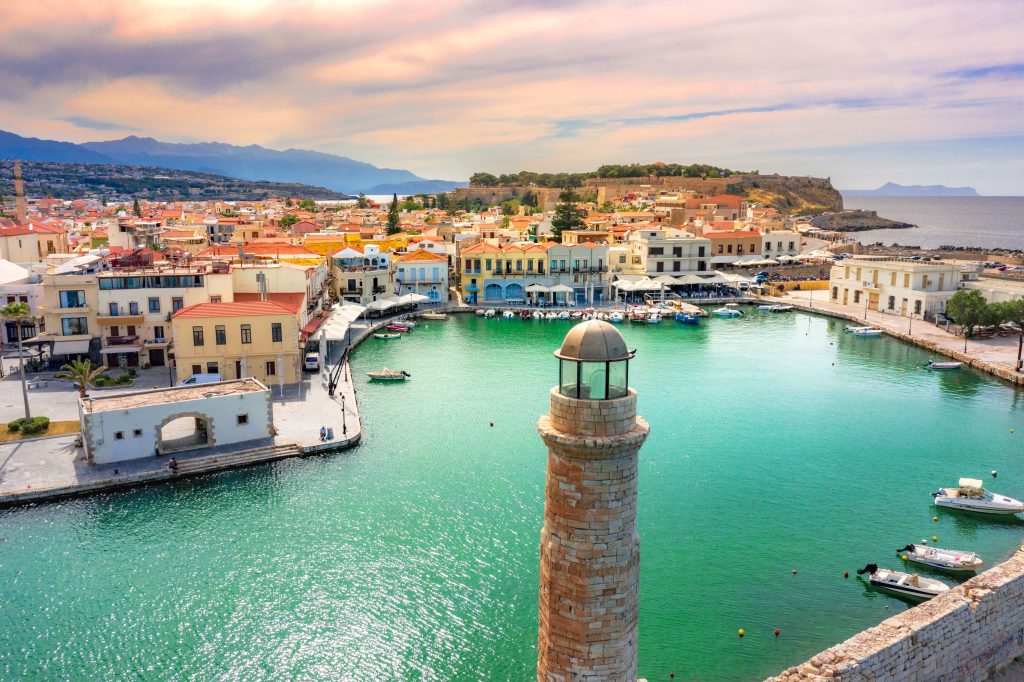
Halfway between Chania and Heraklion lies another beautiful town that inherited its romance from the Venetians. It was founded in the early 13th century, right after they conquered Crete, and most of the buildings in the old town are their handiwork. Like the old quarters of Chania and Heraklion, Rethymno’s old town owes its charm to its blend of Venetian and Ottoman architecture – a lovely fusion typical of many Greek islands. Its narrow lanes lined with colourful houses and its little Venetian harbour are perfect for a stroll, some shopping, dinner in a small family-run taverna or simply admiring the remarkable architecture. One of Rethymno’s main sights is the Fortezza, a fortress built by the Venetians in the 16th century to defend the town against Ottoman Turkish raids. I recommend visiting early in the morning or just before sunset, so you avoid the heat and can enjoy the beautiful view over the town in peace.
Arkadi Monastery
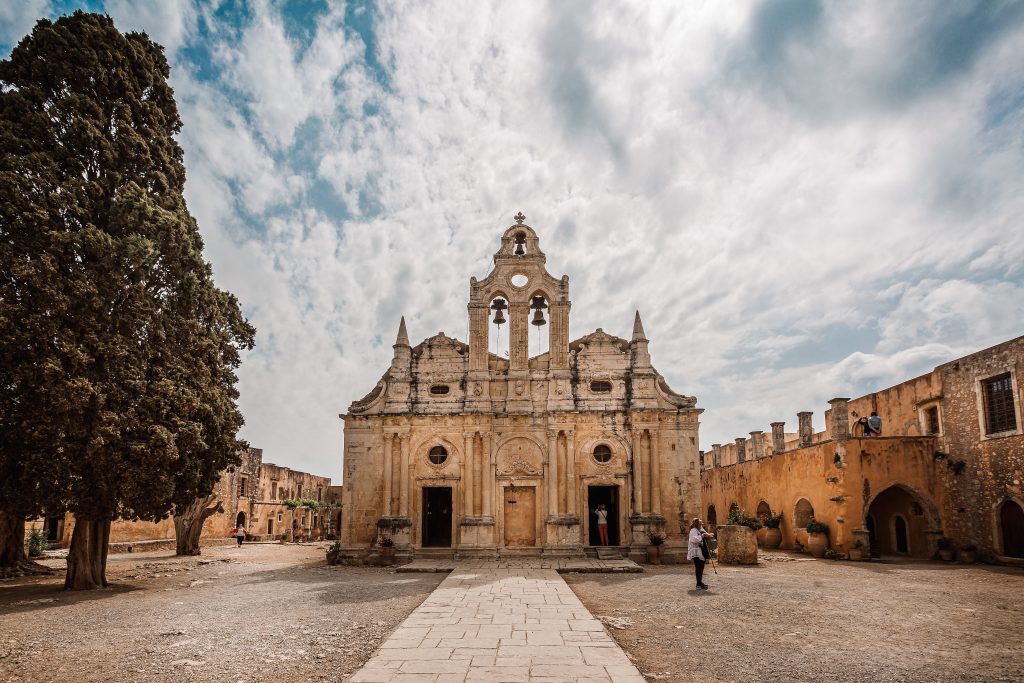
About 25 km from Rethymno stands the beautiful Arkadi Monastery – the perfect place to escape the tourist bustle and wander in the quiet shade of the cypress trees out in the countryside. In fact, nobody knows exactly when the monastery was founded. Historians give rather conflicting accounts. Some link it to the time of Flavius Arcadius (early 5th century), others to a later period – the reign of the Byzantine emperor Heraclius I. Either way, it’s clear that Arkadi Monastery is hugely important to local history. The village of Arkadi, where the monastery stands, was at the heart of the events of 1866, during the Cretan revolt against the Ottoman Empire. During the uprising, more than 940 Greeks, mostly women and children, took refuge in the monastery. A 15,000-strong Turkish army besieged it for three days and finally managed to break in. At that moment the locals chose death over slavery and blew up barrels of gunpowder, which in the end killed hundreds of Turks and Cretans. Their sacrifice turned the monastery into a symbol of the Greek fight for independence.
Balos
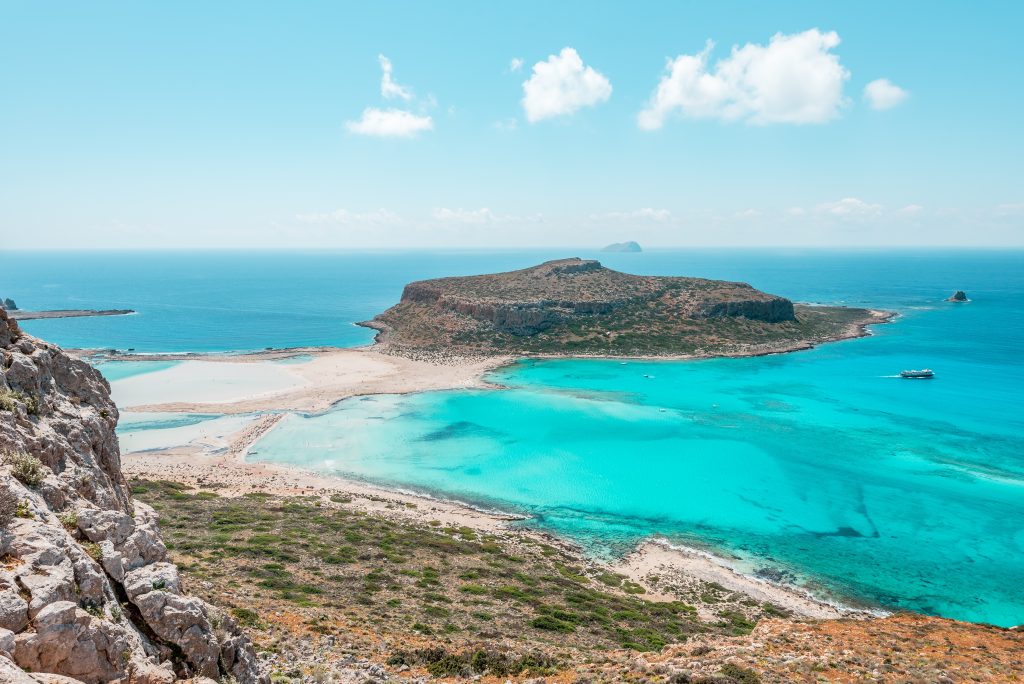
Without doubt one of the most beautiful beaches on Crete – Balos Lagoon – lies near the town of Kissamos. Squeezed between the little island of Gramvousa and Crete itself, this incredible lagoon sits right on the shore.
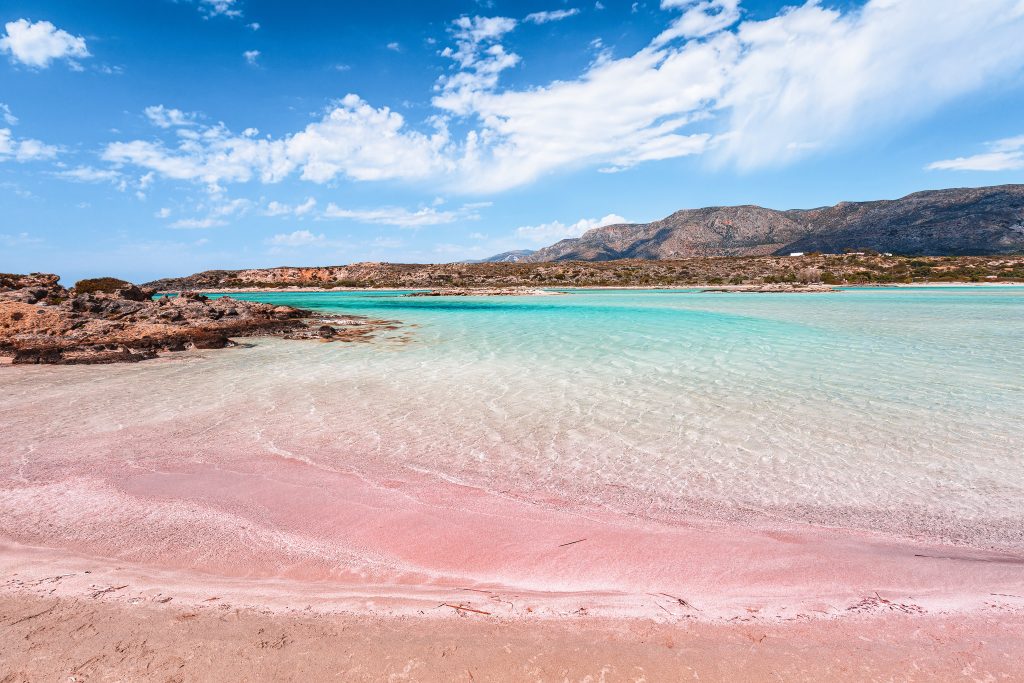
It’s one of the most photographed and most impressive places on Crete. Simply unique. This is where three seas meet – the Ionian, the Aegean and the Libyan – and the water is crystal clear, shimmering in shades of turquoise and emerald green. The shallow seabed is covered in very fine sand that turns a delicate pink in places.
Every day, boat trips leave from Chania, Heraklion and the nearby town of Kissamos, mooring at Balos for a few hours. The other option is to drive and then walk for about 20 minutes to the beach itself. We went for the second option, as we didn’t want to be pressed for time and wanted to stay for as long as we liked.
Elafonisi
Elafonisi is one of the most beautiful beaches in western Crete. It sits on a small island 80 km south-west of Chania. The islet is cut off from Crete by a small, shallow lagoon that you can easily cross on foot. It’s only about 200 metres.
The place is famous for its magical, soft pink sand and clear turquoise water. They say the sand gets its pink colour from the waves washing ashore tiny fragments of coral from African reefs.
Elafonisi is best visited in spring or autumn. In summer it often gets overcrowded. If you’re holidaying on Crete at the height of the season, try to drive there in the morning, before the tour coaches “flood” the beach.
Seitan Limania
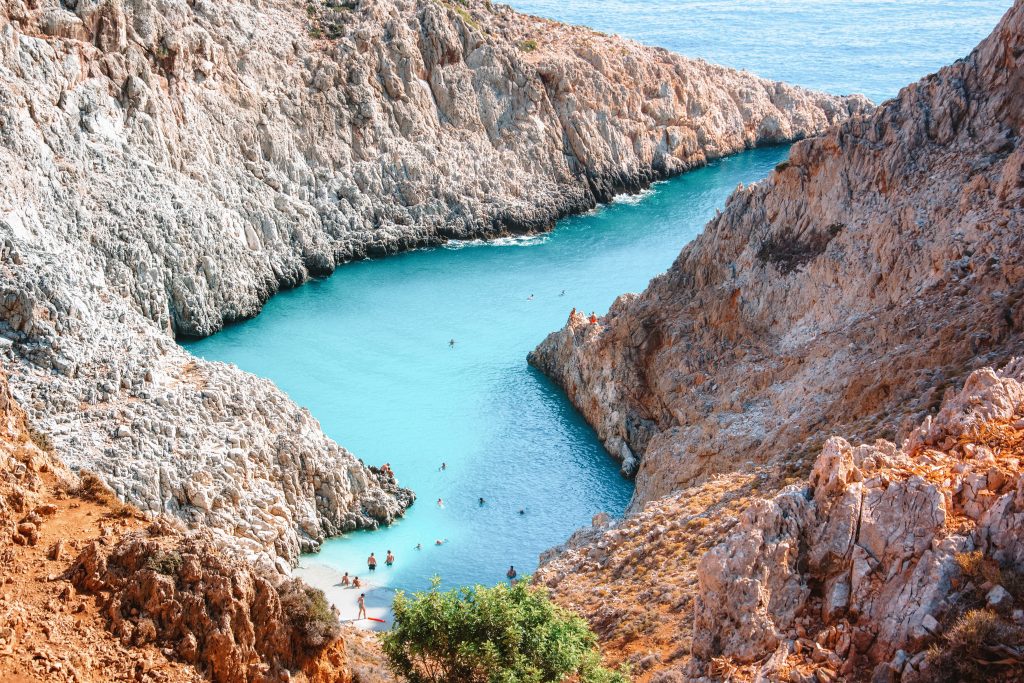
Seitan Limania, or “the Devil’s Harbour”, is one of the wildest beaches on Crete, about ten kilometres from Chania. It’s hard to reach but incredibly beautiful. Its shape is striking: the beach zigzags deep into towering cliffs, and the water looks calm even in bad weather. You’ll get the best photos from the car park above, while brave thrill-seekers can scramble down a steep gorge to reach the beach itself. On the path down you might even meet wild goats. It’s a truly incredible place and well worth a visit, especially if you’re staying around Chania.
Samaria Gorge
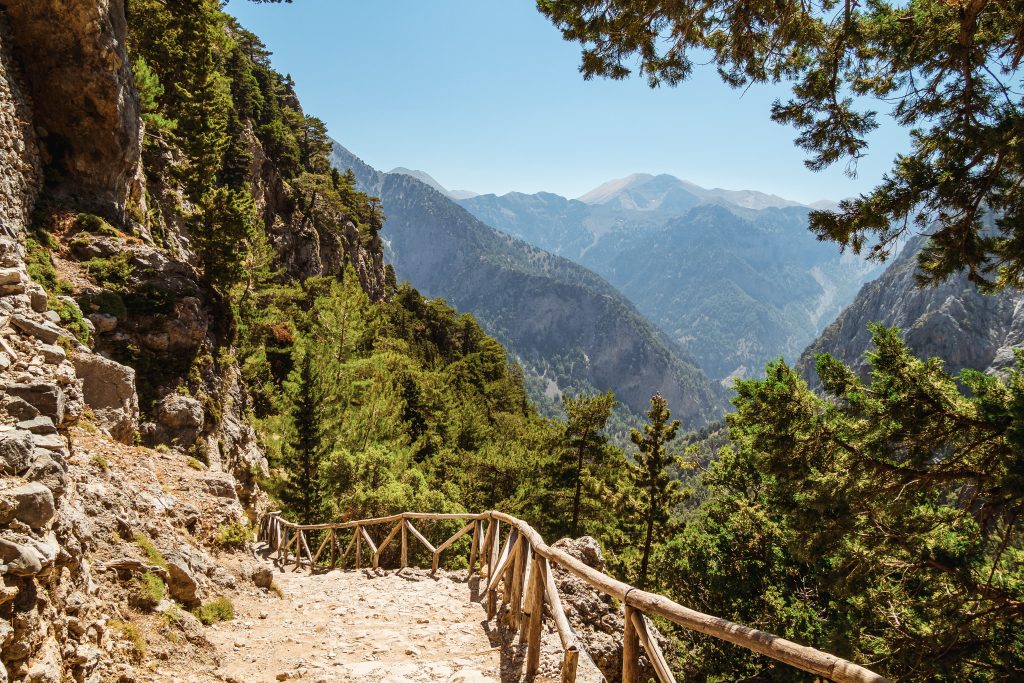
Samaria Gorge is a unique natural wonder and a national park, and according to some sources it’s the longest gorge in Europe (the gorge itself is 13 kilometres long, and to reach the sea you have to walk roughly another 3.7 kilometres). It’s a real challenge for keen hikers and certainly takes a bit more effort than the island’s other sights.
In the warmer months you can do the hike, which takes 6-7 hours. It’s a thrilling experience, if a fairly tiring one, but the picturesque views and the fresh air laced with the scent of herbs are worth every bit of the effort. The hike starts with a brutally steep descent, and somewhere around the halfway mark you’ll reach the village of Samaria, abandoned after 1962, when the gorge was declared a national park and its residents were forced to leave.
The most spectacular and most photographed spot in the gorge is known as “Portes” (the Gates). The rock walls are just 3 metres apart and about 300 metres high, which makes for a very imposing sight. Along the way you might also spot the Cretan wild goats, the kri-kri, that live here. The gorge comes out at the village of Agia Roumeli, on the shore of the Libyan Sea. Plunging into the lovely sea after a long hike is a real treat. Some hikers hire a boat from the beach to take them to the village of Sfakia, which I’ll tell you about in a moment.
Sfakia
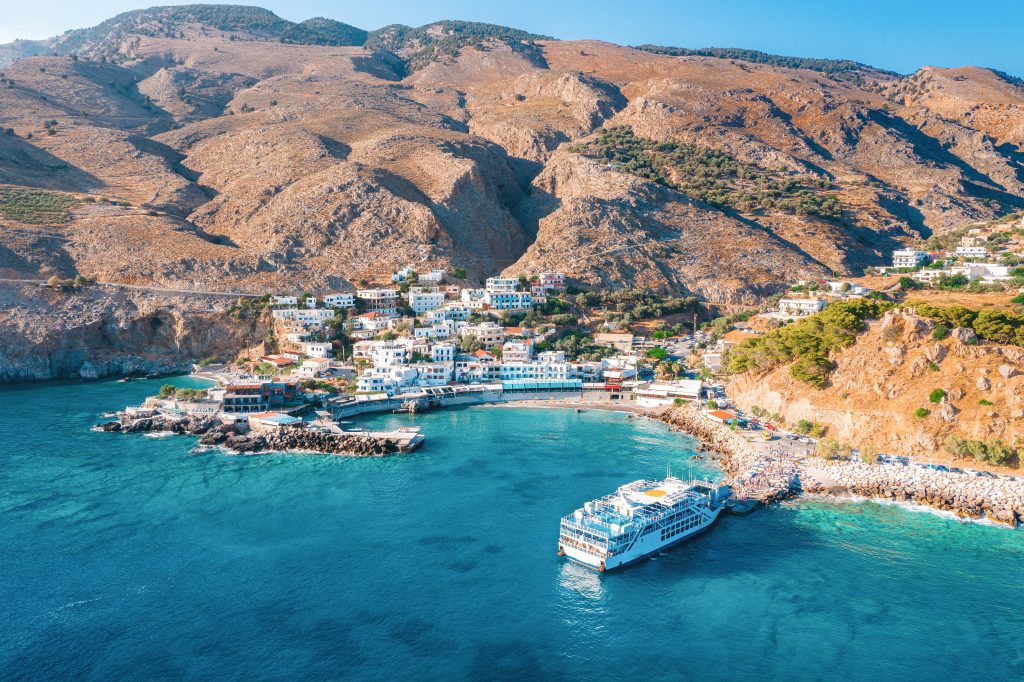
The coastal village of Sfakia lies on the south-west coast of Crete. It’s known for its authentic atmosphere, white houses and beautiful views of the Libyan Sea. Time seems to have stood still here, and the local traditions and hospitality draw travellers looking for peace and quiet in a traditional Cretan setting. The village is the starting point for well-known hiking routes, including the picturesque Samaria Gorge. Ringed by majestic mountains, it’s ideal for lovers of nature and tranquillity. Sfakia serves traditional Cretan food in cosy little tavernas, where visitors can enjoy fresh fish and local specialities. The area is known for its history too, with numerous archaeological sites and walking trails leading to hidden beaches and mountain peaks.
Vai Beach
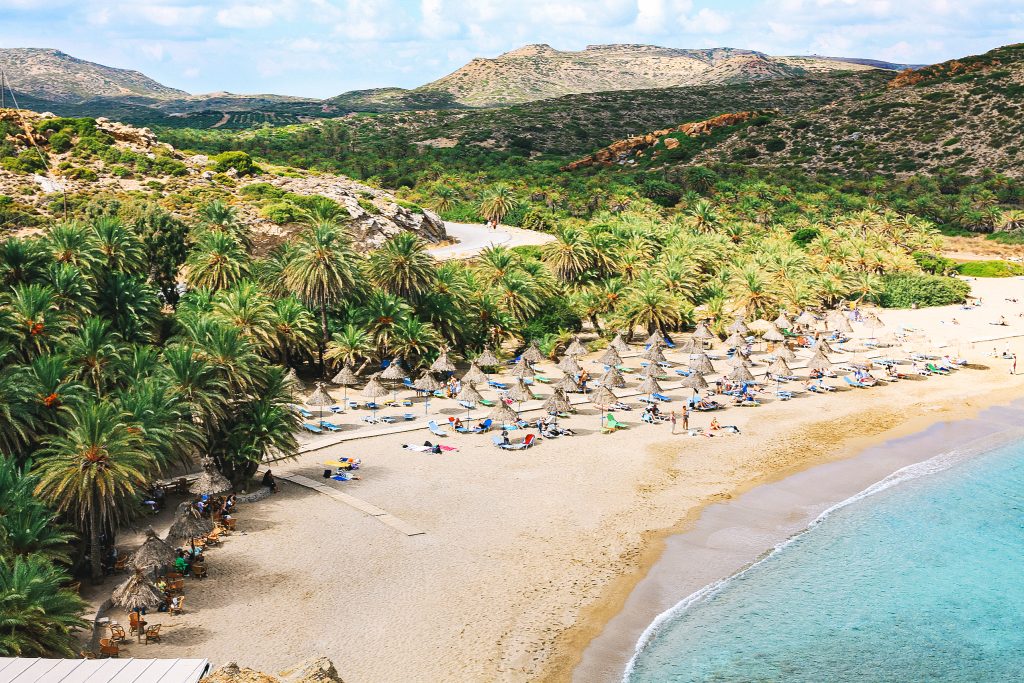
In the east of Crete lies one of the island’s most exotic spots. As well as being home to the largest natural palm forest in Europe, Vai Beach draws visitors with its clear, shallow turquoise water. The combination of fine white sand, gorgeous blue sea and a palm forest makes it a magnet for anyone who loves the seaside. Fun fact: the beach was relatively unknown until the 1980s, when it shot to fame thanks to the first advert for Bounty bars, which was filmed right here.
Agios Nikolaos
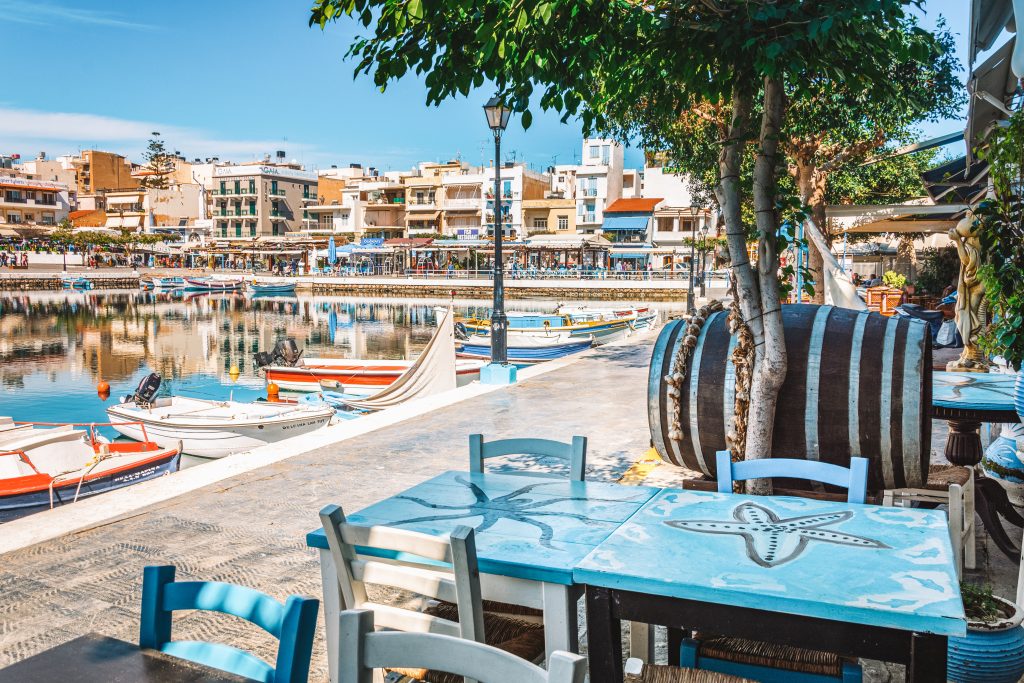
This pretty town in eastern Crete is known for its relaxed, romantic atmosphere and beautiful views over the Gulf of Mirabello. It’s no coincidence that the locals call it “the Saint-Tropez of Crete”.
In the centre of town, your eye will be drawn to a lake linked to the sea by a man-made channel. This is the freshwater Lake Voulismeni, which is 64 m deep. When there’s an earthquake in the area, its surface starts to ripple. Make sure you take a stroll around the lake and along the channel, which is lined with tavernas, cafés and little shops. It’s also the most popular place for a walk in town, and you might even bump into a celebrity.
Spinalonga Island
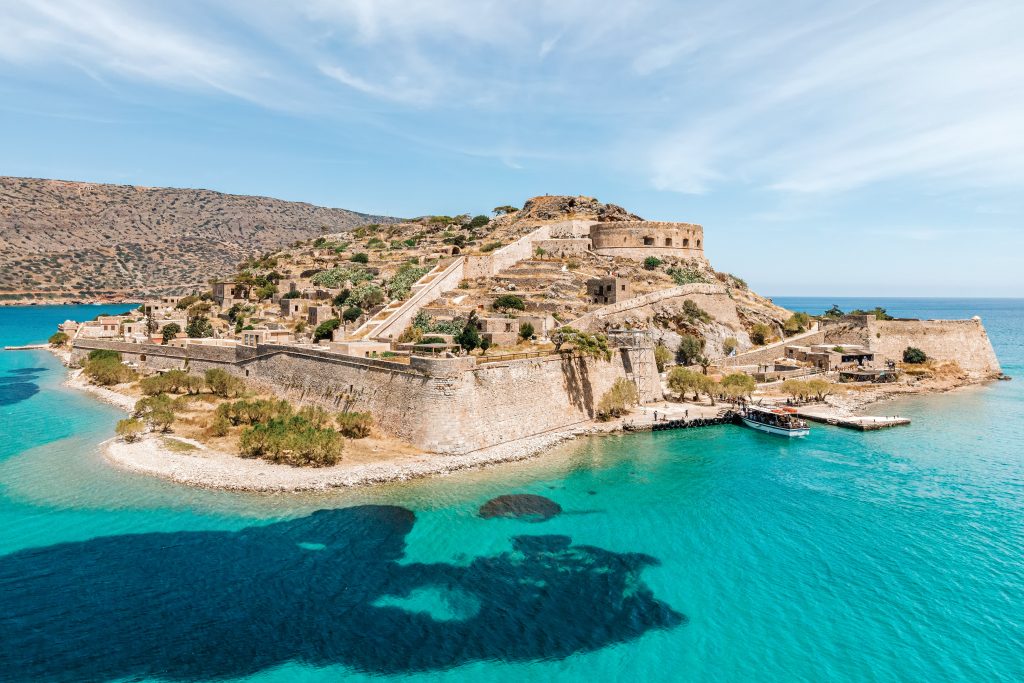
This little island in the Gulf of Mirabello is one of Crete’s most popular tourist attractions. In the 16th century the Venetians built an impregnable island fortress here to guard the settlement against pirates. Later, even after conquering Crete, the Ottoman armies couldn’t take Spinalonga for a full 46 years.
Spinalonga is known for its grim and sad history. It’s called the island of the living dead, because from 1903 to 1957 it was a leper colony, with patients brought not only from Greece but from all over Europe. You’ll see the tunnel the lepers walked through, knowing there was no way back – this is where they waited to die. The fortress is well preserved, and some of the buildings have been restored. For a day trip by boat to Spinalonga, you can buy tickets HERE.
Elounda
Elounda is one of the most popular holiday spots on Crete, having grown from a small fishing village into a luxury resort with some of the most expensive hotels in Greece. Surrounded by lavish natural beauty, Elounda offers stunning sea views across to Spinalonga, delicious Cretan food and plenty to do. The locals are proud that even Lady Gaga chose Elounda for her summer holiday ten years ago. A few kilometres away is the village of Plaka – a quiet, picturesque spot with cosy tavernas and souvenir shops, where you can catch a boat to Spinalonga.
Matala
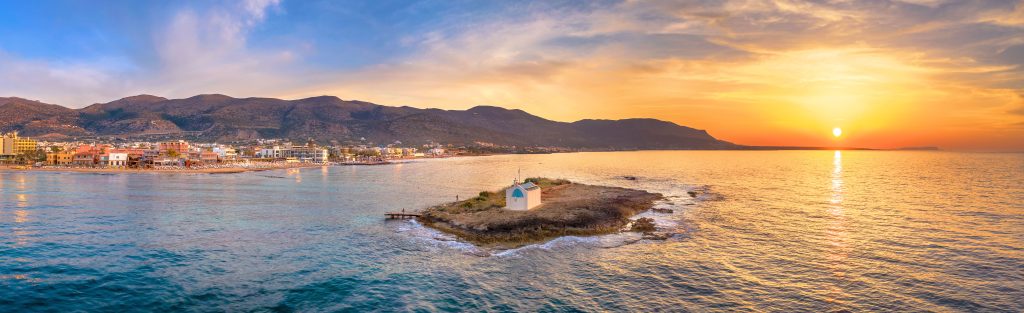
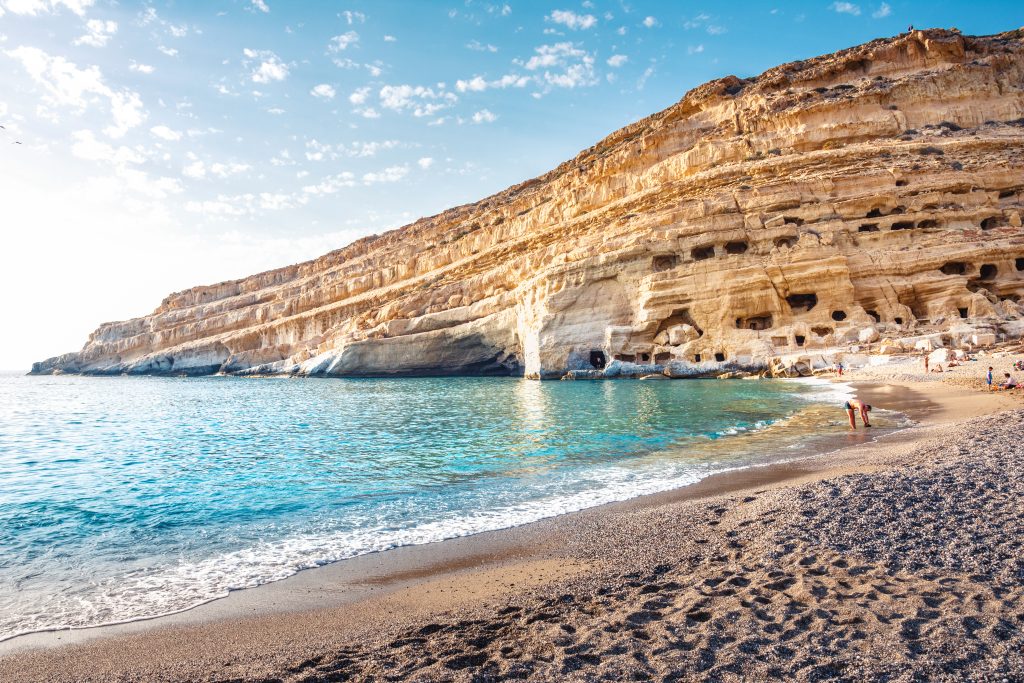
Matala, on the western edge of the Messara Plain, is one of the most popular villages on Crete. It draws visitors with its unique atmosphere and history. Once the ancient port of Phaistos, Matala is now famous for its iconic cliff riddled with caves and its lovely beach with crystal-clear water. In the 1970s the village became a hippie hotspot, and that tradition lives on today with annual festivals and concerts. History and archaeology buffs can explore the nearby sites of the Palace of Phaistos and Gortyn and uncover Crete’s ancient secrets.
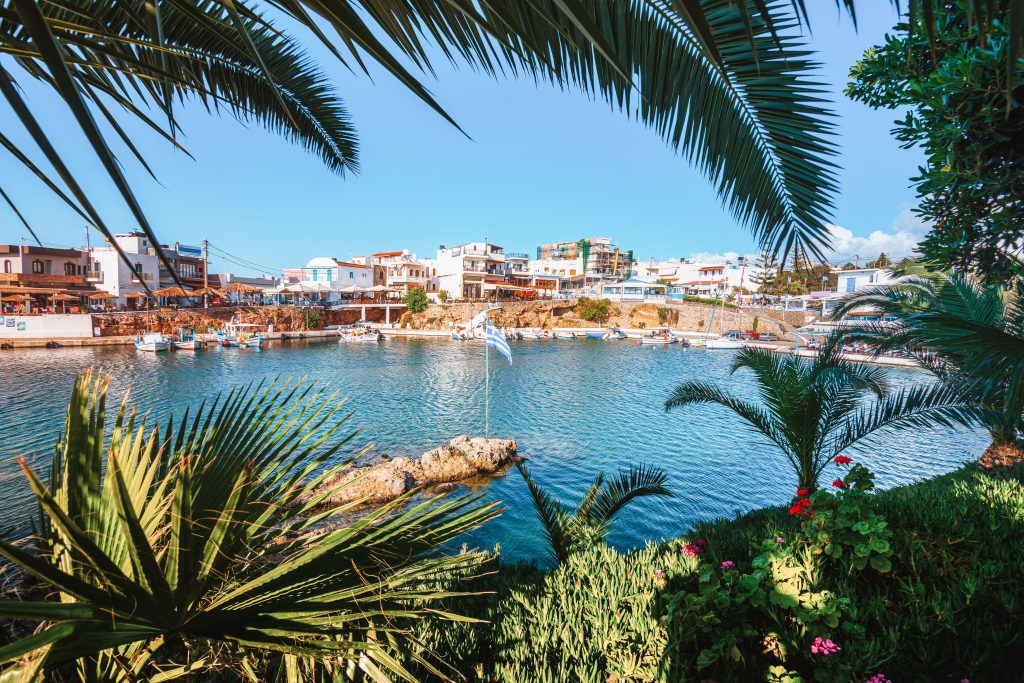
The fishing village of Sisi
The charming fishing village of Sisi, on Crete’s north-east coast, is known for its laid-back atmosphere and picturesque harbour. Tucked between mountain slopes and the shore, Sisi draws visitors with its crystal-clear water, beautiful beaches and traditional tavernas where you can tuck into fresh seafood. Unlike the busier resorts, Sisi has kept its authentic Cretan charm and is ideal for anyone after peace and relaxation. The village makes a perfect base for exploring the surrounding sights and for unhurried walks by the sea. It’s close to Heraklion, Malia and Agios Nikolaos, so if you’re in this part of the island, I’d recommend paying it a visit.

Author
Vilislav Alkantara