
Built on the remains of a Roman imperial palace, Split is a charming Mediterranean city on the Adriatic coast, in the Croatian region of Dalmatia. Its buzzing cafés and little restaurants, its beautiful, typically Mediterranean buildings and its palm-lined streets give it an irresistible charm and make it all the more appealing to visitors, especially in summer. Split is the second-largest city in Croatia and a great base for exploring a different place in the area every day – just as we did. We spent several days in Split, heading off to a new destination each day. The city also has a big port, from which boats and ferries leave several times a day for the beautiful and still unspoilt Croatian islands.
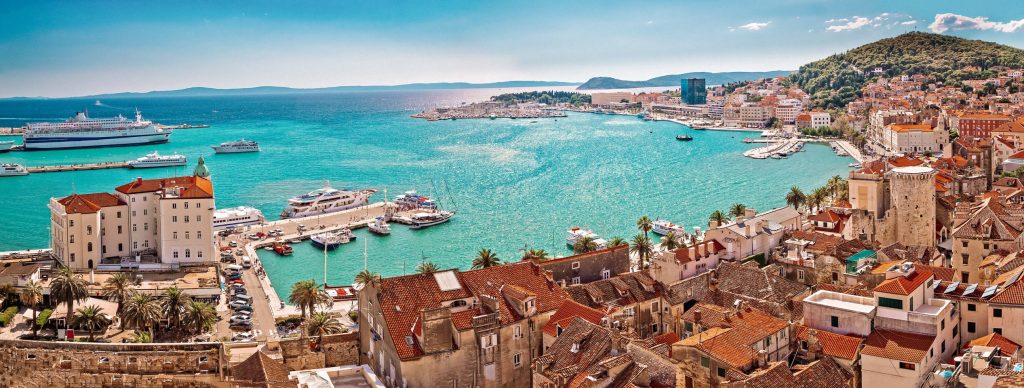
The Dalmatian coast and its towns stand out for their remarkable cultural and architectural variety compared with the cities of inland Croatia. While we were still travelling from Zagreb to Split, I noticed that most of the towns along the way were typically Balkan and had nothing in common with what I’d seen in photos. Split isn’t famous for having the country’s most beautiful beaches, and compared with Dubrovnik it may strike you as a little dull, but you definitely shouldn’t underestimate it. Split and the area around it have an incredibly rich history. The city was founded in the 2nd century BC as a Greek colony. It was later ruled by the Romans, the Avars, the Slavs and the Byzantines. It belonged to the Venetian Republic for a full four centuries, then came under the Kingdom of Croatia and later the Kingdom of Hungary. A true melting pot of cultures. Interestingly, in the 20th century Split became the largest ferry terminal on the Adriatic coast and the main gateway to the alluring Croatian islands.
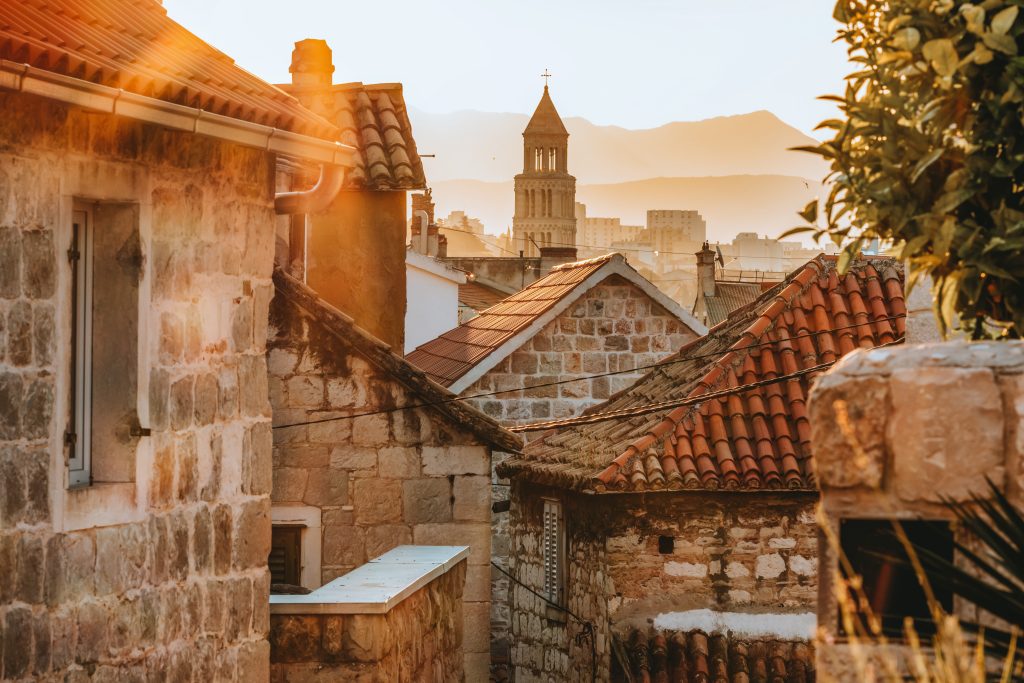
I should point out here that you need no more than 1–2 days to see Split. We managed to see the most interesting places in exactly one full day and even spent the late afternoon on one of the beaches near the city. In this blog I’ll tell you about the most interesting places I recommend you visit.
How do you get there?
Although Split has its own airport, there are currently no direct flights from Bulgaria, but there are flights from Sofia to Zagreb and Zadar. Zadar is another resort town on the Adriatic coast and is definitely the handier option for reaching Split, Croatia’s second-largest city. Whether you land in Zagreb or Zadar, the easiest and cheapest way to get to Split is by coach. And if you’re not a fan of public transport, hiring a car is also a good, if pricier, option.
What should you see in Split?
Diocletian’s Palace
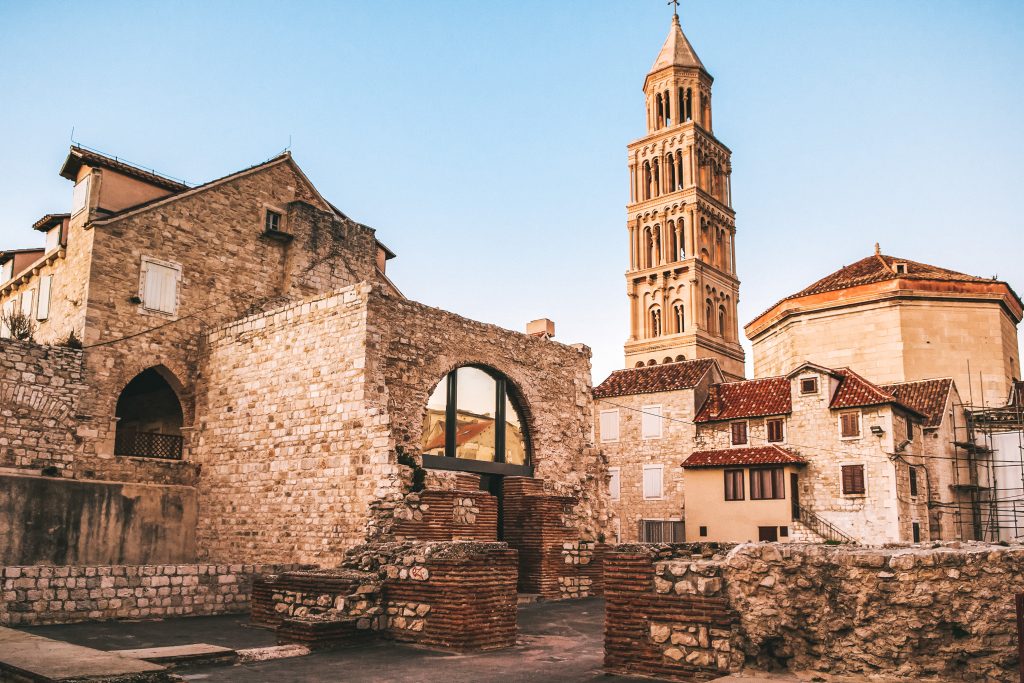
I have to start with the most iconic and perhaps the oldest surviving sight in Split: the palace of the Roman emperor Diocletian, which sits literally at the very core of the city. The beautifully preserved complex brings together the remains of the lavish villa where Diocletian spent the last 8 years of his life and a large military camp. The palace is a UNESCO World Heritage Site and there’s no entrance fee. Another fact worth mentioning is that the palace ruins were used as a set for some of the scenes in the hit series “Game of Thrones”.
The palace, whose ruins you’ll spot all over the city, is considered one of the finest examples of late Roman architecture. The wide arcaded streets leading to its four gates are particularly striking. The southern part of the building once housed the emperor’s private quarters, while the northern part had a workshop making woollen uniforms. Like every great Roman palace, it had its own aqueduct, which was around 4 km long.
The Old Town
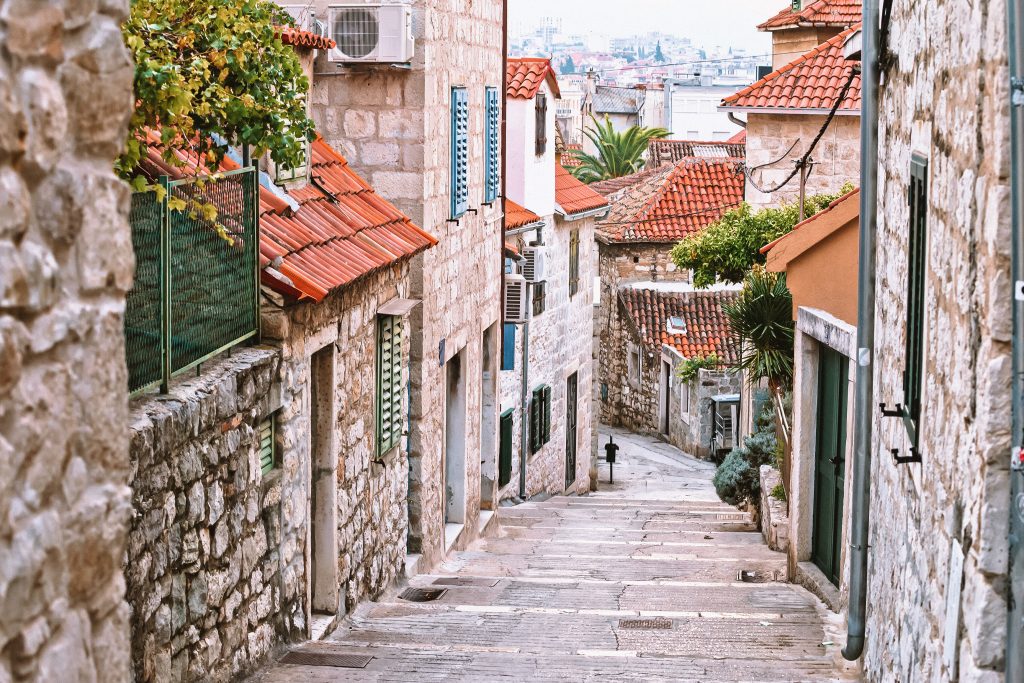
Right next to Split’s main sight – Diocletian’s Palace – lies the old part of the city. Set off along its narrow lanes, which twist and turn like a maze, and you’re bound to end up on one of the beautiful squares paved with polished marble slabs. You can try the local food or a tasty Mediterranean dish in dozens of restaurants, and sample Croatian coffee, which is strong and aromatic – as the locals say, “Italian style, but the Balkan way”. In the evening you can watch the lively lanes from a wine bar. Even if you get lost, you’re sure to end up on People’s Square with its famous clock tower, which has 24 numbers instead of 12. The Old Town has hundreds of little shops selling souvenirs and local produce, as well as a big shop devoted entirely to Game of Thrones souvenirs.
The Peristyle
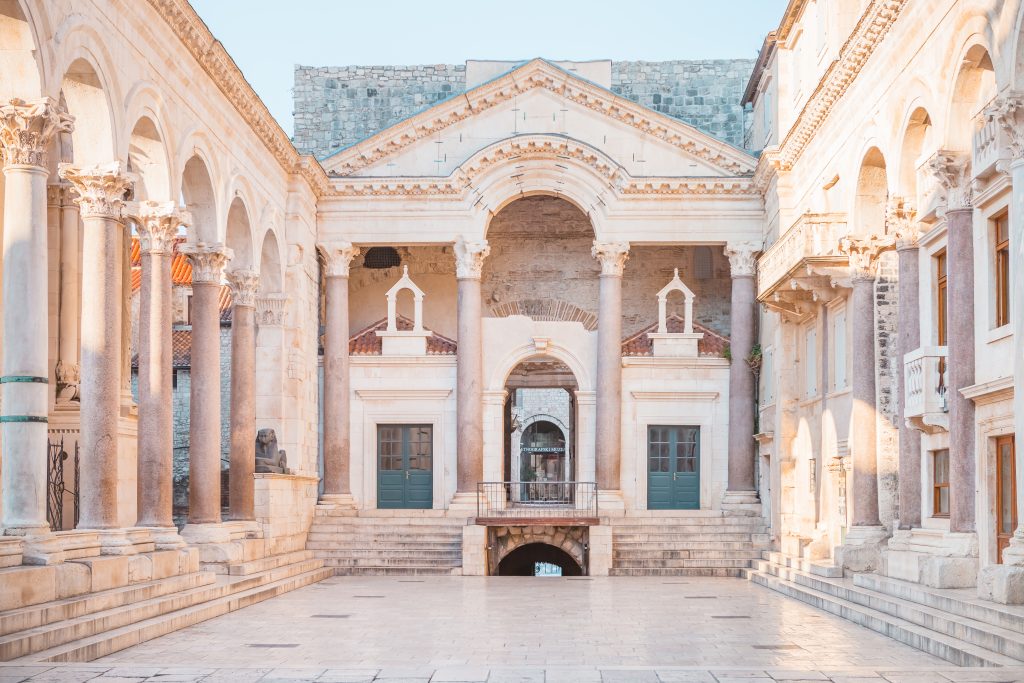
At the heart of the imperial part of the palace lies the Peristyle. It’s a courtyard surrounded by colonnades, where you can walk on the original stone paving dating from the 3rd century AD. Most tourists think the Peristyle is actually Diocletian’s Palace, but in truth it’s just a courtyard that has since become a square. In the evening the atmosphere here is completely different from the daytime. The crowds of tourists are gone and it’s calm and pleasant. Most visitors sit in the cafés and bars around it or on the steps by the colonnades, while the centre of the Peristyle becomes an impromptu stage for street musicians showing off their talents to visitors from all over the world. One tip from me – if you want a good photo here without the crowds, get up at sunrise and come really early, before everyone else pours in.
The Cathedral
Another sight you simply can’t miss is the Cathedral of St Domnius, named after one of Croatia’s best-loved saints and the patron saint of Split. The cathedral stands on the site of Diocletian’s former mausoleum: the building was converted into a church, and all the pagan statues and the emperor’s sarcophagus were removed. What happened to the sarcophagus remains a mystery, but given how Diocletian treated Christians, probably nothing good. Along with Diocletian’s Palace, it’s one of the most visited sights in Split, and the view from its 60-metre bell tower is unforgettable.
The Riva promenade
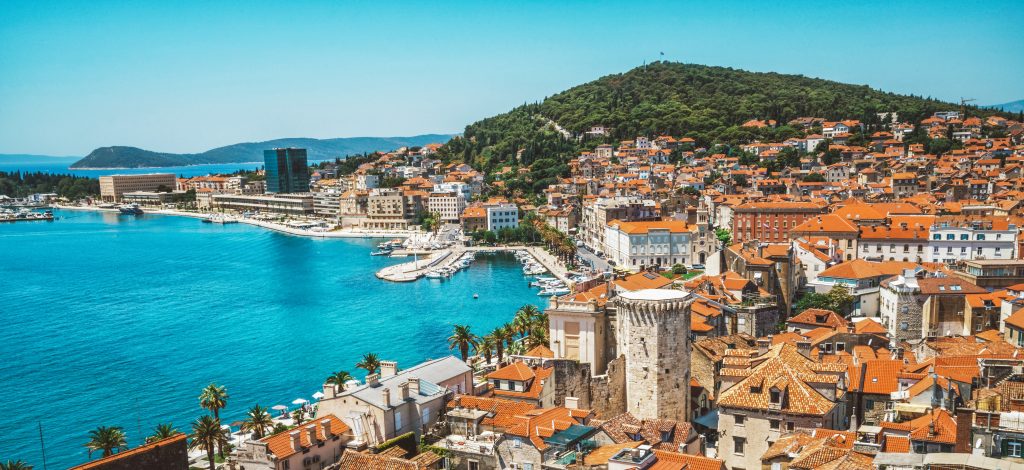
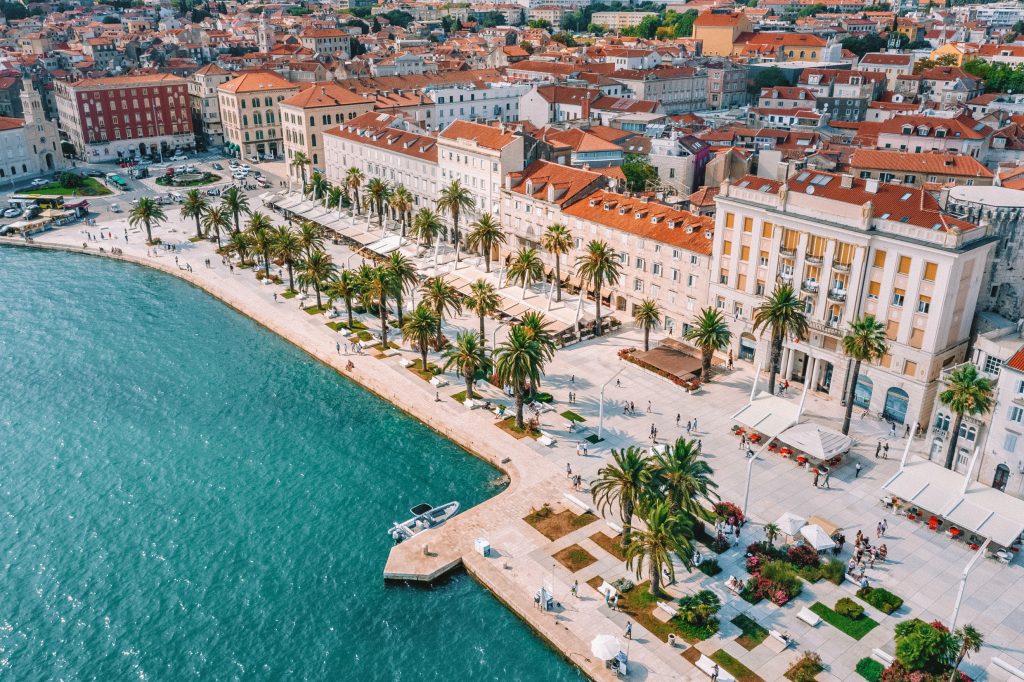
The Riva promenade is one of the most popular spots with tourists, especially the city’s younger visitors. Although it’s not a typical tourist attraction, this beautiful promenade, lined with huge palm trees, is packed with clubs, cafés and restaurants where the locals gather too. In the evening it’s really lively, and I’d say the Riva gives the city a whole new face – much noisier, more colourful and more youthful.
Marjan Hill
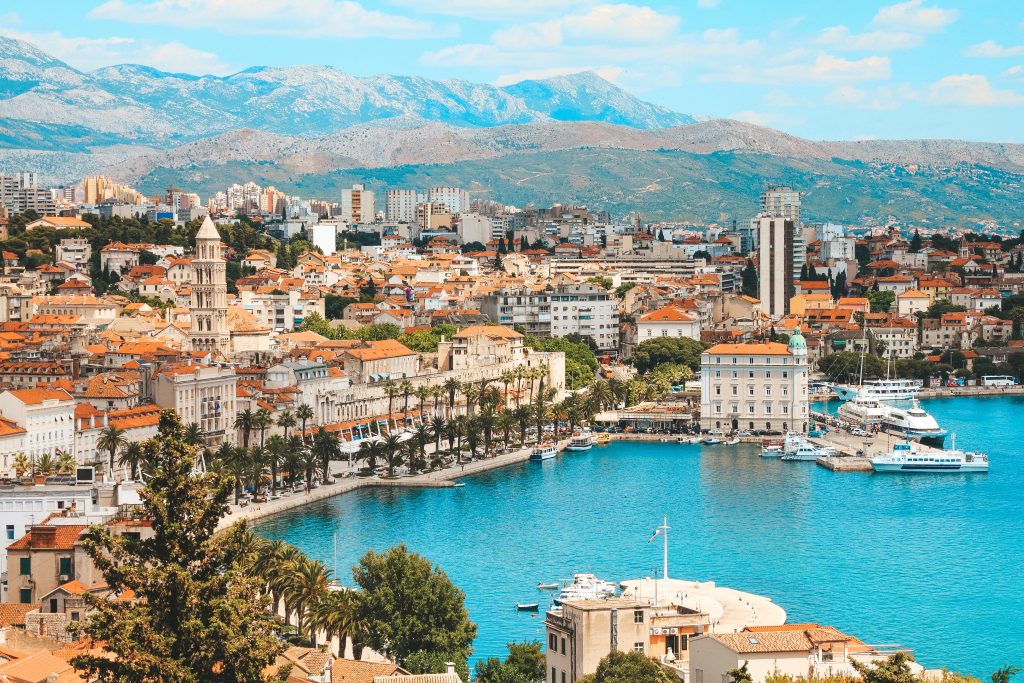
Marjan – written Marjan in Croatian – is a huge hill turned into a park, which was declared a protected area in the 1960s. Its slopes and woods are the city’s green lungs and a popular escape from the noise of the city or the summer heat. The easiest way to get there is by taxi, but you can also walk up through the old Varoš quarter in 15 minutes. I highly recommend going in the late afternoon so you can enjoy a beautiful sunset from the top. From up there you can see not only the city’s seafront but also incredible views of the Adriatic and the nearby islands.
Hitting the beach in Split
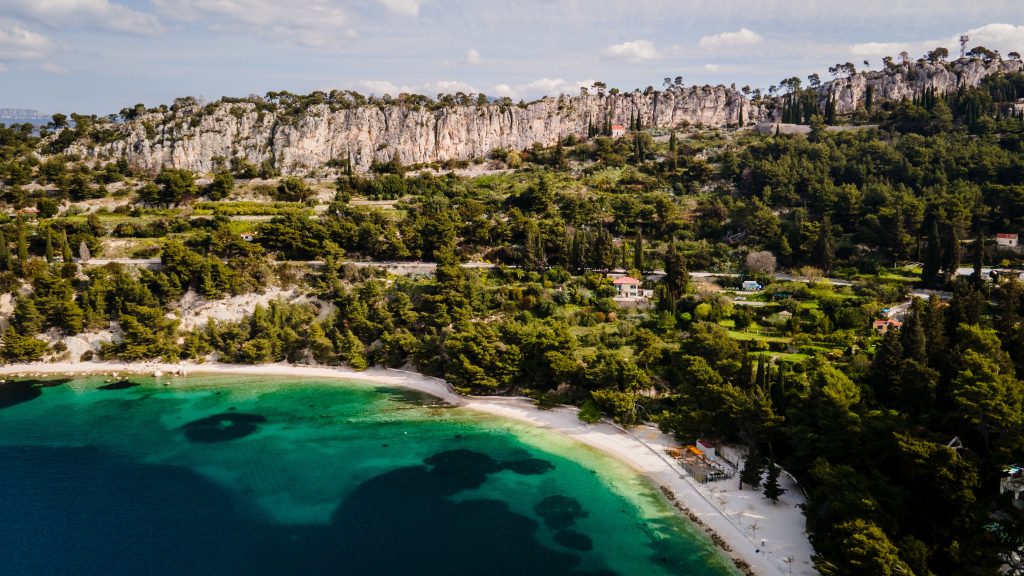
Although Split is on the Adriatic, its beaches aren’t as beautiful as those at the other resorts nearby, especially on the islands – but then there’s really no comparison. Still, as I mentioned at the start of this blog, we managed to see the main sights of the city in half a day and decided to spend the whole afternoon on one of the beaches at the foot of Marjan Hill. We got there by Uber – there is public transport, but we preferred the quicker and more comfortable option. The beach we went to is called Kašjuni (Kasjuni beach), and the peninsula where Marjan Hill stands has plenty of other wild beaches backed by thick forest. It was beautiful. The beaches here are rocky, with no sand, so I’d recommend bringing suitable shoes. Split itself has several city beaches you can head to if you don’t fancy leaving town – one of the most convenient, right next to the Old Town, is Bačvice (Bacvice Beach).
What should you eat in Split?
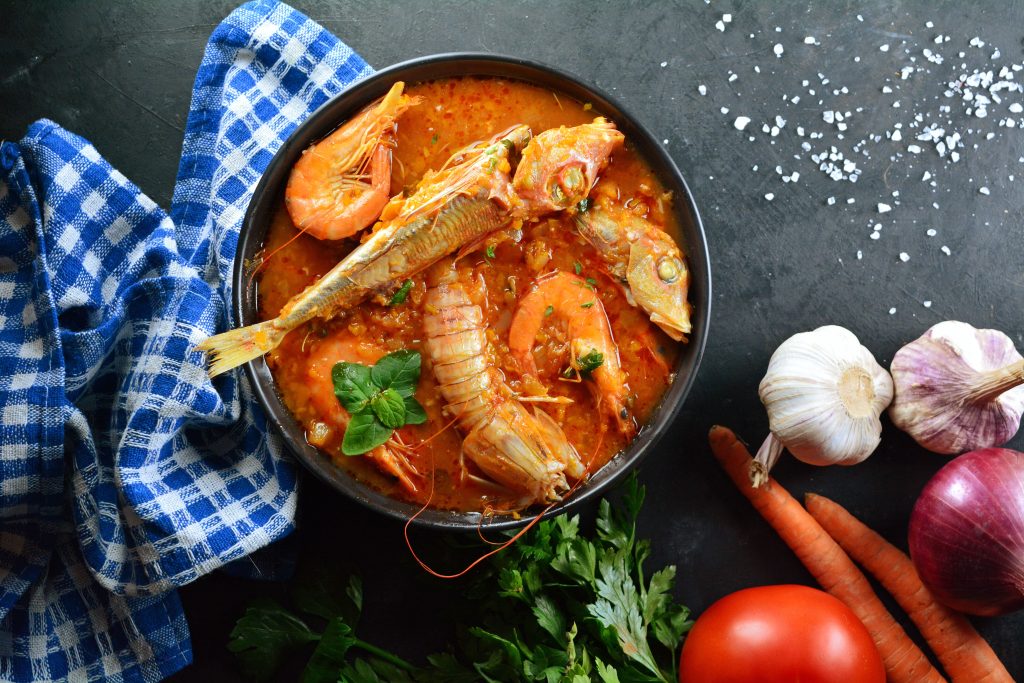
Croatian cooking is very close to Serbian, but it has its own character, having been influenced by many cultures – Italian, Greek and Hungarian. In almost every restaurant in Split you’ll find a few menu staples: fish, pizza, pasta and risotto. Besides fish and seafood, Croatians love beef and lamb, and only rarely eat pork. The traditional food of Dalmatia, the region Split belongs to, includes some incredible dishes you won’t find anywhere else and simply have to try. I’ll start with brudet, a classic dish of the region – a fish stew in tomato sauce. Every restaurant and every family has its own favourite version, but wherever you eat it, I’m sure you’ll love it. Another staple on almost every menu is black risotto, usually served with seafood. The locals tend to have it for lunch.
Dalmatia also has a few traditional desserts to sweeten your holiday. Be sure to try the local egg custard pudding, rozata. At first glance its ingredients are nothing special – eggs, sugar and milk – but its name and its wonderful aroma come from the traditional rose liqueur, also known as rozalin, that’s added to the mix. The dessert actually has quite a long history. It comes from Dubrovnik and was invented back in the Middle Ages, but thanks to its simple ingredients and easy preparation, the recipe has stayed unchanged for centuries.

Author
Vilislav Alkantara