

Veliko Tarnovo is still one of Bulgaria’s richest cities for sights, and the area around the old capital is an absolute slice of paradise, wrapped in greenery and calm, with a whole host of interesting places to explore when you visit – more than enough for a packed long weekend. Besides the beautiful steep lanes of the Old Town, the Samovodska Charshiya, the fortresses of Tsarevets and Trapezitsa, and dozens of churches and museums, Veliko Tarnovo offers plenty of nature walks and cultural destinations too. Around the city you’ll come across monasteries with a thousand years of history, beautiful waterfalls, eco-trails and old villages that kept the Bulgarian spirit alive for centuries.
In this article I’ve decided to tell you about 10 of the most interesting places within a 40 km radius of the old capital that you can visit. I’ve picked a varied mix to suit every taste and occasion – whether you’re after a walk, some downtime, a holiday, a romantic weekend or simply an escape from the daily grind.
1. The boyar village of Arbanasi
Right on the doorstep of Veliko Tarnovo (just 10 minutes by car) lies the pretty little village of Arbanasi. Perched on a rocky plateau above the city, this boyar village draws visitors with its old National Revival houses, their walls as high as a fortress’s, and its narrow cobbled lanes. Being so close to Tarnovo, the village is hugely popular with visitors to the old capital, and it has some really nice spa hotels with all sorts of comforts you rarely come across if you’re into rural tourism.
According to one theory about how the village came to be, Arbanasi has existed since the days of the Second Bulgarian Empire. The area was a favourite of the Bulgarian boyars, who built their lavish residences here. Local legends say the Bulgarian tsars minted coins here. After Tsar Ivan Asen II defeated the Epirote ruler Theodore Komnenos at Klokotnitsa in 1230, the Arbanas lands (today’s Albania) became part of the Bulgarian kingdom, and many settlers from the new territories moved to this area. And so, according to one legend, the village was named after the homeland of the newcomers.
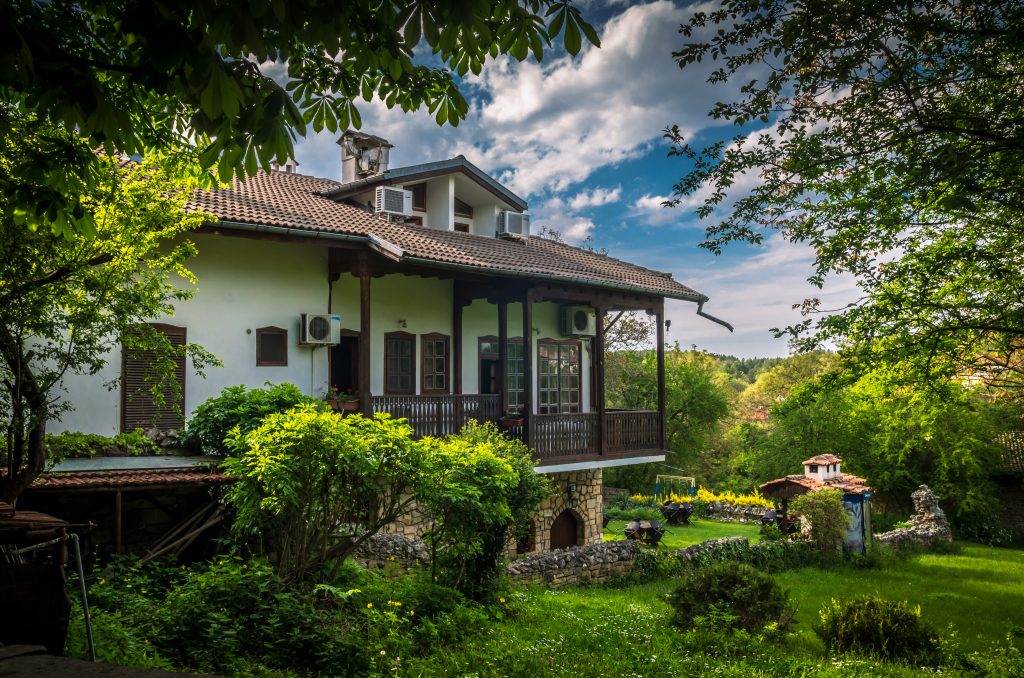
In the 17th century Arbanasi grew into an important trading settlement. Its merchants were renowned and traded right across the Ottoman Empire. The houses the wealthy merchants built in this period look like small fortresses. They’re stern and austere on the outside but rich and luxurious inside. All the interior decoration – doors, windows, cupboards and ceilings – features exceptionally rich woodcarving and plasterwork. A distinctive feature of the Arbanasi houses is that they were designed so you could live in them for a long time without ever going out, except to the well in the yard for water.
The splendour of Arbanasi lives on to this day in its many houses and places of worship, and in the traditions and customs tied to the daily life and culture of its old inhabitants.
The most interesting museums in the village are the Konstantsalieva House, the Church of the Nativity and the Church of the Archangels Michael and Gabriel.
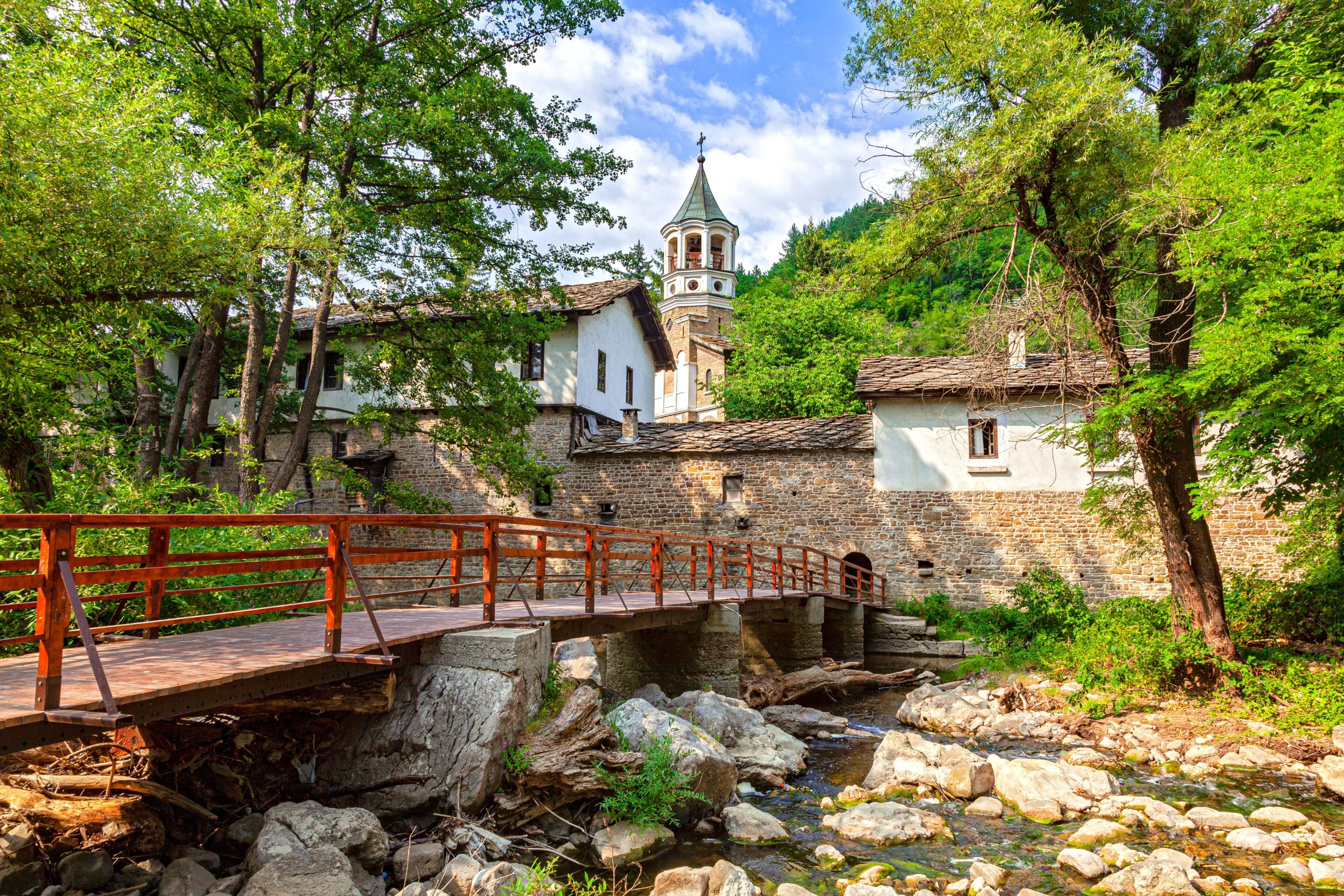
Other interesting historic monuments are the Church of St George and the Church of St Athanasius, as well as the Monastery of the Holy Mother of God, at the entrance to Arbanasi. It’s one of several holy places around Bulgaria’s old capital that hold grim memories of the Ottoman invasion. The monastery keeps the miracle-working icon of the Three-Handed Virgin, also known as the Weeping Virgin. Legend has it that after the Ottomans captured Tsarevets (1396), the nuns abandoned the monastery and buried the holy icon. Years later, a shepherd boy heard a groan coming from under the ground. The icon was found and returned to the monastery. The monastery’s feast day is 15 August – the Dormition of the Mother of God – which is also when Arbanasi celebrates its own festival.
2. The Wheel of Life at the Transfiguration Monastery
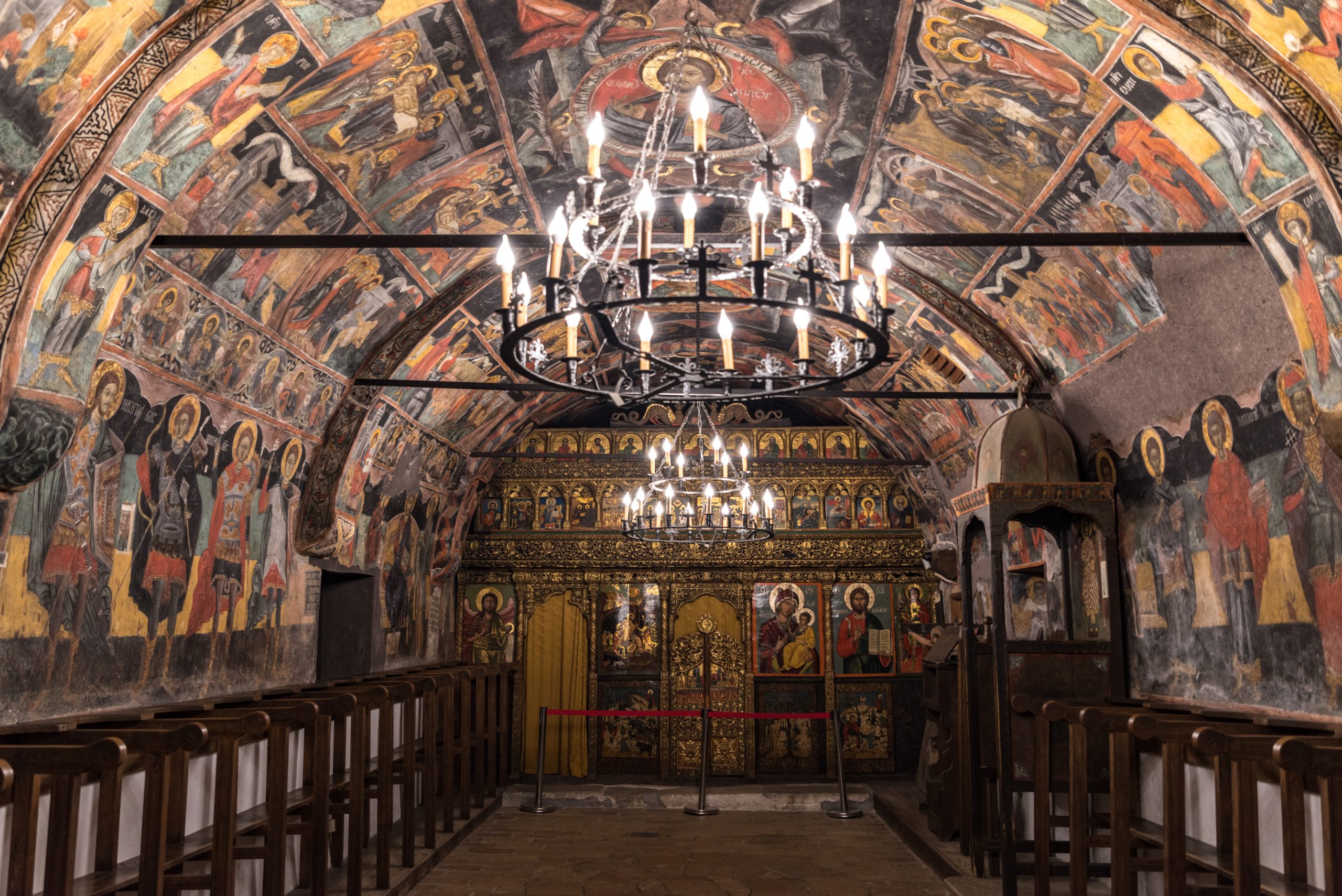
About seven kilometres north of Veliko Tarnovo, at the foot of an imposing sheer ring of cliffs, stands the Transfiguration Monastery – the largest around Tarnovo and the fourth largest in the country. Tucked away in the forests near the old capital, the monastery proudly guards Zahari Zograf’s priceless frescoes, along with its almost thousand-year history.
The Transfiguration Monastery was built at the end of the 11th century as a dependency of Vatopedi Monastery on Mount Athos. Between 1358 and 1360, during the reign of Tsar Ivan Alexander, it became one of the Bulgarian monasteries. Even though it was now Bulgarian, the monastery has kept its Athonite traditions to this day – for almost 900 years. That really is impressive.
The Transfiguration Monastery is home to one of the greatest masterpieces of the National Revival period – “The Wheel of Life”. If you’ve ever visited the monastery, I doubt you missed this remarkable mural. In fact, “The Wheel of Life” is full of symbolism, and it’s no accident that it was painted on the south side of the Church of the Transfiguration: that way, everyone heading for the church’s main entrance would see it, stop and measure themselves against the wheel. Almost 170 years have passed since Zahari Zograf finished this masterpiece, but believe me, however different the times our ancestors lived in, people had the same vices and weaknesses as they do today. Even back then, people hankered after material things and neglected the spiritual and the sublime – which is why the monks gave Zahari Zograf this task: to teach them a lesson through his mural, one that has lasted for generations.
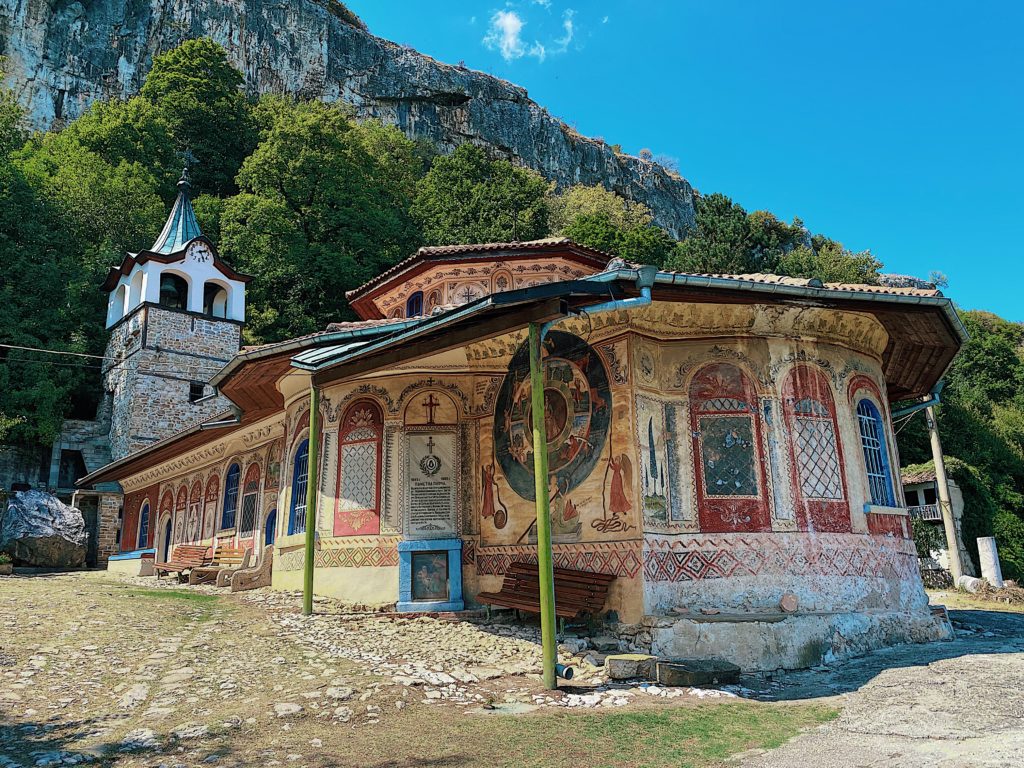
3. The Patriarchal Monastery of the Holy Trinity
The Patriarchal Monastery of the Holy Trinity lies about 6 km north of Veliko Tarnovo, in the Derventski Gorge of the Yantra River. According to some sources, it was founded in 1070. Another theory holds that it was more likely founded by Patriarch Euthymius (1325–1403) with the help of Tsar Ivan Shishman, who was on the throne at the time. Hence the monastery’s names – “Patriarchal” or “Shishman’s”. The monastery was the centre of the Tarnovo Literary School while Euthymius was its abbot, and it went on flourishing after 1375, when he was elected patriarch.
The monastery church was built in 1847 by master builder Kolyu Ficheto (one of our most celebrated National Revival builders) and beautifully painted by Zahari Zograf, who created the large icons of the Mother of God, John the Baptist, Christ Pantocrator, the Holy Trinity and others.
In 1913 the church was destroyed in an earthquake. Some old icons were saved, including the church’s own Holy Trinity icon from 1708. The church also has an underground chapel, and the rocks around it hide caves that served as cells and chapels in the Middle Ages and as hiding places for the monks during Ottoman rule. The monastery was restored to its present form in 1927.
The monastery was home to monks until 1946, when the first women arrived. At first they lived in the monastery’s farm buildings. Today it’s a convent. The monastery doesn’t offer accommodation, and bear in mind that the nuns are pretty strict. Taking photos inside the monastery is strictly forbidden, men must wear long trousers and women must cover their shoulders.
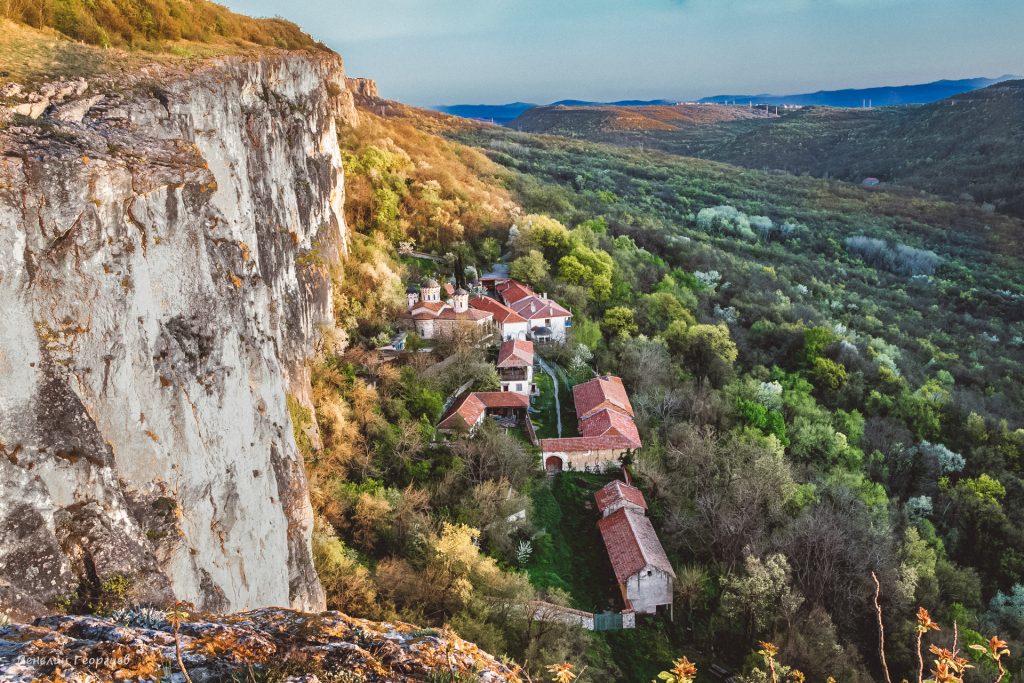
4. Etara Ethnographic Complex
Ever since I was a child, Etara has been one of my favourite places for a day out around Tarnovo. The “Etar” Open-Air Ethnographic Museum was the first open-air museum in Bulgaria. It has around 50 sites that bring to life the atmosphere and everyday life of the local people during the National Revival. Here you’ll find restored buildings, authentic objects and craft tools brought in from elsewhere, as well as replicas of real buildings from the Gabrovo region. It’s about 50 km from Veliko Tarnovo and 8 km from Gabrovo. There are other interesting places nearby that you can see in a single day along with Etara – for example Sokolski Monastery, Bozhentsi, Dryanovo Monastery and Bacho Kiro Cave. I’ll tell you about them further down.
One of the most interesting parts of the ethnographic complex is the bazaar street with its craft workshops. The houses along it are textbook examples of Balkan architecture – the workshop is on the ground floor, and the living quarters, where the craftsman’s family lived, are on the floor above. You’re free to peek into every workshop and see first-hand how local craftsmen used to work. The masters are very friendly and talk about the old crafts with huge enthusiasm, demonstrating their traditional techniques with authentic hand tools. Among the workshops you’ll find coppersmiths, icon painters, saddlers, bell makers, confectioners, goldsmiths, weavers, potters and woodcarvers.
As soon as you walk into Etara, the clock tower catches your eye – a copy of the one in Dryanovo, which was built in 1778 and demolished in 1946. Its bell was cast in St Petersburg. Clock towers marked the start and end of the working day and also served as lookout posts. Another interesting building is the Church of the Holy Epiphany, which also houses a school – a reconstruction from the late 19th century. The church is a copy of an 1868 church from the village of Radovtsi in Dryanovo Municipality, and it doesn’t look like a church at all – more like a house.
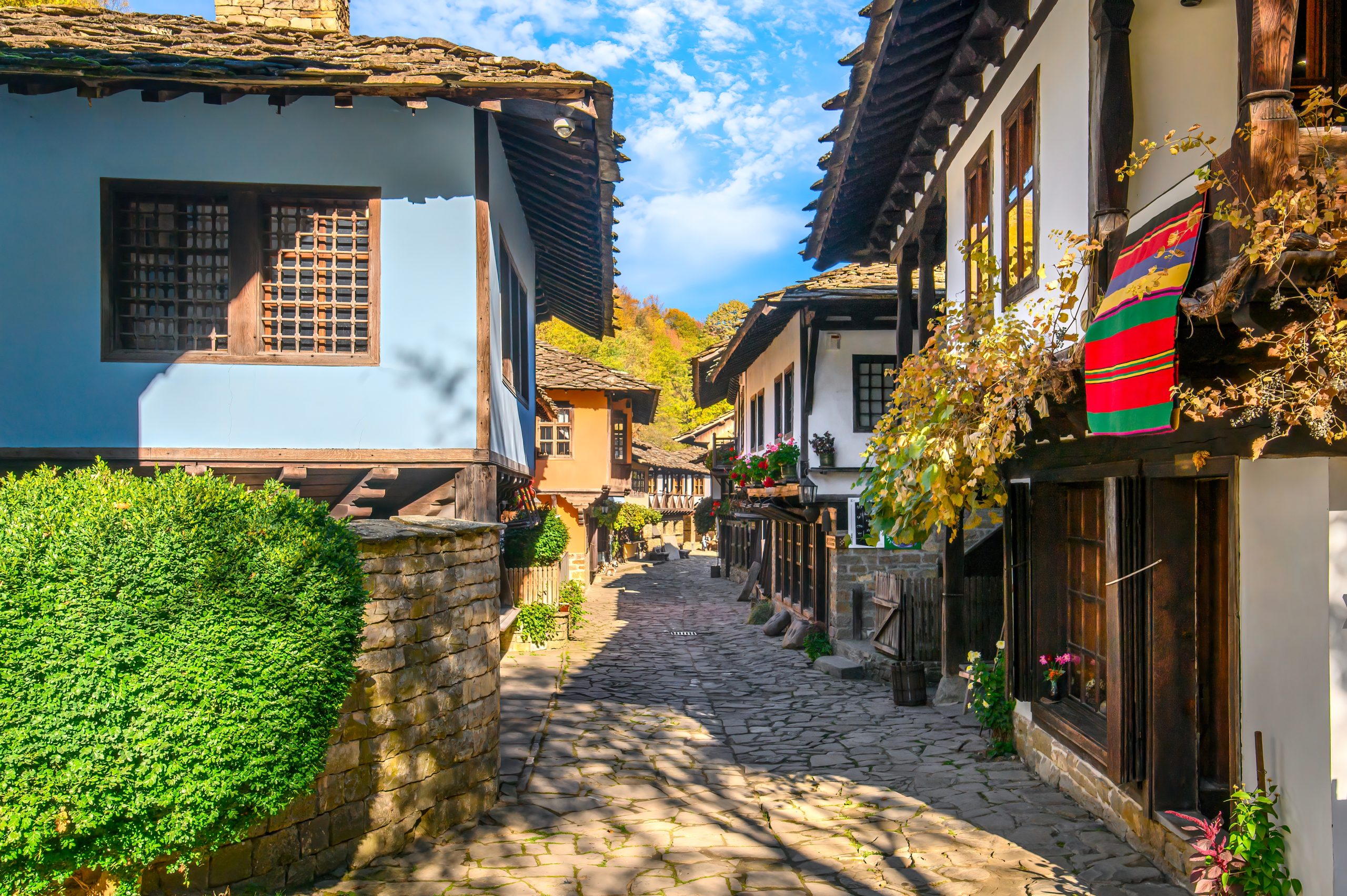
5. Bozhentsi
Bozhentsi, or Bozhentsite to give it its official name, is an architectural and historical reserve 46 km from Veliko Tarnovo and 16 km from Gabrovo. The village is small but has more than 600 years of history. It has kept its authentic old-world look from the National Revival era, along with valuable architectural and ethnographic monuments. Legend has it that when Tarnovo fell to the Turks, the widowed noblewoman Bozhana set off with her children in search of refuge. At this spot in the Balkan Mountains she stopped and laid the first stone of the settlement, which was later named after her.
The social and economic boom of 18th-century Bulgaria benefited the village too, and it soon began to prosper. The locals made their living mainly from trade, chiefly in honey, hides and wool. Having grown wealthy through livestock farming, crafts and trade, the village changed its architectural look as well. Bozhentsi houses have a tall ground floor, an outside staircase and a veranda leading into a parlour and then the kitchen. The furnishings are impressive – the walls are panelled in wood, and the ceilings are carved and decorated with all kinds of motifs. The high stone walls, iron-studded oak doors, little cobbled lanes, stone fountains and bridges create a one-of-a-kind atmosphere. Today more than 100 centuries-old houses survive, and the village has just 40 inhabitants. Bozhentsi was declared an architectural and historical reserve in 1964.
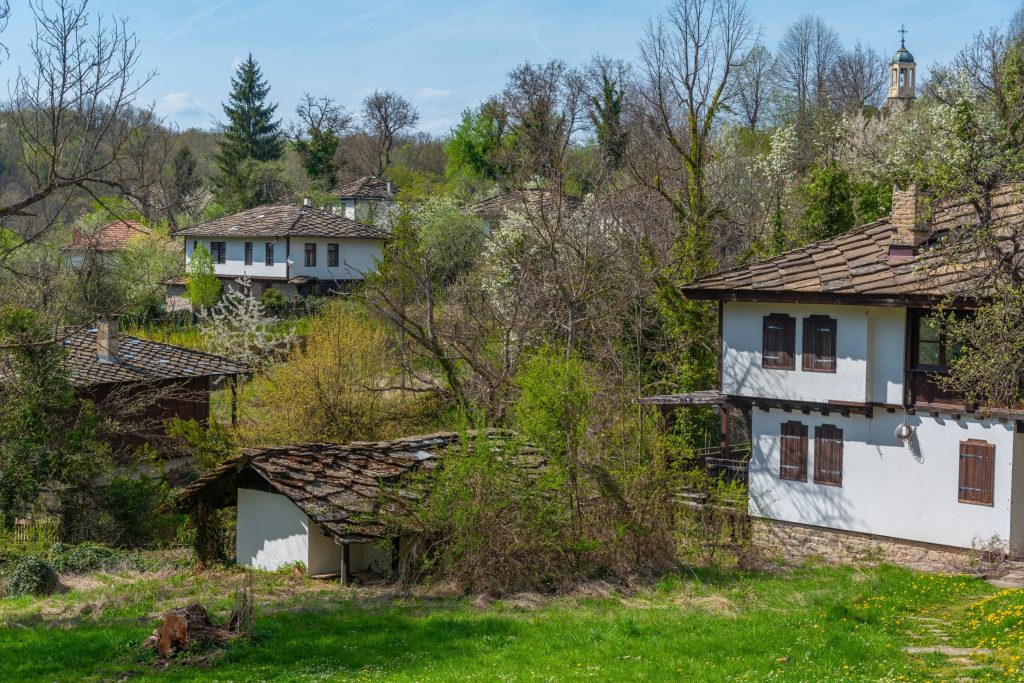
6. Kapinovo
The village of Kapinovo is just 19 km from Veliko Tarnovo and is a favourite day-trip destination for locals and visitors to the old capital alike. It’s especially appealing in summer thanks to the Kapinovo Waterfall and the campsite next to it. The waterfall is small – about 7 metres high – but the pool beneath it is a good 20 metres deep. In summer it’s full of young people jumping off the rocks into the pool, and I’d recommend it to those of you who love an adrenaline rush. Be careful, though: the rocks are slippery and there have been accidents.
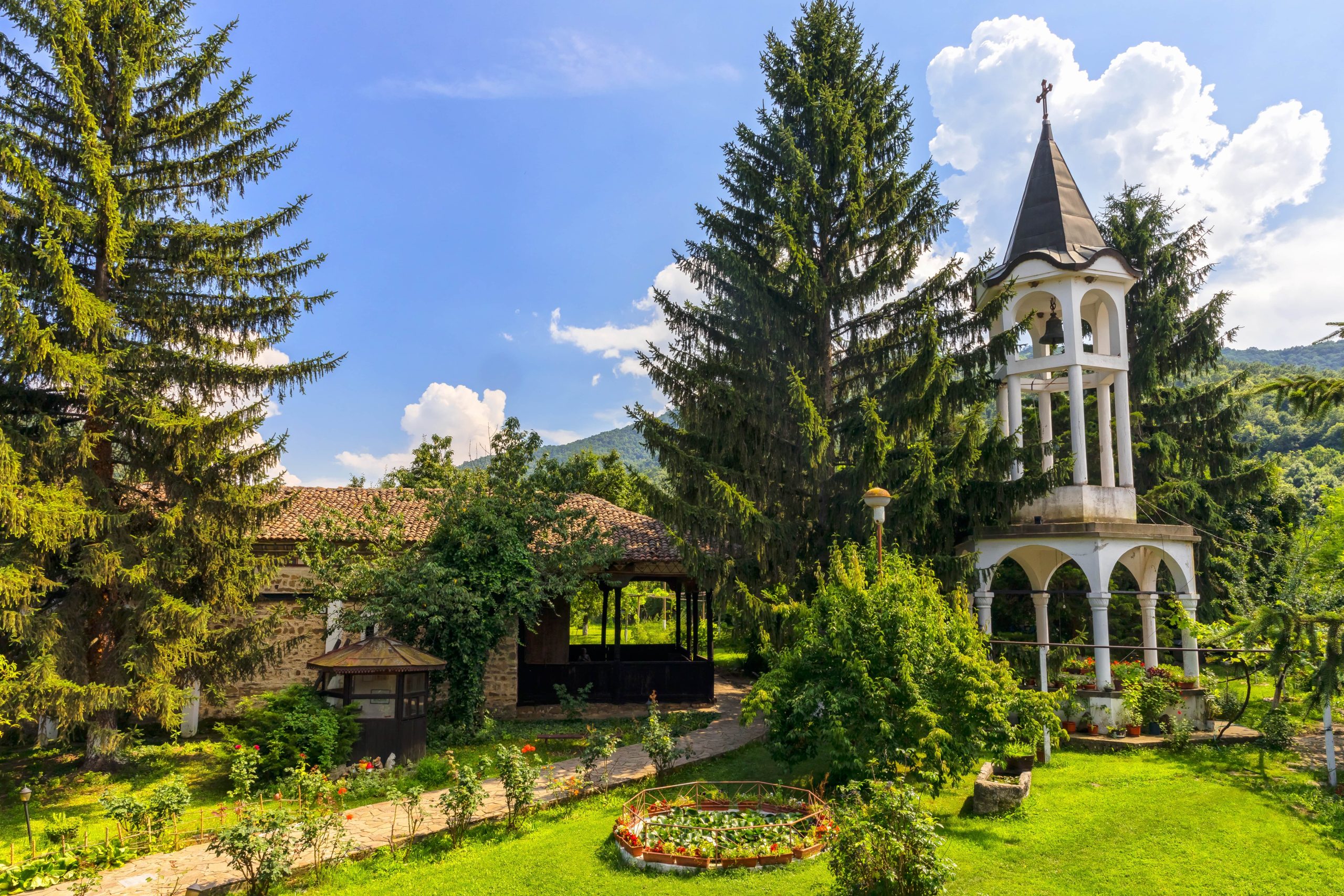
Right next to the waterfall stands Kapinovo Monastery of St Nicholas the Wonderworker, founded in 1272 during the reign of Tsar Constantine Tikh Asen. Over the centuries it was destroyed and rebuilt many times, and it has a very rich history. It was visited by figures such as Vasil Levski, Filip Totyu and others, and in 1794 none other than Sophronius of Vratsa was its abbot. Today the monastery complex consists of residential buildings, a chapel and a church.
The village hosts a bikers’ rally every year at the start of summer, which has drawn as many as 12 000 motorcyclists from Bulgaria and abroad.
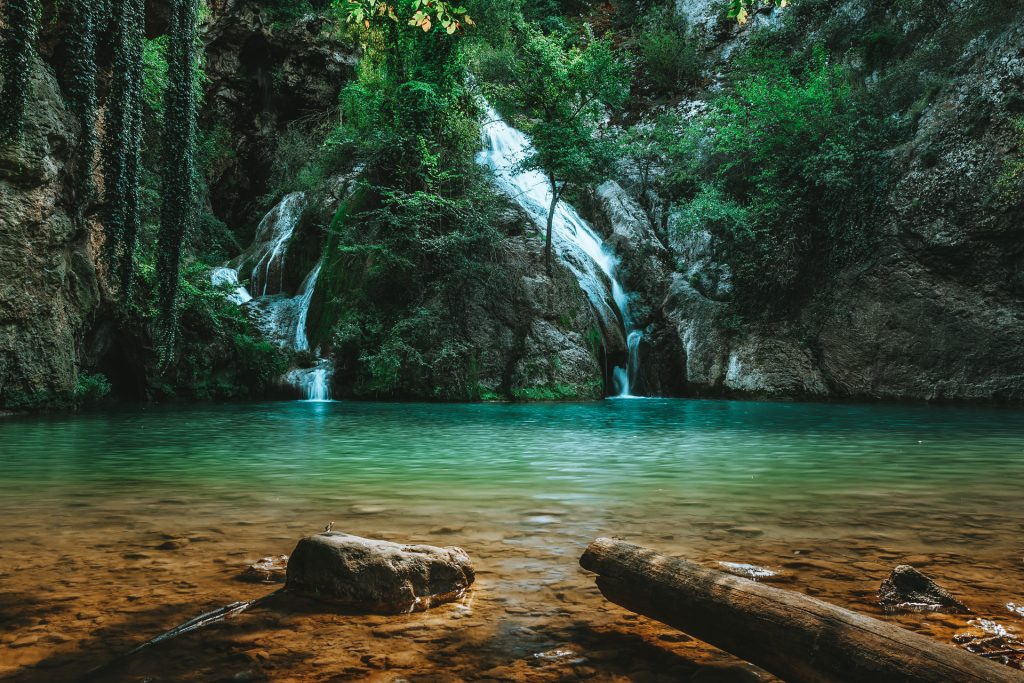
7. Hotnitsa Waterfall
Hotnitsa Waterfall is a great choice for escaping the hustle and bustle of the city. It’s about 20 km from Veliko Tarnovo and 2.5 km from the village of Hotnitsa. It’s very easy to get to, and there’s plenty of parking at the start of the trail. At around 30 metres high, it’s definitely one of the most beautiful waterfalls in Bulgaria. What will really win you over is the emerald colour of the water, which comes from the limestone deposits in the rocks.
In summer, when everything is lush and green, it’s so beautiful you’ll feel as if you’re on a lovely deserted tropical island far from civilisation. Hotnitsa Waterfall is also known as Kaya Bunar, which is Turkish for “spring in the rock”. To the left of the pool, an eco-trail leads up to the top of the waterfall, where a lovely view opens up over the surrounding countryside.
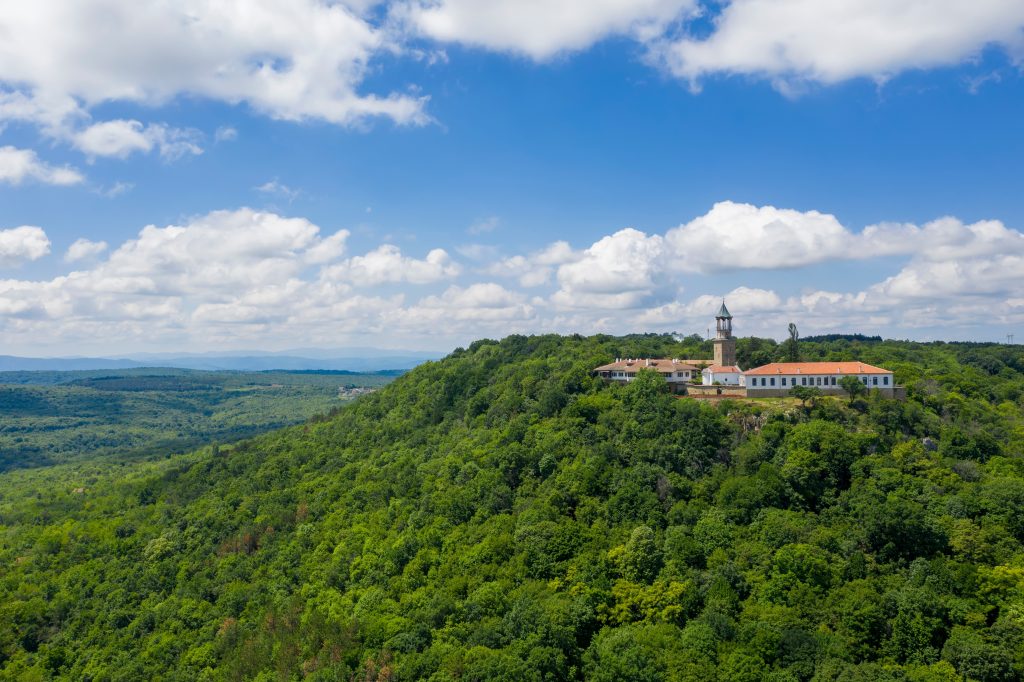
8. The Monastery of St Peter and St Paul
The picturesque Monastery of St Peter and St Paul is just 6 km from our old capital, Tarnovo. Perched on top of the Arbanasi Plateau, it catches the eye from afar with its pointed bell tower, whose bells ring out all the way to the nearby town of Lyaskovets.
The Monastery of St Peter and St Paul, also known as Lyaskovets Monastery, is one of the 14 monasteries built around Tarnovo during the Second Bulgarian Empire. According to legend, it was built in the time of the brothers Asen and Peter, on the hill where it stands today and where a fortress once stood. It was in that fortress that the uprising of 1185 to free Bulgaria from Byzantine rule was planned, and the Asen brothers built the monastery as a thank-you for its success.
As well as its rich history, the monastery impresses with the beautiful view from its courtyard over the towns and villages in the valley below. The Monastery of St Peter and St Paul is right next to Arbanasi, so you can easily combine the two on the same outing.
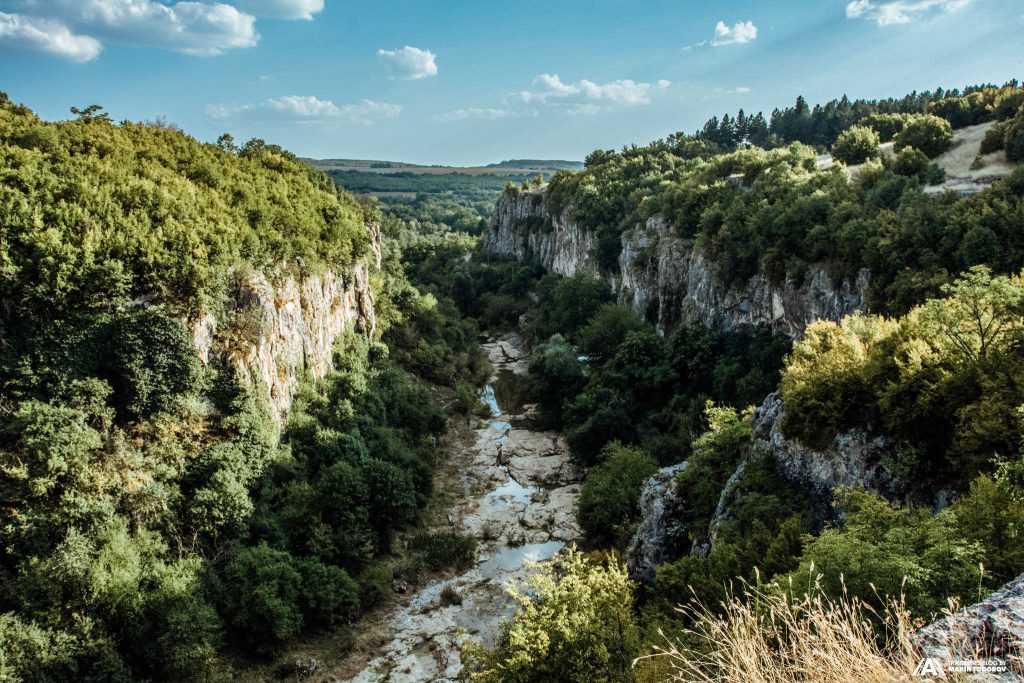
9. Emen Canyon
Emen Canyon is a picturesque spot with unique natural formations along the Negovanka River, in the foothills of the Fore-Balkan, 20 km west of Veliko Tarnovo. Over time, the flowing water has carved the soft limestone into countless rapids, waterfalls, pools and hollows, hemmed in by sheer cliffs up to 90 m high. The canyon begins south of the village of Novo Selo and is interrupted by a widening of the valley, where the village of Emen sits. This naturally splits it into two parts – the Lower and Upper Boaz. The area is rich in karst features – the canyon is home to Emen Cave, one of the longest in Bulgaria (3,113 m). It has been shown to have been inhabited in the Neolithic, and there are also finds from the Bronze Age, the Early and Late Iron Age and Antiquity. The breathtaking scenery is a magnet for travellers and photography lovers.
10. Dryanovo Monastery and Bacho Kiro Cave
Another of my favourite places around Veliko Tarnovo is Dryanovo Monastery of St Michael the Archangel. It’s 30 km from Tarnovo, on the right bank of the Dryanovska River, tucked away at the foot of picturesque cliffs. The monastery’s present buildings date from the late 19th century. When the Ottoman Turks set it on fire while crushing the April Uprising, only the church survived. If you look closely at the church walls, you’ll see the holes left by the shrapnel that hit them during the battle of 1876. In the monastery courtyard stands the ossuary, built in honour of the band of rebels led by Pop Hariton, who was surrounded here by the Ottoman Turks. The ossuary was built in the late 19th century, a few years after part of the monastery had been restored.
About 300 metres from the monastery is Bacho Kiro Cave, named after the April Uprising hero. It’s the oldest show cave in Bulgaria, and there are two routes for visitors – a short one and a long one. There are lots of fascinating rock formations, lit up in different colours, which makes them even more striking.
Author
Vilislav Alkantara