

[blockquote align=”none” author=”“The Semantron Tolls” Ivan Vazov “]
“In a remote mountain valley there stood,
in days long gone, a holy abode;
a little lamp glimmered, a prayer was sung
in a poor little church, far from the world.”
[/blockquote]
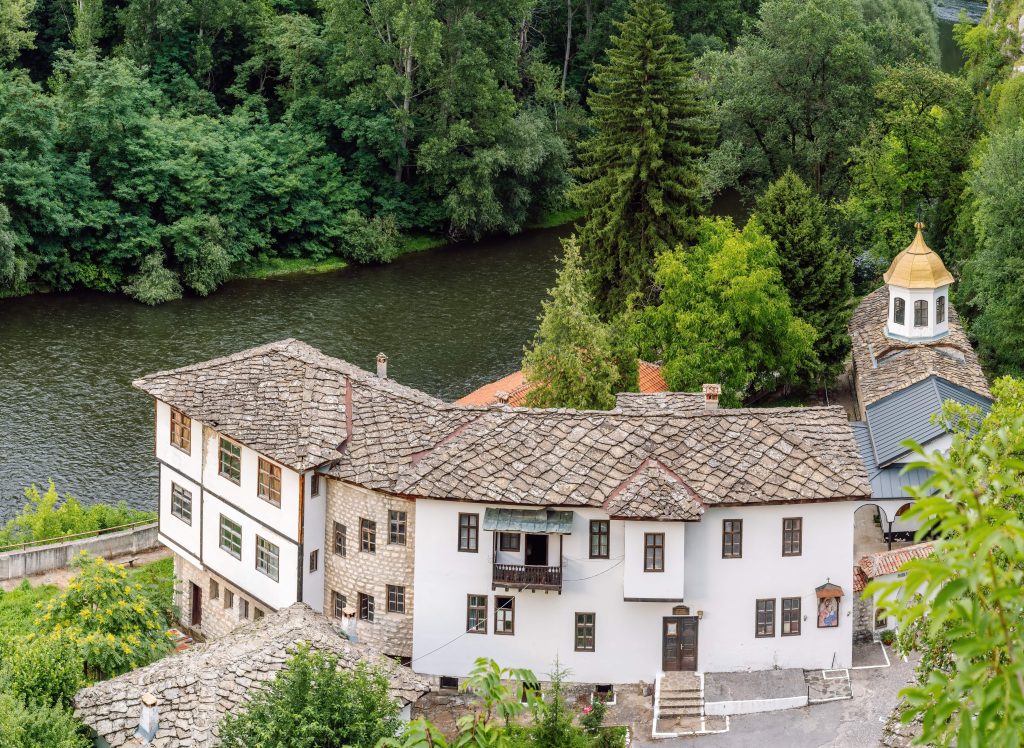
Bulgaria is blessed with stunningly beautiful corners that have survived like faded black-and-white photographs in an old bound album of memories from a long-gone era. One of the most picturesque places in the country is the Cherepish Monastery of the Dormition of the Mother of God, surrounded by lush greenery, majestic cliffs and the waters of the Iskar River. It’s just 85 km from Sofia, which makes it a perfect day trip from the capital. Nestled beside the Iskar Gorge, it’s full of beautiful, breathtaking views.
It’s the beginning of April, the weather is already wonderful, and nature has started to wake up and turn green. We fancied a weekend outing somewhere close to Sofia, and since I’d had it on my list for ages, we settled on Cherepish Monastery. I’d never had the chance to visit the Vratsa Balkan before, so I thought it would make a lovely day out.
Getting there
Cherepish Monastery lies in the Iskar Gorge, 85 km from Sofia and 13 km from Mezdra. There’s a small car park in front of the monastery gates. You have three options for getting there:
Option 1: By car from Sofia towards Mezdra through the picturesque Iskar Gorge. After the village of Zverino, turn left off the road and you’ll come straight to the monastery.
Option 2: By car from Sofia towards Mezdra via Botevgrad, turning off towards Rebarkovo and from there to Lyutibrod. The road passes through several tunnels, and at the sign for the monastery you turn right. Follow a narrow tarmac road and you’ll find yourself right in front of the monastery gates. This is the option we chose. We reckoned the motorway would be much more comfortable, and the route is about 30 minutes shorter too.
Option 3: By train on the Sofia–Mezdra line, but since not all trains stop at Cherepish station, make sure you ask, so you don’t go straight past the monastery. It’s no more than a 20-minute walk from the station.
History of the monastery
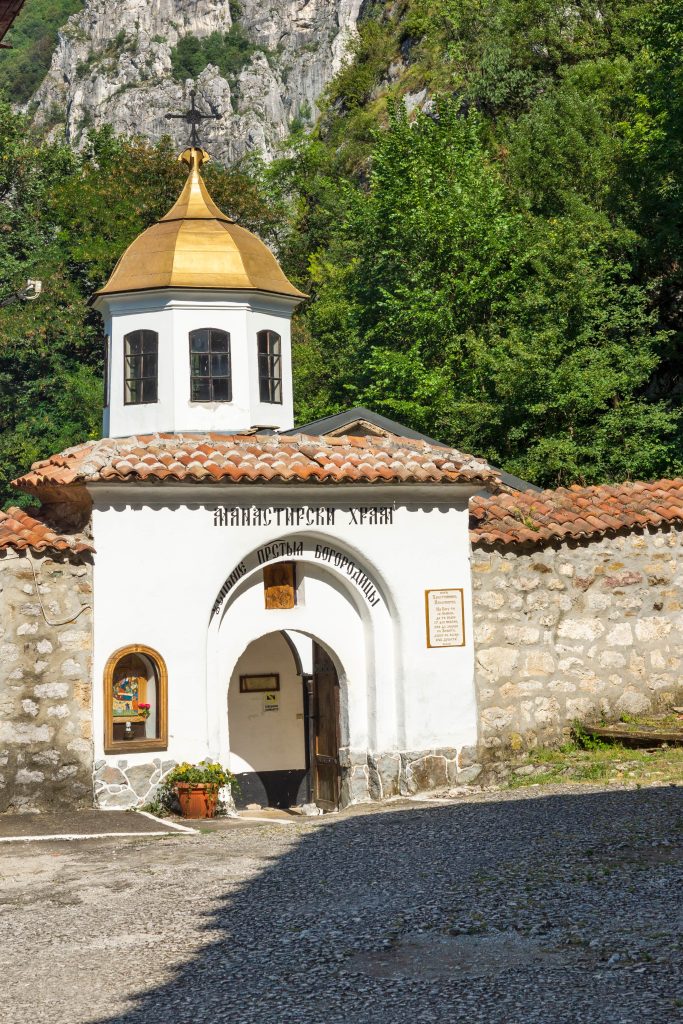
Cherepish Monastery was founded in the time of the Second Bulgarian Empire during the reign of Tsar Ivan Shishman. According to local tradition, at the end of the 14th century Bulgarian troops bravely defended the ancient fortress of Koritengrad against the Turkish invaders. After the battle the whole area was strewn with the bleached bones of the fallen soldiers, and this is thought to be where the monastery gets its name.
During the centuries of Ottoman rule, the monastery was burned and looted many times. It was restored in the 17th century by the renowned Bulgarian icon painter and man of letters Pimen Zografski, and that’s when the monastery’s present church was built. The church has kept its appearance since 1612, and the whole monastery complex looks untouched by time. The epitaphios (holy shroud) in the church was embroidered well before the Liberation – back in 1844.
During the National Revival, Cherepish Monastery became a centre of learning and culture. A monastery school was set up, and books, saints’ lives and gospels were written and copied here, some of which survive to this day – the 16th-century “Cherepish Gospel”, bound in golden covers and decorated with biblical scenes, and the “Danail Gospel”, copied in 1616 by the monk Danail and now kept in the Church of St Nicholas in Vratsa.
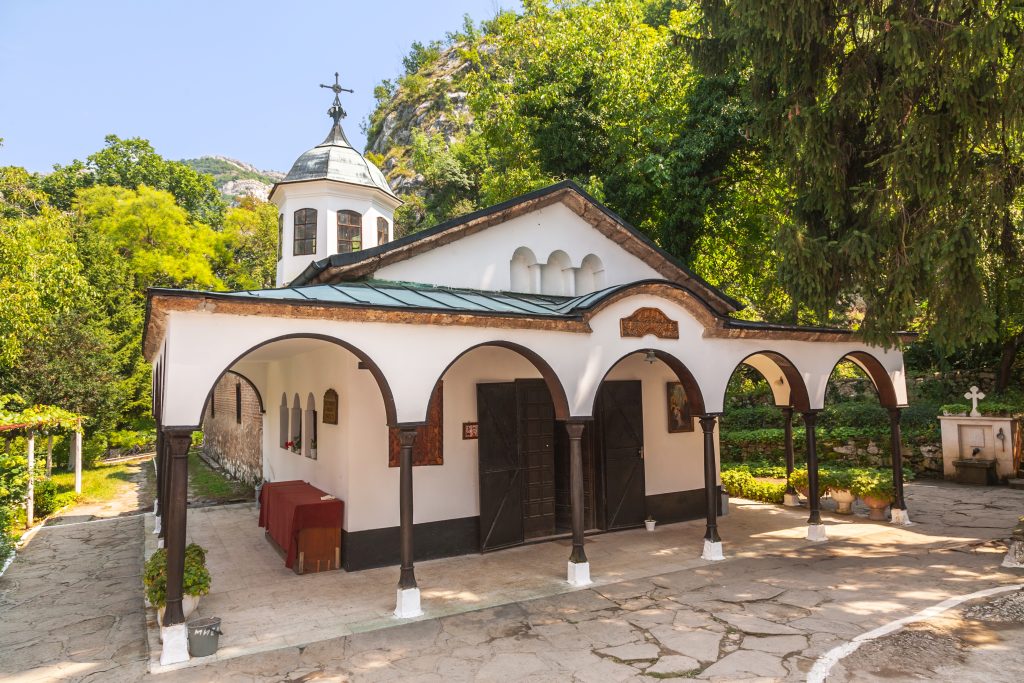
In 1798–1799, Cherepish Monastery gave refuge to St Sophronius of Vratsa. It was also here that the monastery’s abbot, Epifaniy, founded the Lyutibrod revolutionary committee. Between 1872 and 1876 the monastery was visited by members of the Vratsa revolutionary committee and representatives of the Bulgarian Revolutionary Central Committee (BRCC). Near Cherepish Monastery lies Rashov Dol, where part of Botev’s band, led by Georgi Apostolov, fought its last battle. High up in a prominent spot in the monastery courtyard stands a chapel-ossuary holding the remains of some of Botev’s fighters who fell in the battle at Rashov Dol.
Hristo Botev’s sabre is also kept here. After his death, Petar Makedoncheto took it and brought it to the monastery. The monk Gerasim hid it in Rashid’s room. Later, in 1910, the monastery’s former servant Neno Netsov gave a written account. According to him, only the sabre itself is genuine. The scabbard was probably swapped at some point – nobody knows how or why.
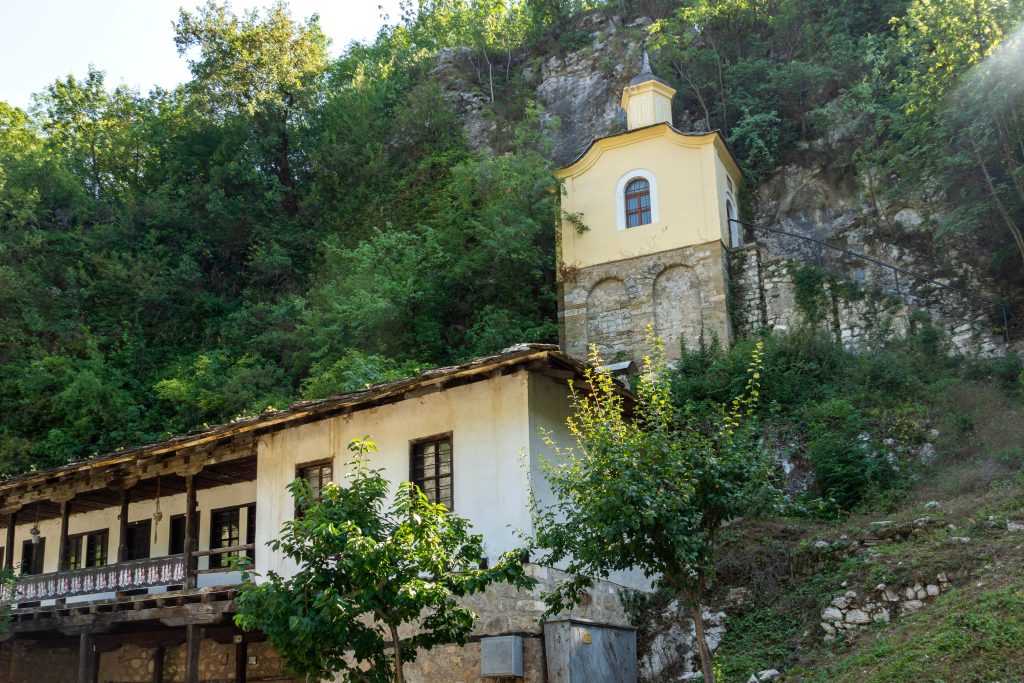
The famous geographer, traveller, artist and intelligence agent Felix Kanitz (1829–1904) was also captivated by the beauty of the Balkan Mountains near Cherepish station. He described the whole area in his writings and captured it in three engravings, calling the monastery “the most beautiful place in the world”.
The church also holds the relics of the holy unmercenary brothers Cosmas and Damian. They were two brothers from Asia Minor who, encouraged by their mother, devoted themselves from an early age to the Christian faith and to studying the healing properties of herbs. They became healers. For their decency and piety, God granted them the gift to “heal people and animals”. They did all this without asking for money, which is why people called them “unmercenaries and wonderworkers”. Many Christian believers rest their foreheads on the reliquary holding the healers’ relics and pray for good health and for healing from illness.
Rashid’s House
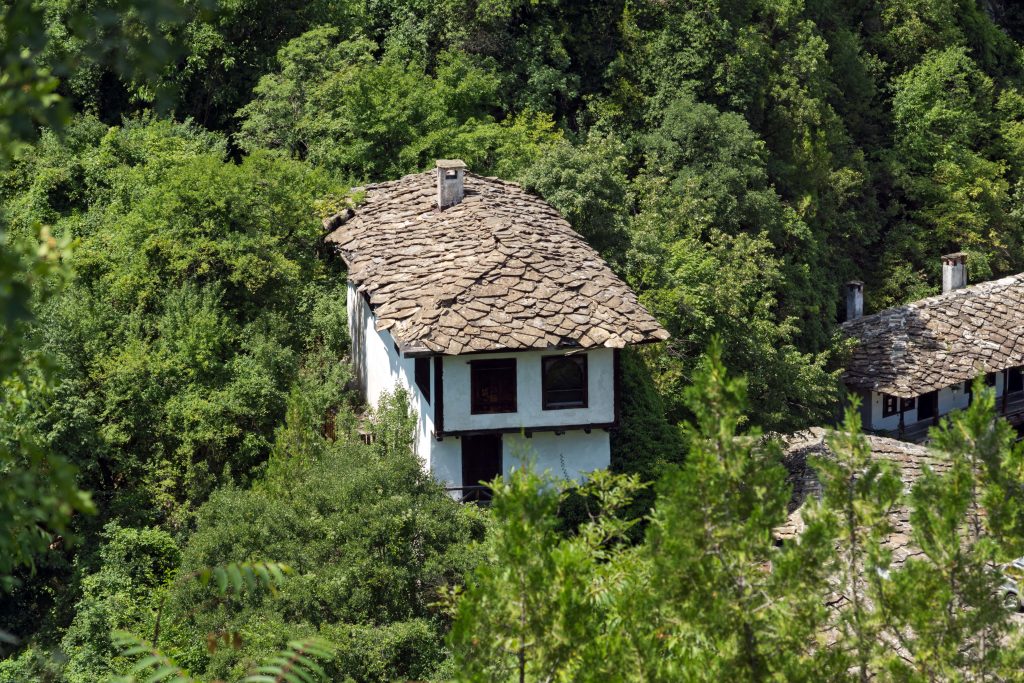
In the monastery courtyard, just past the steps leading up to the ossuary of Botev’s fighters, you’ll see Rashid’s House. Legend has it that the daughter of the governor of Vratsa, Rashid Bey, fell gravely ill. One day the young girl dreamed of the Virgin Mary, who called her to the monastery to be healed. Her father granted her wish and built a little house in a cleft in the rocks. Before long, he was summoned to the monastery. He set off fearing the worst had happened to his child. Imagine the bey’s astonishment when he found his daughter alive and well! He promised the monks he would support the monastery, and he kept his word. And on the spot where his daughter embraced the Christian faith, he built a large, beautiful house, still known today as Rashid’s House.
A favourite haunt of Bulgarian writers
You won’t be the only one charmed by the cool air of the Vratsa Balkan and the beautiful views of the Iskar Gorge. It’s no coincidence that the monastery has a small museum corner dedicated to Ivan Vazov – this is where the writer found the inspiration for a number of his works, including the stories “Grandpa Yotso Is Watching” and “A Bulgarian Woman”. On display are many of the writer’s personal belongings, as well as some of the stories thought to have been written here. But Vazov wasn’t the first to put this peaceful spot on the banks of the Iskar on the literary map. Before him, Aleko Konstantinov wrote about the monastery in his travelogues “In the Bulgarian Switzerland” and “Sofia–Mezdra–Vratsa”, as his train wound its way along the bends of the Iskar. On the river side of the monastery courtyard runs “Aleko’s Alley” with its benches, where you can sit and lose yourself in thought, gazing at the river and the majestic, fantastically shaped white cliffs.
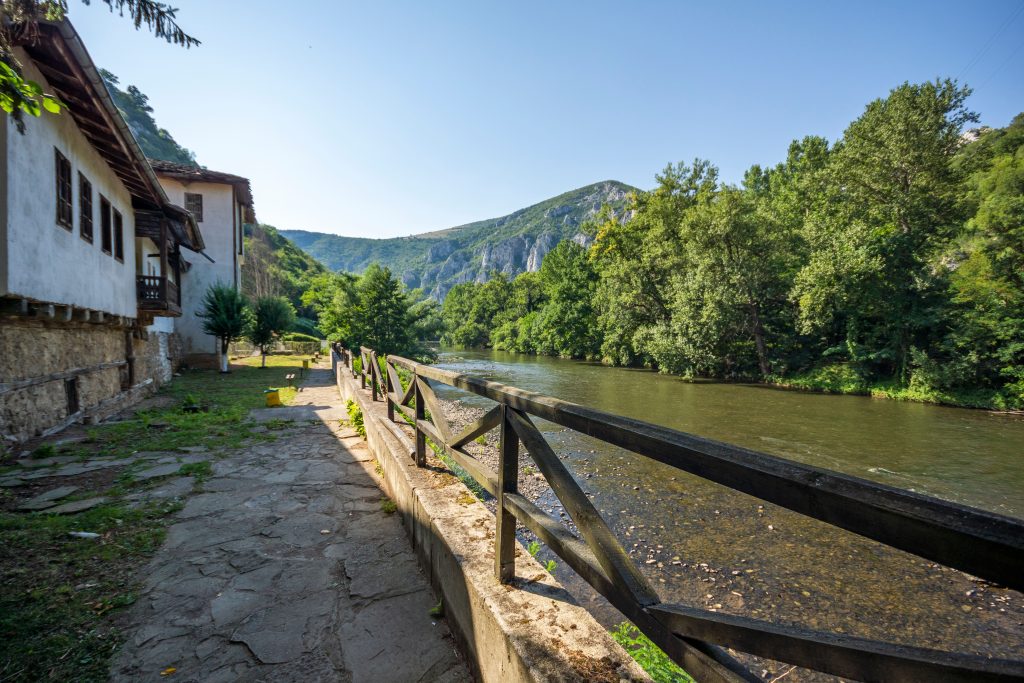
[blockquote align=”none” author=”Aleko Konstantinov on Cherepish Monastery”]“And it truly is beautiful; Lord, how beautiful this lonely Cherepish Monastery is! The bends of the murmuring Iskar, hemmed in on one side by green, blossoming wooded hills brimming with nightingales, and on the other by overhanging giant cliffs of every colour and shape, riddled with caves where the monastery flocks shelter; up the crags and screes of these green-streaked cliffs the young goats, little acrobats, merrily clamber, leap and frolic, teasing the appetite of the eagles gliding smoothly above the rocks; and beside nature’s handiwork we now see the work of human hands: in the very heart of these mighty cliffs gapes a new, still-fresh wound — the tunnel, with its beautiful horseshoe curve, while the angry Iskar has been tamed by a splendid iron bridge on stone piers — and all of it taken together, with the monastery nestled and perched at the bottom, makes such an enchanting picture as none of the easier, more accessible outings around the Bulgarian capital can give you any idea of.”[/blockquote]
Legends of the area around the monastery
It was at the “Kaleto” fortress and the nearby area of Koritengrad (named after an old settlement that once stood here) that Tsar Ivan Shishman fought his last great battle against the Turks. Legend has it that after the defeat, the tsar’s sceptre, crown and treasure were hidden in a cave. As if to back up the story, there’s a cave here called Shishman’s Cave, whose floor has been dug up countless times by treasure hunters – but no treasure has ever been found. Their enthusiasm is fuelled further by tales that Botev hid his band’s archive, money and flag in another cave above the monastery.
Another story tells how two of Botev’s fighters, fleeing from the Turks, hid in a cave they had stumbled upon by chance. It was full of gold. The pair buried the entrance, covered it with turf and bushes, and then fled to Wallachia. After the Liberation they came back, but they couldn’t find a thing.
Even more sensational is the tale of one of the monks at the monastery, who some twenty years ago dived into the waters of the Iskar and came upon an underwater cave full of gold. All these tall tales have time and again set off “bombshell” stories from treasure-hunting folklore in the press.

Author
Vilislav Alkantara